 Historical Figure MBTI
#1204 · 9-3-26 · The Mughal Empire
Bairam Khan
Commander · Regent · Literary Patron
c. 1501–1561
6 min read
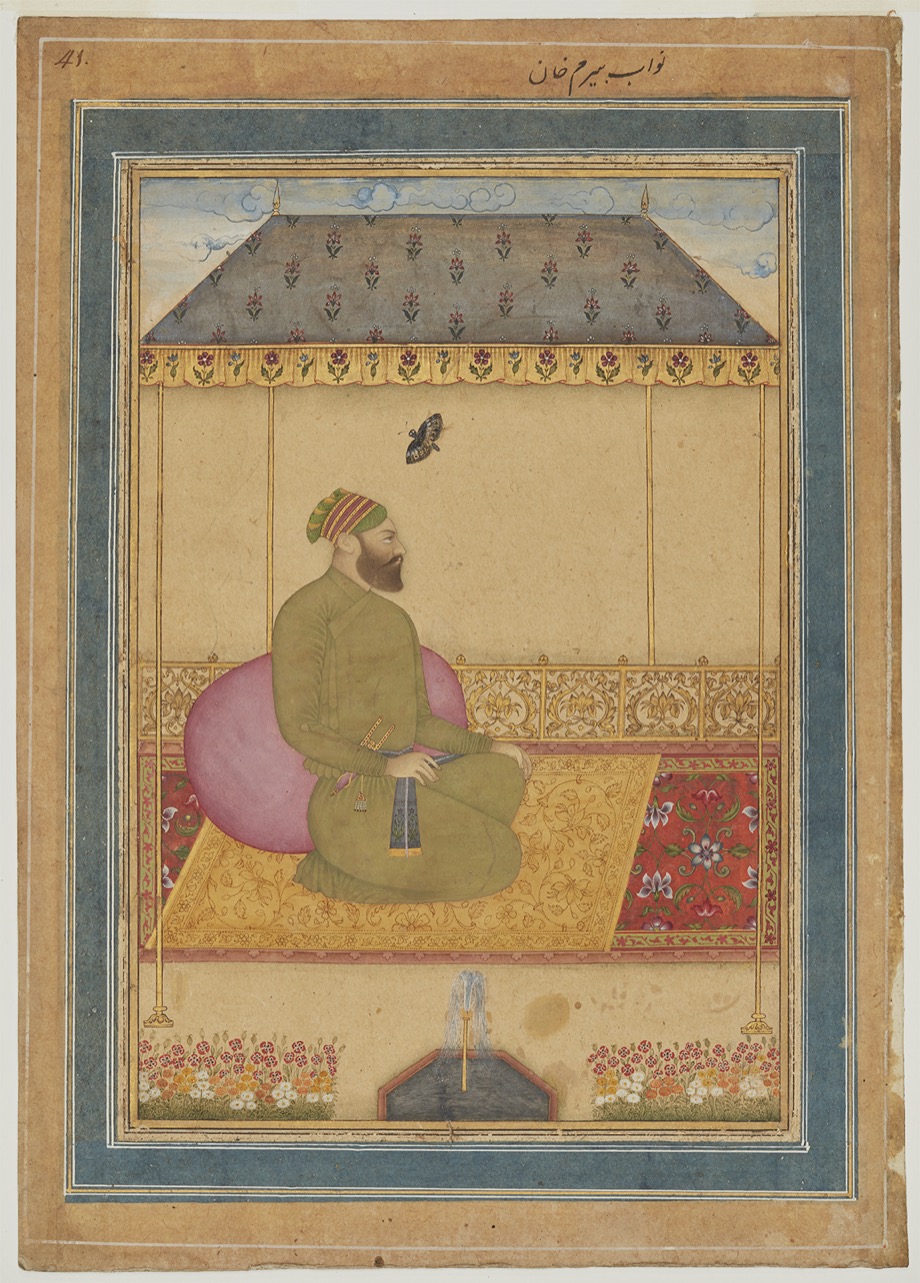
Portrait of Bairam Khan — c. 1710–1740 (later depiction)
The man who kept the throne standing
Bairam Khan made himself necessary to a dynasty that repeatedly approached ruin. He served Humayun through exile and restoration, then protected Akbar when the restored emperor died and left a thirteen-year-old successor. Command was not an abstract preference in these circumstances. Someone had to hold an army together, make appointments, and decide which danger required action first.
The proposed ENTJ reading rests on the joining of practical control to a sustained dynastic purpose. It remains speculative. The record preserves a successful commander’s public conduct more readily than his habitual thinking, and much of his regency survives in accounts composed under the ruler who dismissed him. The competence that established his authority could later be narrated as the arrogance that made his removal inevitable.
He also wrote poetry in Persian and Turkish and patronized literary talent. This cultivated life belongs inside the portrait, rather than appearing as a surprising exception to military forcefulness. A Mughal officer could seek an enduring place through verse, service, and reputation at once. Bairam’s career was made within that shared political and literary world.
Bairam Khan reads as an ENTJ led by dominant extraverted thinking: dynastic survival must be turned into commands, resources, and a result.
Make the restoration executable
Following Humayun’s defeat by Sher Shah Suri, Bairam joined the displaced ruler and became an important participant in his dealings with the Safavid court. Persian support helped Humayun recover a base in Afghanistan. Bairam then held command at Kandahar and contributed to the advance that restored Mughal authority in northern India in 1555. The path ran through diplomacy, fortified positions, and military service, not a single brilliant charge.
After Humayun’s death in 1556, the regency required the same attention to means under more precarious conditions. The victory over Hemu at the second battle of Panipat preserved Akbar’s position. Bairam’s decisive authority over officers and policy gave a young ruler time to survive. That authority was also harsh. His execution of Tardi Beg after the loss of Delhi remains one of the episodes through which historians assess his determination and the hostility it aroused.
Dominant extraverted thinking offers a lens on the insistence that a dynastic claim must have an organization capable of enforcing it. Loyalty had to become coordinated action; offices and commands had to serve a result. Yet regency itself demanded these behaviors. The type argument therefore rests on the degree to which Bairam appears to have made direction and control his own mode of service, rather than treating a high office as a psychological test.
An empire beyond the present camp
The continuity between Humayun’s exile and Akbar’s minority is striking. Bairam did not attach his fortunes only to the nearest victorious ruler. He invested in recovering a displaced house, then preserving it across a dangerous succession. The future he served was specific: restored Mughal sovereignty. His decisions changed with circumstances, but their political destination remained unusually consistent across the upheavals that shaped his career.
Auxiliary introverted intuition is a possible description of that concentration. Diplomacy in Iran, command in Afghanistan, and campaigns in India can be read as stages within a durable project. The explanation should not imply he privately foresaw the institutions of Akbar’s later empire. He helped make a future available without knowing its final form. His own expectation of influence proved less accurate than his commitment to the dynasty’s survival.
The regency contained the contradiction that undid him. A successful protector enabled the sovereign to grow powerful enough to need protection less. Authority exercised for a minor emperor had to become answerable to an adult. Bairam seems to have had more difficulty revising his place within the restored order than pursuing the restoration itself. The long project could remain persuasive even after the role through which he pursued it had expired.
Force and its changing audience
Bairam operated in a military world where delay could cost a position and public punishment could announce the limits of acceptable failure. The regency’s victories gave that stern direction credibility. They also brought other ambitious officers into a court where access to the emperor mattered increasingly. Military success could sustain his authority without insulating him from factional opposition.
In 1560 Akbar ended the regency. Bairam initially accepted departure toward pilgrimage, then turned to armed resistance before submitting. The Akbarnama presents the break as the emperor exposing a servant’s dangerous overreach. Its elevated language makes Akbar’s independence appear preordained. Behind that judgment stands a difficult transition in which an experienced commander confronted the loss of his political place.
Tertiary extraverted sensing is a tentative way to describe readiness to act directly when control seemed endangered. It is not an explanation for every punishment or for the revolt. Officers responded within real struggles over offices, safety, and status. Bairam’s reversal shows that strategic constancy could coexist with urgent, damaging action when the immediate field changed.
The servant behind the office
The literary record resists a portrait made entirely from offices. Persian and Turkish verse placed him in more than one cultivated audience, while patronage made a commander a source of livelihood for others. Those activities could build prestige, but prestige does not exhaust what writing meant to its author. They preserve a second kind of agency: the choice to fashion a voice rather than only issue an order. A psychological reading should leave that voice room without inventing confessions the surviving evidence does not provide.
Bairam’s submission brought a measure of reconciliation. Akbar offered alternatives that included remaining in imperial service or proceeding on pilgrimage. Bairam chose the journey toward Mecca. In 1561, at Patan in Gujarat, he was murdered by an Afghan who sought revenge for an earlier killing. The end belonged to the accumulated injuries of military life as well as the recent politics of dismissal.
Inferior introverted feeling is the weakest part of the suggested reconstruction. His poetry, religious commitments, and fidelity to Humayun indicate a personal life of value and attachment, but they do not show that such a life was psychologically inferior. What can be proposed is a tension between identification with service and the humiliation of no longer directing it. That tension is historically plausible; its place within a four-function scheme is much less securely recoverable.
Why ENTJ Over ESTJ
Why not ESTJ?
ESTJ explains his stern administration, loyalty, and attention to rank at least as readily as ENTJ. Preserving a dynasty can reflect inherited duty rather than a singular strategic vision. ENTJ has a modest advantage in the continuity of his restoration project across very different political settings and in his concentration of authority around that project. The evidence cannot decisively separate long-range synthesis from experienced adherence to a familiar order.
The strongest claim is a public preference for purposeful direction, not a complete map of his mind. ENTJ is offered as a useful reading of the commander who linked immediate organization to an enduring objective. ESTJ remains close, and court historiography may sharpen his rigidity because it needs the young emperor’s independence to appear justified.
Connected Figures
Further Reading
- The Akbarnama — Abu’l-Fazl; translated by Henry BeveridgeThe official court history, indispensable when read with attention to its praise of the emperor.
- The Mughal Empire — John F. RichardsA modern synthesis of conquest, administration, and the changing ideological basis of Mughal power.
- Bayram Khan — Encyclopaedia IranicaA scholarly account of his origins, service, diplomatic role, and literary interests.
