 Historical Figure MBTI
#1199 · 9-2-26 · The Mughal Empire
Sher Shah Suri
Sur Emperor · Administrator · Rival of Humayun
c. 1486–1545
6 min read
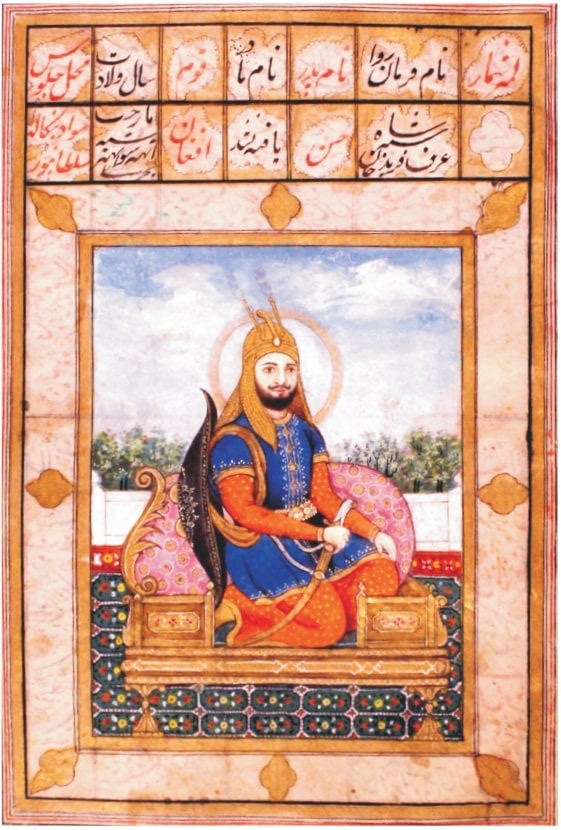
Portrait of Sher Shah Suri — retrospective depiction, c. 1570–1590
The Conqueror Who Counted
Sher Shah understood that taking a kingdom and making it answer were different achievements. The Afghan commander who drove Humayun out of northern India had spent much of his earlier life negotiating estates, local loyalties, and the practical demands of power in Bihar. His imperial reign lasted only five years, from 1540 to 1545. Its reputation rests on the conjunction of conquest with attention to the roads, revenue, currency, and officials through which conquest could become government.
Born Farid, probably around 1486, he emerged from the competitive world of Afghan service rather than inheriting an uncontested crown. His victories over Humayun at Chausa in 1539 and Kannauj in 1540 made that rise spectacular. Yet spectacle is a poor guide to his character. The more revealing pattern is his effort to make dispersed resources usable: information arriving, soldiers accounted for, cultivation assessed, and commanders prevented from converting delegated authority into private sovereignty.
An ESTJ interpretation has medium confidence within this speculative archive. It describes a recurring administrative preference, not a recovered diagnosis. Much of the fullest evidence comes from Abbas Khan Sarwani, writing decades later under Akbar and drawing on Afghan memories. His admiration preserves valuable detail while also encouraging the portrait of an exemplary king.
The ESTJ reading places dominant Extraverted Thinking in Sher Shah’s insistence that victory acquire roads, records, and enforceable responsibilities.
Making Power Answerable
The administrative Sher Shah appears most clearly in the Tarikh-i-Sher Shahi’s account of assignments and supervision. Officials were to know what they collected and what they owed; the ruler wanted intelligible obligations rather than an impressive parade of dependants. Revenue arrangements connected measurement, assessment, and written undertakings. These were ways of turning a countryside of particular bargains into resources a central government could reckon with.
The same impulse connected road security to responsibility. Sarwani describes demands on local authorities to account for robberies and punish failures of protection. The stories sometimes approach an ideal kingdom in which theft becomes impossible. Their literal perfection should be discounted, but their organizing principle remains significant: public order had an identifiable custodian, and an officer’s failure was supposed to have consequences.
Here Extraverted Thinking is a useful interpretive term for directing people through external standards. It does not mean benevolence. Assessments could press cultivators, punishments could be severe, and military government remained coercive. His administrative achievement was the coordination of demands and means, not the invention of a state without violence.
Improvement Along an Existing Road
Sher Shah is often credited with creating the Grand Trunk Road as though commerce had waited for his command. Long-distance routes across northern India were much older. His importance lay in improving and securing routes, supporting resting places and communications, and making movement serve imperial administration. The road linked trade, intelligence, and military mobility; it was useful because several ordinary needs could travel along the same maintained corridor.
Currency requires similar care. Silver coinage preceded him, but his silver rupee became an influential standard. Revenue measurement and military inspection also had precedents in the Delhi sultanate. His reforms combined inherited practices, local experience, and renewed enforcement. Later Mughal administration developed these arrangements further; resemblance does not prove that every mature Mughal institution had already existed in finished form under Sher Shah.
This is the strongest case for auxiliary Introverted Sensing: practical continuity, disciplined maintenance, and improvement by reference to known operations. It is an inference from his public record. We do not have access to the private habits of recollection that the theory proposes. Even so, the emphasis on making familiar mechanisms reliable is better evidenced than a purely visionary portrait.
An Estate Holder’s Expanding Horizon
Farid’s ascent required more than careful bookkeeping. Service among competing Afghan leaders, involvement in the politics of Bihar, and expansion toward Bengal gave him opportunities that a rigid administrator could have missed. He developed a territorial base while Mughal attention and local alliances shifted around him. The victories at Chausa and Kannauj were the culmination of a changing balance of resources, not isolated demonstrations of battlefield temperament.
His flexibility complicates the stereotype of an ESTJ who merely repeats precedent. A ruler could preserve a working practice while finding a new application or changing the personnel who controlled it. Sher Shah’s handling of Bengal, where a powerful governor threatened to acquire excessive independence, shows the connection: he adjusted the distribution of authority rather than trusting a single successful servant indefinitely.
Tertiary Extraverted Intuition is a tentative way to describe that receptiveness to alternative arrangements. It should not become an explanation for every alliance or stratagem. Political necessity gave any ambitious leader reason to improvise. The narrower claim is that his administrative consistency did not prevent him from recognizing new openings and adapting the machinery of rule to them.
Justice Spoken From the Throne
Sarwani presents Sher Shah as a king intensely concerned with justice, including the protection of cultivators whose labour sustained the realm. Such passages cannot simply be accepted as intimate moral confession. Justice was a conventional language of legitimate kingship, and an admiring historian had reasons to put exemplary declarations into his ruler’s mouth. The policies provide firmer evidence than the speeches.
The limits of that ideal are equally necessary. Sher Shah’s campaigns brought violent dispossession, and the fall of Raisen is remembered through accounts of betrayal and slaughter. Details and assigned motives require comparison across chronicles, but a profile that celebrates orderly revenue while concealing conquest’s victims would reproduce the ruler’s preferred perspective. Competent government and destructive war belonged to the same career.
Inferior Introverted Feeling is therefore the least secure part of the proposed stack. A personally asserted standard of right conduct may have accompanied the drive for control, but the surviving sources do not establish how he privately reconciled justice with expediency. The type should hold that uncertainty open, not turn cruelty into a function or administrative success into proof of virtue.
Testing the ESTJ Reading
Why not ENTJ?
Sher Shah’s rise and imperial ambitions make ENTJ a serious alternative. Both readings allow forceful organization and strategic initiative. ESTJ is preferred because the distinctive surviving material repeatedly concerns tested procedures, specific obligations, and the repair or extension of familiar institutions. A single long-range imperial vision is less directly documented than his insistence that daily administration work.
The distinction is provisional. Institutions leave more evidence than private imagination, so an administrative archive naturally favours an administrative interpretation. ESTJ earns its place here through repeated attention to implementation, with medium confidence and an explicit allowance that ENTJ may describe aspects the chronicles did not preserve.
Connected Figures
Further Reading
- Tarikh-i-Sher Shahi — Abbas Khan SarwaniThe principal detailed narrative of Sher Shah, compiled later from Afghan recollections.
- Sher Shah and His Times — Kalika Ranjan QanungoA substantial study of the conquest and administration, valuable alongside newer scholarship.
- Rohtas Fort — UNESCO World Heritage CentreExplains the surviving fort’s defensive design and its place in Sher Shah’s military programme.
- Medieval India: From Sultanat to the Mughals, Part II — Satish ChandraPlaces the Sur succession and early Mughal consolidation within their wider political setting.
