 Historical Figure MBTI
#1198 · 9-1-26 · The Mughal Empire
Hindal Mirza
Mughal Prince · Rebel and Ally
1519–1551
5 min read
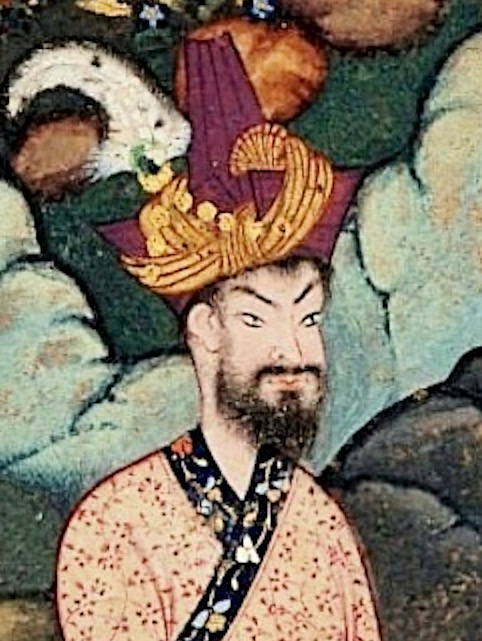
Portrait of Hindal Mirza — 1546, attributed to Dust Muhammad
The younger brother who changed sides
Gulbadan Begum remembers Hindal Mirza close enough to touch: sharing a meal, taking part in a hunt, sending news to spare his sisters anxiety. She also remembers him as a prince who died for an emperor he had once challenged. These are not two incompatible lives requiring a sentimental explanation. In the early Mughal household, a son of Babur could be a relative, a territorial commander, and a potential sovereign at once. Which identity prevailed depended partly on choices and partly on the changing balance around him.
Hindal remains untyped here. His movement from rebellion to loyal service tells us something consequential about his political trajectory. It does not reveal whether he characteristically judged through private conviction, collective obligation, practical calculation, or a preferred vision of the future. The temptation to read a final sacrifice backward across a life is particularly strong when the source is a sister's grief. The historian must hold the earlier challenge and the later service together without inventing a hidden conversion that explains both.
A prince among possible kings
Born in 1519 to Babur and Dildar Begum, Hindal grew up inside a dynasty whose Indian kingdom was still a recent conquest. Humayun's accession did not extinguish the independent claims, commands, or expectations of his brothers. During the emperor's eastern campaign, Hindal asserted royal authority at Agra. Kamran then displaced him. The episode reveals a succession that remained contested in practice even after a ruler had inherited the principal throne.
It would be easy to call the young prince impulsive and stop there. That would obscure the political world in which his action made sense. Commanders could attach their fortunes to different sons; a capital without its emperor offered an opening; royal descent supplied a claim that a subordinate noble could not make in the same way. None of this excuses rebellion or erases Hindal's agency. It establishes what the choice was made among, leaving us less willing to confuse a structural opportunity with a settled temperament.
Within the women's household
Hindal's connection to Hamida Banu Begum gives another view of his authority. Her father was associated with his household, and she was often there when Humayun sought to marry her. Gulbadan reports Hindal's objections and his concern about the provision a king without secure revenues could make. Later speculation has turned this disagreement into a secret romance. The surviving account does not require that explanation. He describes Hamida in familial terms, and the dispute is entangled with rank, protection, and marriage arrangements.
The episode is valuable because it shows a younger prince speaking against the emperor inside an intimate setting. Dildar intervenes, Hamida resists, and Humayun becomes angry. Authority moves through several people rather than issuing from a solitary royal will. Gulbadan's marriage chapter preserves those competing voices. It gives Hindal a place in the discussion, but offers no dependable answer to what private attachment or political calculation lay behind his objections.
Service was made of small rules
Later scenes place him back within Humayun's company. At a gathering of the brothers, Hindal and Askari give an older cousin precedence in washing before the meal, then object to behavior they consider improper in the emperor's presence. This is courtly life at the scale of a basin and tablecloth. The episode is not decisive evidence of his psychology. It does show that formal respect could be actively performed by princes whose relations had recently been hostile.
A hunting scene has the same texture. Gulbadan describes Hindal offering his game to Humayun according to inherited custom, then returning to obtain a portion for his sisters. After being wounded by an attacker she associates with Kamran, he sends reassurance to the women. These details resist reducing service to obedience on a battlefield. They join ceremony, provision, and concern for relatives. They also belong to a loving sister's selected memories, which naturally make the lost brother more present than the rival prince.
The night in the passes
In November 1551, Hindal died during fighting connected with Kamran's renewed opposition. Gulbadan gives the final night an exceptionally detailed shape: warnings arrive, positions are assigned, the prince urges Humayun and the young Akbar to remain on higher ground, and he goes out to encourage his men. When a servant calls for help, he descends into the trench. The narrative places him beside people he could have left exposed, making his death the culmination of responsible service.
That shape must be recognized as well as respected. His sister remembers declarations of repentance and interprets his death as martyrdom. She is giving the loss a moral meaning, not furnishing a neutral operational report. Yet the mourning that follows is itself historical evidence. The family's quarrel has killed someone loved, and the account's emotional register changes accordingly. The memoir's final chapter ends not in a triumphant restoration but in grief and the blinding of another brother.
Connected Figures
Further Reading
- The History of Humayun (Humayun-nama) — Gulbadan Begum; translated by Annette S. BeveridgeA family memoir whose intimate scenes and loyalties require reading together.
- The Mughal Empire — John F. RichardsPlaces the brothers' conflicts within the formation of Mughal military power.
- Three Memoirs of Humayun — Wheeler M. Thackston, editor and translatorBrings Gulbadan, Jauhar, and Bayazid Bayat into one comparative collection.
- Homayun Padeshah — Wheeler M. Thackston, Encyclopaedia IranicaSupplies the political chronology against which family memory must be read.
