 Historical Figure MBTI
#1203 · 9-3-26 · The Mughal Empire
Akbar
Mughal Emperor · Political Experimenter
1542–1605
9 min read
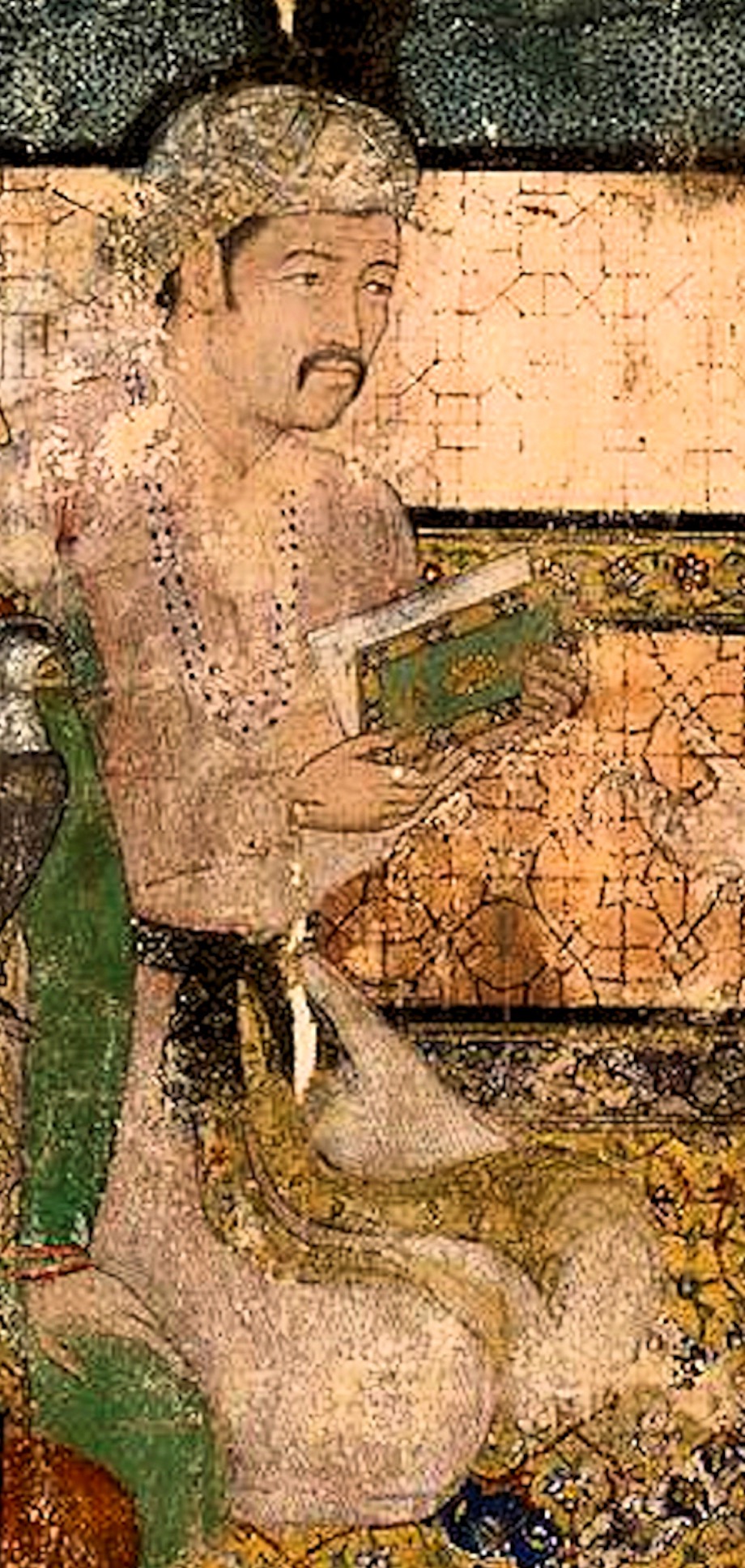
Portrait of Akbar — 1605
The question at the center of the throne
Akbar assembled men who claimed to possess religious truth and discovered that they could barely agree with one another. The emperor did not abandon the discussion. He widened it. What began among Muslim divines at Fatehpur Sikri came to include scholars and practitioners from other traditions. A dispute that might have ended by enforcing a boundary instead became an occasion to reconsider who could enter the room.
The proposed ENTP reading begins here: with an appetite for alternative explanations and a willingness to alter the premises of an institution he had created. His curiosity was neither politically innocent nor equivalent to modern secularism. He was a conquering monarch seeking knowledge, spiritual authority, and a workable relationship with the extraordinary variety of his subjects. The questions could be sincere while the answers strengthened his throne.
Born in 1542 during Humayun’s displacement, Akbar inherited the restored Mughal claim in 1556 while still a boy. Bairam Khan helped keep that claim alive. The adult emperor would conquer widely, remodel offices and revenues, commission books, and change the terms on which loyalty was offered to him. These actions leave a substantial record. They still reach us through interested witnesses, including the official historian Abu’l-Fazl and critics who understood religious experimentation as a dangerous departure.
Akbar reads as an ENTP led by dominant extraverted intuition: an inherited boundary becomes an invitation to ask what else might be possible.
Let another explanation enter
Akbar’s House of Worship, the Ibadat Khana, was established in 1575. Its early debates among Muslim scholars exposed quarrels about precedence as well as doctrine. Expanding participation did not merely add colorful guests to an unchanged ceremony. It weakened the assumption that one circle of learned men could monopolize the questions a ruler was entitled to ask. The institution’s difficulties generated a different institution within the same walls.
The arrival of Jesuit missionaries in 1580 offered another set of claims to examine. Christian visitors hoped to persuade the emperor, while the emperor could listen, question, inspect their texts and images, and remain unconvinced. The encounter mattered without culminating in conversion. For this psychological interpretation, the revealing feature is the sustained interest in a possibility that did not have to become his final allegiance. Listening was an activity in its own right.
Translation made the same openness less dependent on a single evening’s debate. Akbar’s court commissioned Persian versions of Sanskrit works, including the Mahabharata and Ramayana. Scholars collaborated across languages to make narratives and arguments accessible within the court’s principal literary medium. These were not transparent windows onto another culture: translation involved selection, explanation, and negotiation. Yet the commission itself made other traditions part of an imperial conversation rather than consigning them entirely to the people who already knew them.
Dominant extraverted intuition is a plausible name for this repeated movement from a received limit to additional alternatives. Akbar seems especially interesting where an arrangement ceases to satisfy him and he enlarges the field of inquiry. The hypothesis does not require us to imagine an emperor incapable of finishing anything. A monarch could protect a continuing exchange while ministers, translators, and artists completed its products. His power supplied the time and personnel with which curiosity could become an institution.
Who has the right to decide?
Religious disagreement posed a constitutional question as well as a spiritual one. If qualified interpreters of Islamic law offered conflicting judgments, who could decide which judgment should govern? The 1579 mahzar enhanced Akbar’s authority to choose among competing opinions under specified conditions. The document did not simply make every imperial whim a religious truth. It nevertheless altered the relationship between the sovereign and the learned authorities whose interpretations might constrain him.
The interest here lies in the move from listening to disagreement to inspecting its structure. A collection of confident speakers could not, by itself, explain why one speaker’s answer should bind the state. Akbar sought a framework within which conflict could be adjudicated. Auxiliary introverted thinking offers a tentative lens on that demand for a more coherent account of authority. It also leaves room for the obvious political benefit: the person entitled to resolve the contradiction was the emperor.
Government showed a related concern with classification and accountability. The mansab system assigned graded ranks within imperial service, while revenue reforms sought more systematic assessment. These arrangements were produced with experienced administrators and developed unevenly across a large empire. Their existence cannot independently prove Akbar’s type. They do, however, complicate the caricature of an endlessly digressive questioner. His court’s investigations could lead to distinctions that affected pay, obligation, and the inspection of service.
The Ain-i-Akbari presents a world made legible through detailed accounts of offices, resources, practices, and knowledge. Abu’l-Fazl’s ordering mind must not be merged with Akbar’s. The author selected and celebrated, and the emperor did not personally devise each regulation. What Akbar did was sustain a government in which gathering information and reformulating categories were closely linked. The psychological claim is narrower than the institutional achievement: he repeatedly allowed existing answers to become questions again.
A wider circle of allegiance
Akbar’s accommodation of Rajput houses brought marriage alliances and military service into the construction of an imperial elite. His marriage in 1562 to the daughter of Raja Bharmal of Amber, later known as Mariam-uz-Zamani, belonged to a political relationship with consequences beyond a private household. Rajput leaders could obtain significant positions without being required to abandon their religion. Cooperation expanded the people whose ambition could be pursued through the empire.
Abolishing the pilgrimage tax in 1563 and the jizya in 1564 reduced particular burdens on non-Muslim subjects. These decisions should be judged as concrete changes in the distribution of obligations, rather than as a certificate of perfect tolerance. The later ideal of sulh-i kul, peace with all, offered a broader language for an order in which different communities could be governed without religious difference alone deciding their fitness for service. A monarch’s universal appeal still assumed a monarch at its center.
Tertiary extraverted feeling helps describe the attention to a shared field of belonging. Akbar’s changes could make diverse elites participants in a common political world, while ceremonies and personal favor attached those participants to him. This was not an impersonal citizenship that existed independently of royal will. It was an ambitious management of allegiance through recognition, access, and symbols. The emotional and social dimensions of power were among the materials with which the experiment worked.
Accommodation had sharp limits. The conquest of Chittor in 1568 brought slaughter after resistance, and other campaigns subordinated communities whose rulers rejected Mughal claims. An empire could incorporate some opponents and destroy others. Religious openness did not cancel military coercion. This is central to the portrait rather than an inconvenient footnote: the man who enlarged debate also decided who would be compelled to live inside the political settlement debate helped justify. His ability to imagine inclusion coexisted with formidable powers of exclusion.
The inheritance that remained
Akbar’s revisions began from a substantial inheritance. Timurid kingship, Islamic learning, Persian literary culture, and the memories of exile furnished resources he could alter but never simply discard. Gulbadan Begum’s family history, commissioned in his reign, preserved household experience that the public record of conquest could miss. Remembering the dynasty and experimenting with its future were compatible projects. New questions did not require a blank past.
His early rule also depended on forms of intimacy older than his sovereignty. Maham Anga had been one of his foster mothers; her son Adham Khan occupied a position shaped by that household connection. In 1562 Adham’s killing of Ataga Khan forced a violent boundary between family proximity and the emperor’s authority. According to the court history, Akbar ordered Adham’s execution but later mourned Maham. The break did not make past affection unreal.
Inferior introverted sensing is the most tentative part of this reconstruction. It may describe a ruler more conspicuous for remaking inherited arrangements than for preserving their exact form. It cannot explain his administrative routines or prove a conflict between novelty and memory. Much of the surviving record presents change as purposeful royal wisdom, a literary convention that can exaggerate originality. Traditions were also carried by thousands of people whose contributions the emperor’s image gathers into a single name.
An experiment without a simple label
The practices commonly collected under the name Din-i Ilahi have generated competing descriptions: a new religion, an eclectic spiritual discipline, a circle of imperial discipleship, or an expression of sacral kingship. Treating them as a neatly organized replacement faith makes the evidence more orderly than it is. The emperor drew on several traditions and attracted a limited circle of adherents; neither fact tells us that all subjects were expected to adopt a new creed.
Akbar’s inquiry therefore resists two satisfying shortcuts. He was not merely a cynical politician pretending to care about ideas, and he was not a modern advocate of a neutral state separating religion from power. His spiritual and political projects overlapped. The useful question is how he moved within that overlap: inviting rival claims, testing the authority behind them, and assembling a conception of rule capable of holding a wider range of loyalties. The ENTP reading remains a proposal about that movement.
Why ENTP Over ENFJ
Why not ENFJ?
ENFJ makes a strong case from Akbar’s personal authority, cultivation of allegiance, and vision of an encompassing political community. The court’s elaborate presentation of the sovereign can make social integration appear to be the organizing purpose of everything he did. ENTP has a slight advantage where his inquiry broadens through disagreement and his institutions change because inherited explanations cease to satisfy him. That distinction remains uncertain because Abu’l-Fazl makes both curiosity and harmony attributes of the ideal emperor.
The choice is not between an intellectual and a statesman. Both readings can accommodate inquiry, ambition, and persuasion. ENTP places the emphasis on generating and testing alternatives before binding them into a settlement. ENFJ would place more weight on the settlement’s unifying vision. Neither can recover the private person independently of the historical voices that made his reign intelligible.
Connected Figures
Further Reading
- The Akbarnama — Abu’l-Fazl; translated by Henry BeveridgeThe official court history, indispensable when read with attention to its praise of the emperor.
- The Ain-i-Akbari — Abu’l-Fazl; translated by H. Blochmann and H. S. JarrettA detailed account of imperial institutions, learning, and the court’s view of its own order.
- The Mughal Empire — John F. RichardsA modern synthesis of conquest, administration, and the changing ideological basis of Mughal power.
- Akbar I — Fritz Lehmann; Encyclopaedia IranicaA concise scholarly overview of the reign and its religious and political changes.
