 Historical Figure MBTI
#1202 · 9-2-26 · The Mughal Empire
Sikandar Shah Suri
Sur Claimant · Opponent of Mughal Restoration
Died 1559; birth unknown
3 min read
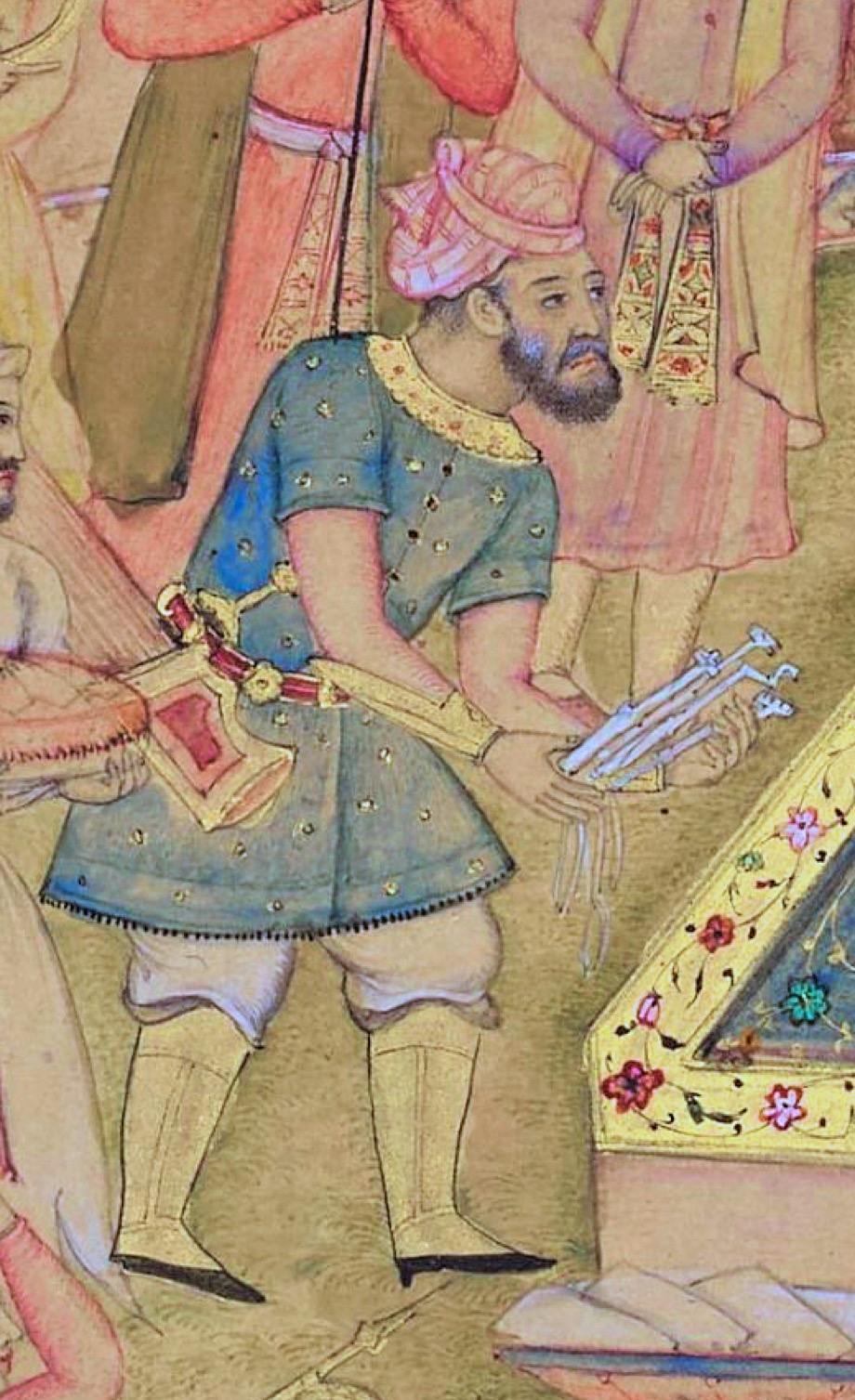
Portrait of Sikandar Shah Suri — 1595 (later depiction)
A Claim That Survived the Capital
Sikandar Shah Suri kept resisting after the centre of his kingdom had been lost. His importance lies in the distance between possession of Delhi and control of northern India. The Mughal restoration could win a capital and still face a Sur claimant with followers, regional connections, and defensible refuges. Sikandar’s career makes that unfinished conquest visible.
Previously known as Ahmad Khan Sur, he emerged among the rival rulers who divided the Sur inheritance after Islam Shah’s death in 1554. He held power in the Punjab and defeated the rival claimant Ibrahim before confronting Humayun’s returning forces. At Sirhind in June 1555 he suffered the defeat that helped open the road to Delhi for the Mughals. Withdrawal into the hills preserved a claim that battlefield defeat had weakened but not extinguished.
He should be distinguished from Sikandar Lodi and from earlier rulers of Bengal bearing the same name. This Sikandar belonged to the short-lived Sur dynasty and its succession struggle. His birth date is unknown; his death is generally placed in 1559. The outline is clearer than the person: we can follow changing military circumstances much more securely than we can recover his habitual way of thinking.
The Hills After Panipat
Humayun’s death in early 1556 created another opportunity. While Akbar and Bairam Khan faced Hemu’s advance toward Delhi, Sikandar gathered support in and around the Punjab hills. Abu’l-Fazl reports that he came out to collect revenue and that a Mughal force opposing him had to retreat toward Lahore. Stripped of the chronicler’s denunciations, the episode shows a claimant still capable of mobilizing people and resources.
After Hemu’s defeat at Panipat, Akbar’s government turned toward this remaining danger. Sikandar withdrew to Mankot, a strong fortified complex associated with Islam Shah. The siege depended on cutting access, pressing batteries forward, and weakening the network of supporters outside the walls. Such operations remind us that restoration was accomplished through pressure on local allies as well as through set battles.
Sikandar surrendered in 1557 and received assigned lands in Bihar under an agreement with the Mughal government. The Akbarnama attributes his submission to desperation while presenting Akbar’s acceptance as magnanimity. That arrangement is more securely recoverable than the humiliating motives and speeches attached to it. It converted an opponent’s independent claim into a tolerated place within the victorious order.
Connected Figures
Further Reading
- The Akbarnama, Volume II — Abu’l-Fazl; translated by Henry BeveridgeThe Mughal court account of the Sur rivals and restoration; read its political hostility critically.
- Medieval India: From Sultanat to the Mughals, Part II — Satish ChandraPlaces the Sur succession and early Mughal consolidation within their wider political setting.
- The Mughal Empire — John F. RichardsA scholarly account of the restored dynasty and the institutions of imperial rule.
