 Historical Figure MBTI
#1200 · 9-2-26 · The Mughal Empire
Islam Shah Suri
Sur Emperor · Keeper of an Inheritance
1507–1554
5 min read
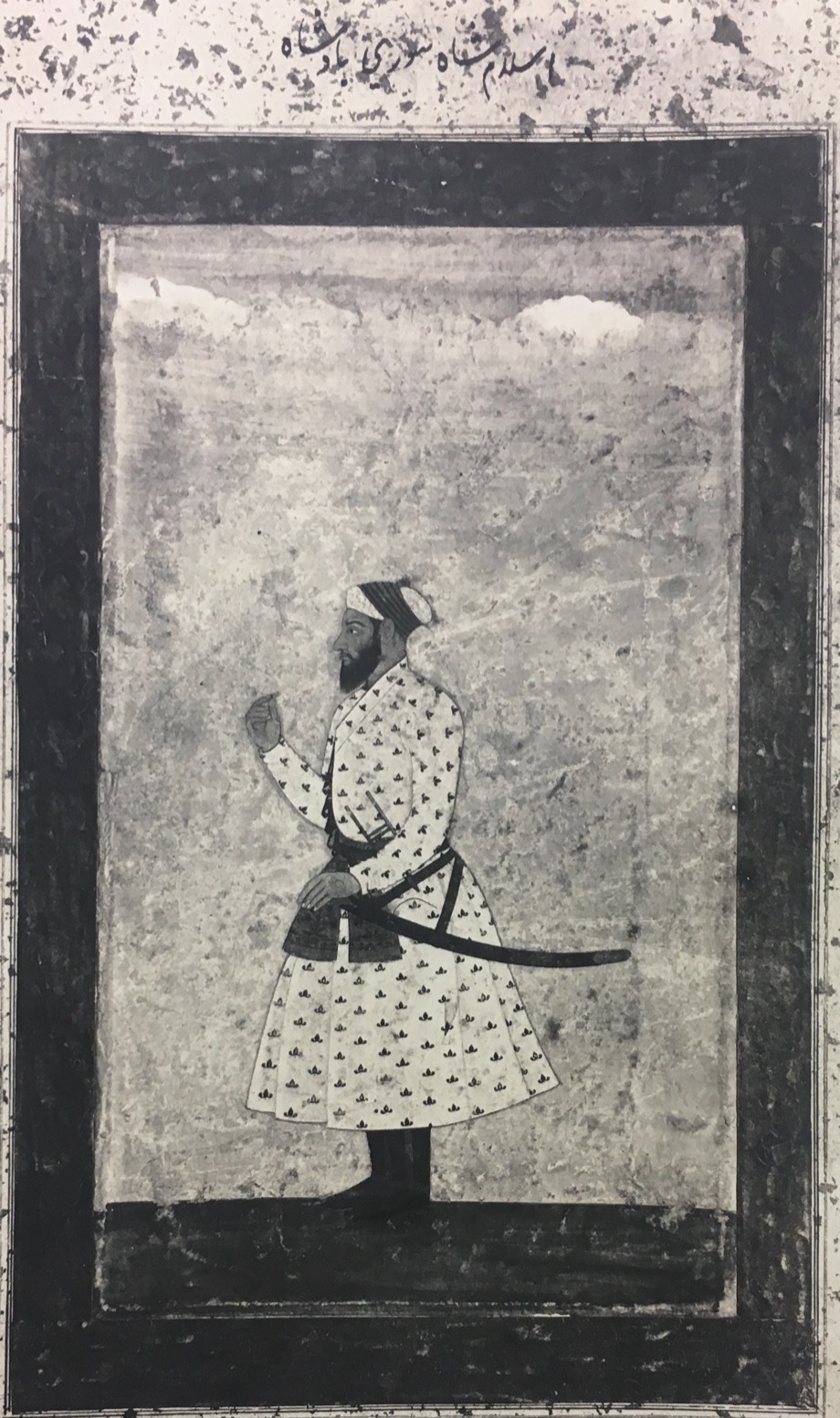
Portrait of Islam Shah Suri — retrospective depiction, 1900
The Inheritance That Would Not Obey
Islam Shah inherited more than Sher Shah’s throne. He inherited commanders accustomed to bargaining, provinces whose rulers could turn office into independent power, and an empire held together by a recently dead conqueror. His response was to press harder on obedience. The reign from 1545 to 1554 preserved the Sur state, but its survival depended increasingly on his ability to restrain the men who sustained it.
Born Jalal Khan in 1507, he was Sher Shah’s younger son. The urgency of the succession after his father’s death at Kalinjar helped him secure the crown ahead of his elder brother Adil Khan. That brother should not be confused with Muhammad Adil Shah, the later ruler served by Hemu. Conflict within the dynasty began immediately; consolidating the inheritance was an active political struggle, not an interval of quiet maintenance.
The proposed ESTJ reading has low confidence. It rests on the reported effort to make regulations, military organization, and noble conduct answer to central authority. Chronicles preserve a ruler’s commands much better than his inner reasoning. Authoritarian office alone cannot distinguish a type, and the following interpretation remains narrower than his whole personality.
The tentative ESTJ verdict locates dominant Extraverted Thinking in Islam Shah’s effort to turn a fragile inheritance into explicit, enforced obligations.
Command Above the Commanders
The early challenge from his brother exposed the insecurity of his accession. Islam Shah defeated the rival force near Agra, but resistance among leading Afghans continued. The Niazi rebellion became a prolonged struggle across the Punjab and its approaches. His government had to fight for the authority that its proclamations already assumed. Suppression was thus not an occasional interruption to administration; it was one of administration’s conditions.
Later narratives describe detailed regulations binding officials and nobles, restrictions on displays of royal privilege, and military organization in graded bodies. Not every reported rule can be dated or interpreted with equal certainty. Taken together, however, they show an effort to separate the sovereign’s powers from those of his servants. A commander might hold resources, but the ruler intended to define what that possession permitted.
That pattern supports an Extraverted Thinking interpretation more than the mere fact of sternness does. He sought compliance through an external structure of duties and penalties. The same system could produce harshness and fear. Its effectiveness in preserving his own position is not evidence that those who lived under it experienced predictable or equitable government.
Keeping the Machinery in Motion
Islam Shah continued the administrative and communications apparatus associated with his father. Accounts credit him with additional resting places and attention to the relays that carried information. Such details belong to the practical geography of rule: roads needed upkeep, messages needed stages, and a distant court needed news before a provincial crisis became irretrievable. Continuity required repeated expenditure and supervision rather than reverence for Sher Shah’s name.
Fortification supplied another form of continuity. The Mankot complex, associated in the chronicles with Islam Shah’s campaigns near the hills, became a refuge for Sikandar Sur after the Mughal return. Abu’l-Fazl describes its connected strongholds, defensible position, water, and provisions. Even a hostile account acknowledged the concrete strength of the installation. Infrastructure could outlive its builder’s political purpose and serve a different claimant.
Auxiliary Introverted Sensing is a cautious label for maintaining and extending inherited arrangements. It does not imply an unchanging reign. Islam Shah revised the relationship between crown and nobility, and some reports portray him as anxious to legislate in his own right. The psychological argument concerns his reliance on defined, repeatable operations rather than an assumption that a son must resemble his father.
The Cost of Personal Sovereignty
His distrust of major nobles is central to the narrative, but it is difficult to separate temperament from danger. Men who had helped create the dynasty could support alternative claimants; a summons to court could therefore look like either an administrative demand or preparation for arrest. The chronicles describe lethal reprisals and the destruction of former allies. Read critically, these episodes expose the human cost of consolidation without supplying a dependable private confession.
An inferior Introverted Feeling reading remains especially weak. There may have been an intensely personal equation of loyalty with right conduct, but royal rhetoric and accusations by frightened rivals cannot establish its inward basis. No claim about hidden tenderness or wounded sensitivity is needed. The firmer conclusion is political: Islam Shah made the crown less negotiable, while reducing the trust that might have helped his dynasty survive another succession.
Testing the ESTJ Reading
Why not ISTJ?
Continuity, regulations, and inherited institutions also support an ISTJ possibility. ESTJ is weakly preferred because the sources emphasize imposing a public hierarchy and directing other people’s conduct. Yet chronicles of kings are structured around commands, so they may exaggerate precisely that appearance. The distinction should remain low confidence, not be inferred from severity or from his occupation.
Islam Shah’s record supports a style of rule more securely than a complete psychological stack. The tentative verdict is a ruler who organized outwardly and preserved through enforcement; ISTJ remains plausible where the evidence cannot distinguish initiative from dutiful conservation.
Connected Figures
Further Reading
- Tarikh-i-Daudi — AbdullahAn Afghan dynastic narrative preserving accounts of Islam Shah; compare its anecdotes with other chronicles.
- The Akbarnama, Volume II — Abu’l-Fazl; translated by Henry BeveridgeThe Mughal court account of the Sur rivals and restoration; read its political hostility critically.
- Medieval India: From Sultanat to the Mughals, Part II — Satish ChandraPlaces the Sur succession and early Mughal consolidation within their wider political setting.
- The Mughal Empire — John F. RichardsA scholarly account of the restored dynasty and the institutions of imperial rule.
