 Historical Figure MBTI
#1195 · 9-1-26 · The Mughal Empire
Humayun
Mughal Emperor · Exile · Restorer
1508–1556
6 min read
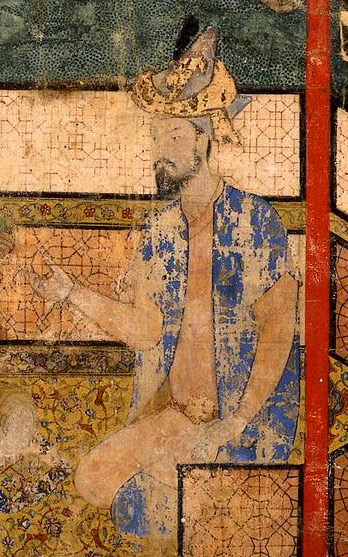
Portrait of Humayun — c. 1550–1555
The kingdom he could imagine
Humayun wanted his brothers around the same table. In Gulbadan Begum's memoir, a reunion becomes more than a diplomatic settlement: the emperor remembers his sister's wish to see the family together and makes their shared meal an image of concord. The scene is fragile. These men command separate armies, and their followers have recently wanted one another dead. Humayun nevertheless invests the gathering with a meaning larger than the agreement that permits it. His throne should belong to a restored human order, not merely to the last prince standing.
An INFP reading begins with that investment in personally meaningful possibilities. It does not begin with a defeated army, an interest in astrology, or the familiar picture of an ineffectual dreamer. Humayun conducted successful campaigns, recovered Kabul, and returned to Delhi. The more distinctive question is how he judged obligations when expediency pushed the other way. Our answer remains tentative: memoirists describe conduct and remembered speech, rather than the private reasoning a confident personality judgment would require.
Humayun suggests INFP with dominant Introverted Feeling: a ruler repeatedly trying to make political survival answer to personal loyalty.
The brother before the enemy — Fi dominant
Gulbadan presents repeated reconciliations as something Humayun actively desired. At the brothers' meeting, he grounds his goodwill in his own intention toward them; he does not simply announce that peace will strengthen the dynasty. This distinction matters. A preference for internally held values would appear when an emperor keeps asking whether an available decision is bearable to his conscience, even after others have calculated its advantages. The memoir's Humayun often seems to ask that question.
The strongest test comes with Kamran's final capture. Officers who have endured his rebellions press Humayun to punish him. In Gulbadan's account, the emperor recognizes their argument while resisting it emotionally, then requires a written collective judgment. He ultimately orders Kamran blinded. This is neither proof of limitless mercy nor a harmless compromise: mutilation ended his brother's political prospects through deliberate violence. Yet the delay and the demand for attestation show the weight he gave the conflict between kinship and kingship. Gulbadan's final chapter preserves that collision, through the eyes of a sister with loyalties of her own.
An empire of correspondences — Ne auxiliary
Humayun's inventions make an unusually revealing companion to his family politics. Planetary colors, elemental divisions of government, and astrologically patterned tents drew connections among objects that an ordinary administrative scheme would keep separate. Such designs do not establish a type by themselves; astrology offered a serious language of sovereignty in his world. What interests us is the proliferation of forms. Clothing, portable architecture, ceremony, and office could all become experiments in translating a larger order into visible arrangements.
This is the most plausible evidence for Extraverted Intuition: a tendency to discover several possible expressions of an idea rather than confine imagination to one settled image. His artistic patronage similarly opened a route between cultural worlds. The Persian painters Mir Sayyid Ali and Abd al-Samad joined his court at Kabul and later accompanied him to India, contributing to the atelier Akbar would expand. Barbara Schmitz's account of Persian painting traces that movement. Exile supplied practical contacts, but Humayun also made room for skills whose value extended beyond recovering territory.
The family remembered — Si tertiary
When Kabul was recovered, Gulbadan records provision for widows, orphans, and relatives of men lost in earlier disasters. The dead from Chausa, Kanauj, and the years of displacement remained part of the restored court's obligations. Her language celebrates the emperor, so its picture of universal contentment should not be accepted literally. The concrete measures are more useful: pensions, rations, land, and attendants convert remembrance into support. The household has a past that victory must repair.
Tertiary Introverted Sensing offers a modest way of understanding this attachment to continuity. Humayun's imaginative arrangements did not require him to discard the inherited Timurid household. The old connections remained emotionally and politically substantial. His memory of Gulbadan's wish at the brothers' meal is another small example: a personal remark survives displacement and returns to give a present occasion its significance. These episodes suggest selective fidelity to remembered experience. They do not prove that he systematically trusted precedent over every new possibility.
The remembered household also complicates his celebrated gentleness. Gulbadan describes an excursion during which delays angered him; he later demanded written apologies from the women who had inconvenienced the departure. A ruler invested in intimate company could still impose hierarchy on it. This is useful counterevidence against a flattering portrait: his personal attachments did not automatically grant others equal authority. The same man could arrange shared enjoyment and resent its disruption. An inwardly valued harmony may remain quite different from harmony experienced by everyone whom its author expects to participate.
The work of returning — Te inferior
No interpretation survives if it turns Humayun's eventual success into somebody else's achievement. His return depended on troops, alliances, command, and the weakening of his opponents. Safavid assistance helped him recover an Afghan base; the later campaign into northern India required sustained military organization. Bairam Khan's contribution belongs in that history, but collaboration does not erase the emperor's agency. The man who valued reconciliation could also seize cities and compel submission.
Calling Extraverted Thinking inferior therefore means a proposed tension, not an absence of ability. Humayun's record suggests that impersonal requirements became most painful when they contradicted his preferred moral settlement. The written advice against Kamran is revealing precisely because he eventually acts on it. An external judgment helps authorize a decision he cannot reconcile easily with brotherhood. Political circumstance explains much of this behavior without personality theory. The function language earns its place only if it directs attention to that recurring friction rather than converting every setback into a defect.
Why INFP over INFJ?
Why not INFJ?
The symbolic court could suggest an organizing inward vision, while reconciliation could suggest concern for collective harmony. Yet the surviving episodes more often show Humayun multiplying symbolic arrangements and defending personal obligations than consistently steering others toward one future settlement. His appeal at the family reunion begins from what lies in his own heart. This gives INFP a slight advantage, with low confidence.
The distinction rests on patterns of judgment, not on which type is supposedly more gentle. We lack enough unmediated material to establish the order of his preferences. An INFJ interpretation remains credible, and the cultural conventions surrounding an emperor can resemble either account. The archive's label is a disciplined hypothesis about the man these sources allow us to glimpse.
Connected Figures
Further Reading
- The History of Humayun (Humayun-nama) — Gulbadan Begum; translated by Annette S. BeveridgeA family memoir whose intimate scenes and loyalties require reading together.
- The Mughal Empire — John F. RichardsPlaces the brothers' conflicts within the formation of Mughal military power.
- Three Memoirs of Humayun — Wheeler M. Thackston, editor and translatorBrings Gulbadan, Jauhar, and Bayazid Bayat into one comparative collection.
- Homayun Padeshah — Wheeler M. Thackston, Encyclopaedia IranicaA concise scholarly chronology of exile, restoration, and courtly interests.
