 Historical Figure MBTI
#1197 · 9-1-26 · The Mughal Empire
Kamran Mirza
Mughal Prince · Poet · Rival Brother
c. 1509–1557
5 min read
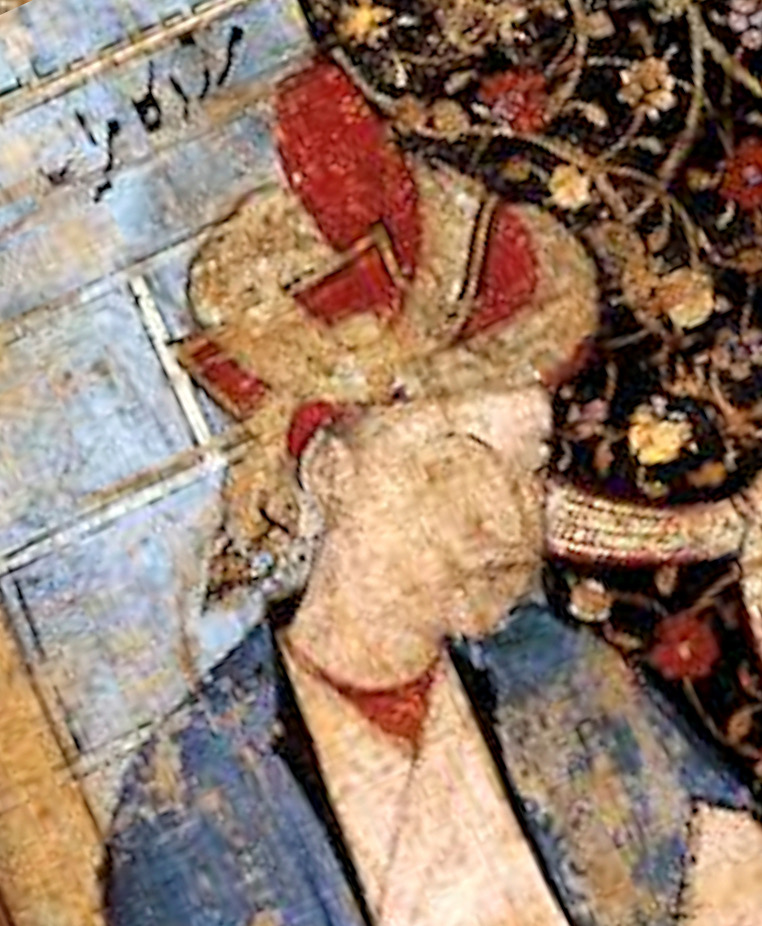
Portrait of Kamran Mirza — detail from The Princes of the House of Timur, c. 1550–1555
The brother with another center
Kamran Mirza did not understand his place in the dynasty as waiting obediently for Humayun's instructions. His territories gave him troops, revenues, and a court. Kabul was not a distant possession on his brother's map; it was a center from which he could exercise power himself. When the family's Indian kingdom collapsed, that independence became more consequential. A brother might offer refuge, bargain for precedence, or make the claimant's return harder. Kinship did not settle which role he would choose.
His repeated political adjustments make ESTP a plausible, low-confidence hypothesis. The argument concerns responsiveness to usable advantage and an apparently independent tactical calculus. It does not concern rebellion as a personality symptom. Nor can it ignore the poet: Kamran wrote in Persian and Chagatai Turkish, and some contemporaries praised qualities that the victorious dynasty's narrative obscured. A portrait assembled entirely from his enemies would mistake their verdict for his mind.
Kamran Mirza tentatively suggests ESTP with dominant Extraverted Sensing: power pursued through the opportunities a changing situation placed within reach.
Territory before agreement — Se dominant
Babur entrusted Kamran with Kandahar when he was young. He later governed the Punjab and held Kabul during Humayun's displacement. These were substantial commands, and his defense of Kandahar against a Safavid force in 1536 demonstrates military competence independent of the fraternal struggle. His position cannot be reduced to a sequence of jealous intrusions. He had acquired practical experience of defending an actual domain and the resources to resist being treated as merely its custodian.
The proposed Extraverted Sensing emphasis appears in the way available territory repeatedly becomes leverage. Reconciliations do not consistently bind his subsequent choices; altered circumstances reopen the question of what can be held or taken. Such behavior could follow rational princely incentives without revealing a cognitive preference. Still, the recurrence suggests a political attention drawn toward immediate command and actionable openings. He treats an unstable settlement as something to test against the present balance of force, rather than as an obligation already settled by the family's seniority.
His own reckoning — Ti auxiliary
Gulbadan's account of the final crisis depicts Kamran seeking help from the Sur ruler Islam Shah, called Salim Shah in her narrative. After hearing that the ruler wished to destroy him, he fled without notifying his own following. The men left behind bore the consequences. The episode is hostile testimony, recorded by a grieving sister, and its claim to know another ruler's private remarks deserves particular caution. Nevertheless, it presents the same prince reassessing an alliance in terms of its newly perceived danger.
Introverted Thinking is suggested here as reliance on his own situational calculation, even when it violates the expectations of those attached to him. This does not turn abandonment into evidence of superior logic. It asks whose judgment authorizes the change: in the memoir, Kamran decides for himself that remaining has become untenable and acts before his following can participate. We lack the letters or deliberations needed to know how he reached that conclusion. The account supports a tentative pattern of autonomy, not a reconstruction of the thoughts inside his head.
The cultivated prince — Fe tertiary
The literary record interrupts the convenient picture of a man made only of appetite and intrigue. Sunil Sharma's Iranica biography notes the survival of Kamran's divan and the disagreement among writers: some emphasize bravery, generosity, learning, and piety, while Abu'l-Fazl condemns him. Courtly verse placed him within a shared language of refinement. His standing could be expressed through the cultivated recognition of peers as well as through armed possession.
Tertiary Extraverted Feeling is possible as sensitivity to that social register, but poetry alone establishes neither sociability nor empathy. A ghazal is an art with inherited conventions, not a transparent psychological confession. The strongest claim is therefore modest: Kamran could operate within the cultivated exchanges of his world, and his political conduct did not exhaust his capacities. The literary prince and the rival commander belong to the same life. Keeping them together prevents a type label from becoming a moral cartoon.
Why ESTP over ENTJ?
Why not ENTJ?
Independent rule and sustained ambition could suggest ENTJ. The surviving narrative more clearly displays repeated adjustments to immediate opportunity than the implementation of a durable, coordinated institutional project. Kamran's moves often preserve personal freedom while disrupting the alliances that might secure a larger settlement. That favors ESTP slightly, but political instability itself could explain much of the pattern.
A failed bid for sovereignty is not evidence against strategic thought, just as successful maneuvering would not prove a particular type. We chiefly possess retrospective accounts written around his brother's recovery. The label remains provisional because those accounts give us decisions without a reliable sequence of deliberations.
Connected Figures
Further Reading
- The History of Humayun (Humayun-nama) — Gulbadan Begum; translated by Annette S. BeveridgeA family memoir whose intimate scenes and loyalties require reading together.
- The Mughal Empire — John F. RichardsPlaces the brothers' conflicts within the formation of Mughal military power.
- Three Memoirs of Humayun — Wheeler M. Thackston, editor and translatorBrings Gulbadan, Jauhar, and Bayazid Bayat into one comparative collection.
- Kamran Mirza — Sunil Sharma, Encyclopaedia IranicaBalances political rebellion with poetry and the disagreement among chroniclers.
- Divan-e Mirza Kamran: farsi — Kamran Mirza; edited by Mahfuz al-HaqqThe prince's Persian verse offers a necessary counterweight to hostile political narratives.
