 Historical Figure MBTI
#844 · 6-18-26 · The American Civil War
Ambrose Burnside
Union General · Fredericksburg Commander
1824 — 1881
6 min read
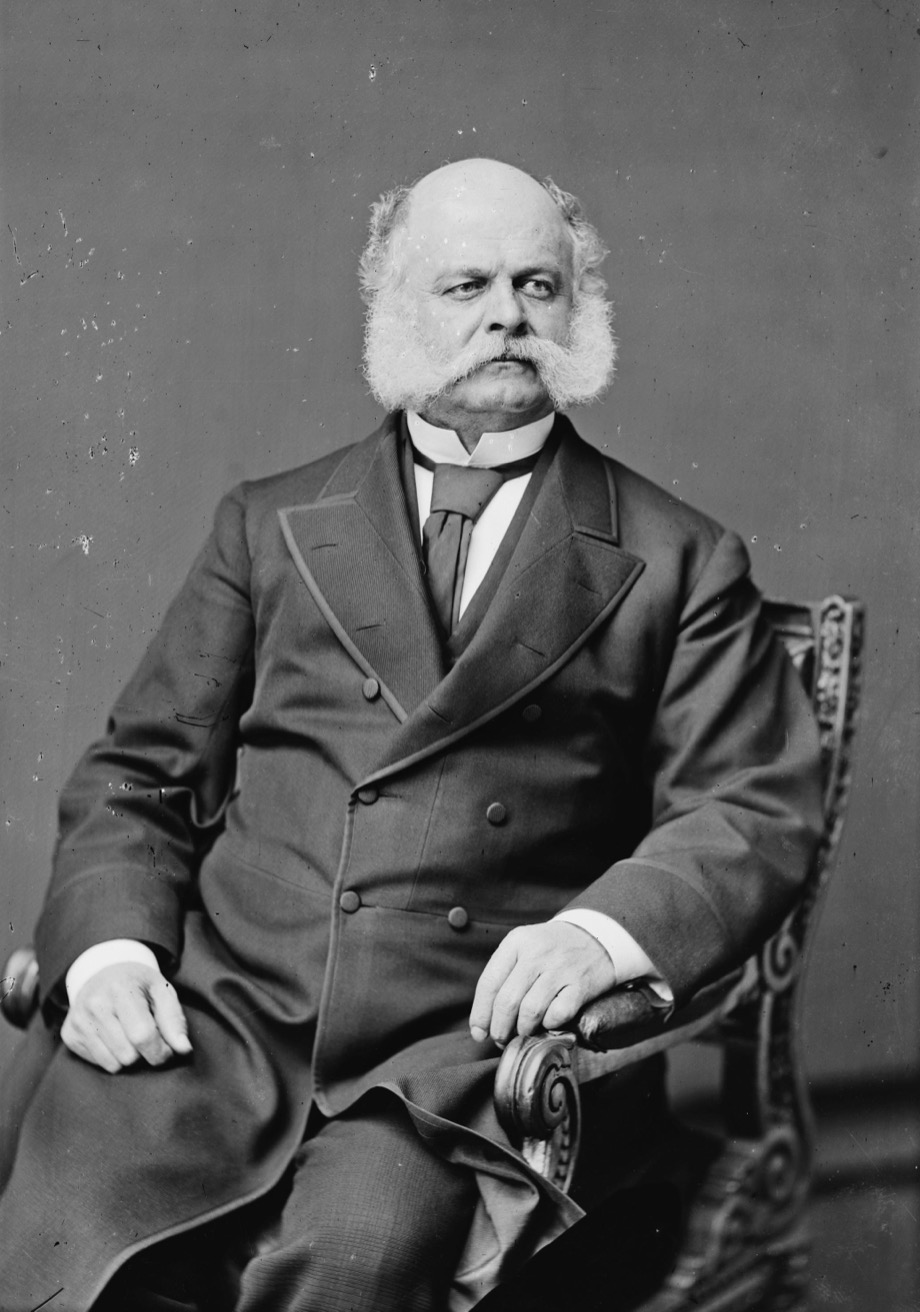
Photograph of Ambrose Burnside, c. 1860s
The Man Who Kept Saying No
Twice, Ambrose Burnside was offered command of the Army of the Potomac, and twice he turned it down — not out of modesty performed for an audience, but because he genuinely did not believe he was equal to it. When Lincoln asked a third time in November 1862, Burnside accepted the way a dutiful officer accepts an order he wishes had gone to someone else: because refusing again felt like a greater failure than accepting. He was, by every account, likable — warm with his men, loyal to superiors and subordinates alike, quick to shoulder blame rather than deflect it. He grew the whiskers that would give English the word "sideburns," and wore them, like everything else about him, without vanity.
That same steadiness had served him well on the North Carolina coast, where he ran a difficult amphibious campaign against Roanoke Island and New Bern with real competence. But command of the whole army asked for something he did not have in reserve: the willingness, mid-crisis, to throw out a plan that circumstances had already ruined. At Fredericksburg, with his pontoon bridges delayed and surprise lost, he pressed forward anyway, sending wave after wave up the open slope of Marye's Heights into a wall of Confederate fire. It was not recklessness. It was the opposite — a rigid, almost dutiful refusal to abandon the approved plan once it was set in motion. The pattern recurred two years later at the Crater, when a last-minute change of orders, forced on him from above, sent the wrong men into a breach he had carefully prepared — and Burnside, ever the subordinate, complied rather than object. He is best read as an ISFJ, a temperament built for steadfastness and service, undone by exactly the situations that asked it to bend.
Burnside was not a coward or a fool — he was an ISFJ commanding an army, a man whose dominant Introverted Sensing bound him to the plan as given, long after the plan had stopped making sense.
The Plan as Scripture
Burnside's dominant Introverted Sensing showed up as an almost physical loyalty to the approved plan — the map already drawn, the order already given. At Fredericksburg, the plan called for a swift crossing of the Rappahannock before Lee could concentrate his army on the heights above the town. The pontoon bridges arrived late. The moment of surprise the whole plan depended on had already evaporated by the time the army crossed. A more improvisational commander might have paused, reconsidered, found another axis of attack. Burnside crossed anyway and attacked anyway, because the plan was the plan.
This was not stupidity; it was a specific cognitive habit. Si orients toward the known, the verified, the previously established procedure — it trusts what has already been laid down more than what the present moment is telling it. Burnside had internalized the operational plan so completely that abandoning it, even as its premises collapsed around him, felt less like sound judgment than like a betrayal of the men who were counting on him to execute it as ordered.
Obligation Wearing a Friendly Face
Auxiliary Extraverted Feeling gave Burnside the warmth that made him one of the more personally liked men in the Union officer corps, and it also supplied the sense of duty to the chain of command that overrode his own private misgivings. When Lincoln pressed him a third time to take the army, Burnside's objections were sincere, but so was his conviction that a soldier does not refuse his country when called — an internalized obligation to the president, the army, and the men whose morale depended on someone being willing to lead them.
That same Fe is visible in how gracefully he accepted his own fall. After Fredericksburg, demoted to lead a corps under officers he had previously outranked — a humiliation many generals answered with public bitterness — Burnside served under Grant and Meade without visible rancor, because loyalty to the larger effort mattered more to him than his own standing within it.
The Alternative He Couldn't See
Inferior Extraverted Intuition is the function that scans a situation for the branching possibilities within it — the alternate route, the unplanned opening, the option nobody wrote down in advance. It was Burnside's weakest faculty, and its absence is the through-line of his worst days in command. At Fredericksburg, once the crossing had gone wrong, a commander strong in Ne might have looked at Marye's Heights and found another angle of approach, another target, another day. Burnside looked at the same ground and saw only the order he had already been given, executed against a landscape that no longer matched the plan.
It surfaces again at the Crater, where Burnside had trained a division specifically for the fluid, unscripted moment of exploiting a breach — and then, when superiors substituted an unready division at the last hour, did not fight to preserve the advantage he had built. An ISFJ's inferior Ne does not vanish under pressure; it simply goes quiet, leaving Si to keep marching down the road already chosen.
Why ISFJ Over ESFJ
Why not ESFJ?
An ESFJ commander would have led through overt, outward warmth — actively rallying, persuading, and reassuring through personal presence and charisma. Burnside's dutifulness ran quieter and more inward: his repeated refusals of army command reflect a private, internally weighed self-doubt, Si measuring his own fitness against a standard he held for himself, not a socially performed humility staged for others. And when he finally did act, it was through rigid adherence to the existing procedure and structure rather than the warmer, more adaptive people-management an ESFJ tends to bring to a crisis.
The distinction matters because it explains both his likability and his failure with the same mechanism. An ESFJ who blundered at Fredericksburg would likely have talked his way through the chaos, rallying subordinates in real time. Burnside instead retreated into the discipline of the plan itself, trusting the structure to hold even as it visibly failed him — the signature of Si-Fe under pressure, not Fe-Si: procedure over persuasion, obligation over improvisation.
Connected Figures
Further Reading
- Burnside — William MarvelThe standard biography — sympathetic without minimizing Fredericksburg.
- The Fredericksburg Campaign: Winter War on the Rappahannock — Francis A. O'ReillyThe definitive account of the campaign and battle, hour by hour.
- Battle Cry of Freedom: The Civil War Era — James M. McPhersonPlaces Burnside's tenure within the broader arc of Union command changes.
