 Historical Figure MBTI
#831 · 6-16-26 · The American Civil War
Robert E. Lee
The General Who Chose Virginia Over the Union
1807–1870
10 min read
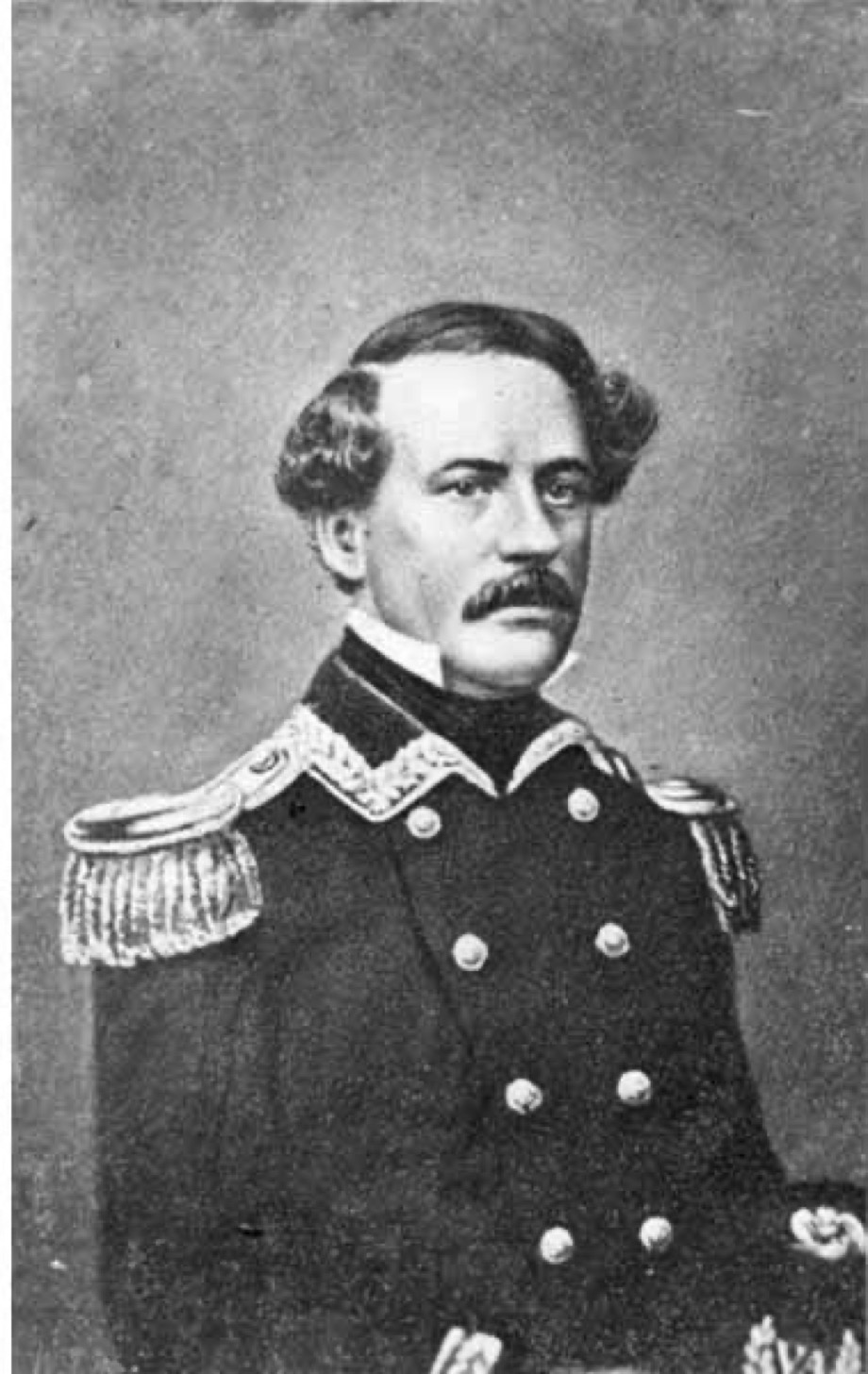
Portrait of Robert E. Lee
The Debt He Was Born Into
In April 1861, in a Washington townhouse, Francis Preston Blair offered Robert E. Lee command of the army the United States was raising to put down the rebellion. The offer came with the authority of Abraham Lincoln behind it and the endorsement of Winfield Scott, the general who had watched Lee scout the roads around Mexico City fourteen years earlier and concluded he was the finest soldier he had ever seen in the field. Lee declined. He then rode to Scott's office and told him so in person — Scott's reply, as Lee remembered it, was that he had made the greatest mistake of his life. Two days later Virginia's convention voted to secede; two days after that, Lee resigned his commission of thirty-two years.
What makes the refusal psychologically legible is what Lee did not say. He did not argue that secession was constitutional — in a letter that January he called it "revolution" and "anarchy," and said that if the Union could only be held together by swords and bayonets it had lost its value. He did not argue for slavery's expansion. He owned enslaved people, married into one of the largest slaveholding estates in Virginia, and administered the Custis slaves at Arlington harshly enough to produce a documented whipping of recaptured runaways in 1859; his 1856 letter calling slavery "a moral and political evil" also argued that emancipation should be left to Providence. None of that was the reason he refused. He refused because he could not raise his hand against Virginia — not the Confederacy, which barely existed yet, but Virginia: the ground, the graves, the name.
That distinction is the whole man. Lee spent his life discharging obligations he had inherited rather than chosen, and the largest of them was his father. "Light-Horse Harry" Lee had been Washington's cavalryman and Virginia's governor, and he ended a debtor, jailed, maimed by a Baltimore mob, dead on a stranger's island having abandoned the family. Robert was six. Everything afterward — the flawless West Point record, the punctilious letters, the almost oppressive personal correctness — reads as a son quietly repaying a ledger someone else ran up. When the war came, the ledger decided.
Lee was an ISFJ whose dominant Introverted Sensing bound him not to a cause but to a place, a lineage, and a debt — and who then fought, brilliantly and for four years, on behalf of a republic he had privately judged a mistake.
Si — The Inheritance as a Standing Order
Introverted Sensing is loyalty to what has already been established: the remembered standard, the precedent, the particular place. Lee's version of it was total. At West Point he graduated second in the class of 1829 without accruing a single demerit in four years — a record so rare it functioned less as achievement than as a statement about what he intended never to be. He was the son of a man whose signature had become worthless. The demerit-free record was a counter-signature.
The same fidelity governed his career. Seventeen years as an engineer, dredging the Mississippi at St. Louis and building coastal forts, work that consists almost entirely of doing exactly what the specification says. In Mexico under Scott he distinguished himself by reconnaissance — riding the lava beds of the Pedregal at night, alone, to establish precisely where the ground would bear an army. Superintendent at West Point, 1852 to 1855, custodian of the code that had made him. In 1859 he was on leave at Arlington settling his father-in-law's estate when he was handed the detachment sent to Harpers Ferry; he took the enginehouse in three minutes and delivered John Brown to Virginia for trial, and thought the raid the work of a fanatic — a disturbance of an order he assumed would hold.
Then 1861 asked him which order. The Si answer was never in doubt, and Lee's own account of it is entirely concrete: he could not draw his sword against "my relatives, my children, my home." Not against secession's logic, which he rejected; against the house at Arlington, the Virginia dead, the family name he had spent fifty years rehabilitating. Dominant Si does not compute an abstract balance of legitimacy. It knows where it is from, and treats that as a standing order. The tragedy — and it must be named as one — is that the specific home he could not betray was a slaveholding society, and his refusal to abstract from it made him the most effective instrument that society ever had.
Fe — Courtesy as Command
Lee commanded almost entirely through relationship. He gave few direct orders and fewer reprimands; his instructions to corps commanders were famously discretionary — take that hill "if practicable" — and worked because the men receiving them wanted badly not to disappoint him. That is auxiliary Extraverted Feeling doing the work that a Te commander would do with a written directive and a court-martial. When J.E.B. Stuart rode a humiliating circuit around the Army of the Potomac, Lee's response was warm indulgence; when Stuart's absence blinded him before Gettysburg, his rebuke amounted to a few quiet sentences. James Longstreet he called "my old war horse" and kept close precisely because Longstreet argued with him. Toward Jefferson Davis, a president who quarrelled with nearly every general he had, Lee maintained four years of unbroken deference and was the only one Davis never fought — a feat of social management, not of luck.
The devotion ran downward and came back up. He rode among the ranks bareheaded; the army called him "Marse Robert" and cheered him in a way that unnerved Northern observers. After the third day at Gettysburg he rode out to meet the survivors of Pickett's charge and told them, repeatedly, that it was all his fault — a public assumption of blame that is Fe's characteristic instrument for holding a shattered group together. Two weeks later he offered Davis his resignation in writing. It was refused.
What the courtesy covered was considerable feeling. The private letters — assembled most fully by Elizabeth Brown Pryor — show a man in real anguish over casualty lists, writing to his daughters about the "horrid" business, saying it is well that war is so terrible lest men grow too fond of it, and then ordering another frontal assault the following week. This is the Si-Fe stack under strain rather than hypocrisy: the obligation is not negotiable, so the grief is carried alongside it. Lee felt the cost of every battle and never once let feeling revise the duty that produced it.
Ti — The Arithmetic of Audacity
The surprise of Lee's generalship is how little it resembles his character. The man of unbroken decorum, handed the army outside Richmond in June 1862 after Joseph E. Johnston fell wounded at Seven Pines, immediately began taking risks that no cautious officer would touch. Within a month he had stripped the Richmond defenses to a screen and thrown almost his whole force across the Chickahominy at McClellan's exposed right — the Seven Days, which drove a far larger army back to the James. In August he split his army in the presence of the enemy, sent Jackson fifty miles into Pope's rear at Manassas Junction, and destroyed him at Second Bull Run. At Chancellorsville in May 1863 he did it twice in one battle: divided in the face of a force more than double his own, then divided again to send Jackson around the Union right through the Wilderness. It remains the most audacious battlefield decision made by an American.
That is tertiary Introverted Thinking working at a very high level — private, internally consistent analysis of a particular problem, unconcerned with what the manual says. Lee's calculations were real ones. He understood that an outnumbered army holding a line loses by attrition, and that the only arithmetic favoring the Confederacy was a short war ended by breaking Northern political will — which meant seeking battle and winning it conspicuously. He read opposing commanders as variables — McClellan would hesitate, Pope would overreach, Hooker would lose his nerve — and staked armies on those readings.
Ti in the third slot is also where the errors live. It is confident without being self-correcting, and it does not naturally price in what it has not modeled. Lee's two invasions of the North were both Ti propositions — carry the war out of Virginia, feed the army on Pennsylvania grain, force a battle that would move Northern opinion — and both failed for reasons outside the model. Antietam in September 1862 became the bloodiest single day in American history and cost him the campaign and, indirectly, the diplomatic war, since it gave Lincoln the victory he needed to issue the Emancipation Proclamation. Gettysburg was worse: three days in July 1863 in which Lee, without Stuart's cavalry and against Longstreet's explicit and repeated objection, sent roughly 12,500 men across three-quarters of a mile of open ground into the center of a fortified Union line. Barely half came back.
Ne — The Future He Would Not Look At
Inferior Extraverted Intuition shows up as a blind spot about consequences that have not yet taken concrete form. Lee could see a battlefield with extraordinary clarity and could not see, or would not, the political and industrial shape of the war he was fighting. He had judged secession a catastrophe in January 1861 and never revised the judgment; he simply stopped applying it. The question of what a Confederate victory would actually build — a permanent slaveholding republic on the North American continent — is one he appears never to have worked through, because the duty that delivered him to it had never been an argument in the first place.
It shows too in his sense of the war's scale. Lee thought in terms of the Army of Northern Virginia and the ground between Washington and Richmond; the Mississippi theater, the blockade, and the manpower arithmetic that would decide the outcome regardless were consistently undervalued in his counsel to Davis. He argued that summer against detaching troops west, reasoning that a victory in Pennsylvania would relieve everything. Vicksburg fell the day after Pickett's charge.
And it shows in the moment of failure. Confronted at Gettysburg with an alternative — Longstreet pressing him to disengage and maneuver around the Union left toward Washington, forcing Meade to attack him on ground of his own choosing — Lee could not take it up. Under stress the inferior function does not generate options; it narrows. The enemy was there, his army had never failed him, and he went straight at the center. He said afterward, more than once, that it was his fault, and he was describing something accurate about himself.
Why ISFJ Over ISTJ
Why not ISTJ?
ISTJ is the standard reading, and it is drawn almost entirely from the surface: the demerit-free cadet, the engineer, the immaculate uniform. But Te-Si decides by rule and system, and Lee's decisions were governed by felt obligation to specific people and places — Virginia, his father's name, the men in front of him. A Te dominant weighing April 1861 would have reasoned from the oath, the Constitution, and the legal status of secession, all of which pointed at the Union, and Lee had already reached that conclusion on the merits before setting it aside. Nor does Te-Si produce Chancellorsville: the ISTJ pattern is to hold the established position and make the enemy pay for it, whereas Lee repeatedly divided an outnumbered army on a private reading of the ground and handed the execution to subordinates on trust. That combination — immovable on obligation, startlingly flexible on method — is Si-Fe with Ti underneath, not Si-Te.
The two types diverge most clearly on where authority comes from. An ISTJ's loyalty attaches to the institution and its rules, and survives a change of personnel; Lee's attached to a particular soil and a particular set of faces, and could therefore be turned against the institution he had served for thirty-two years without any sense of contradiction. He was not a legalist who chose the wrong law. He was a man for whom law was never the operative category — which is why the choice cost him everything, why he made it in two days, and why he never afterward defended it in political terms. He defended it in terms of home.
Connected Figures
Further Reading
- R.E. Lee: A Biography — Douglas Southall FreemanThe monumental four-volume life (1934–35). Indispensable for the campaigns and openly reverent about the man — read it as evidence of the Lee legend as much as of Lee.
- Reading the Man: A Portrait of Robert E. Lee Through His Private Letters — Elizabeth Brown PryorThe best psychological source: Lee in his own hand on his father, his marriage, slavery, and the cost of the war.
- Lee's Lieutenants: A Study in Command — Douglas Southall FreemanHow Lee actually commanded — discretionary orders, personal trust, and the corps-level consequences at Gettysburg.
- Robert E. Lee and Me: A Southerner's Reckoning with the Myth of the Lost Cause — Ty SeiduleA West Point historian dismantling the marble-man tradition he was raised in; the necessary corrective to Freeman.
- The Marble Man: Robert E. Lee and His Image in American Society — Thomas L. ConnellyThe classic study of how the postwar Lost Cause manufactured the Lee most Americans think they know.
