 Historical Figure MBTI
#814 · 6-14-26 · The American Civil War
John Brown
The Prophet Who Chose Violence
1800–1859
8 min read
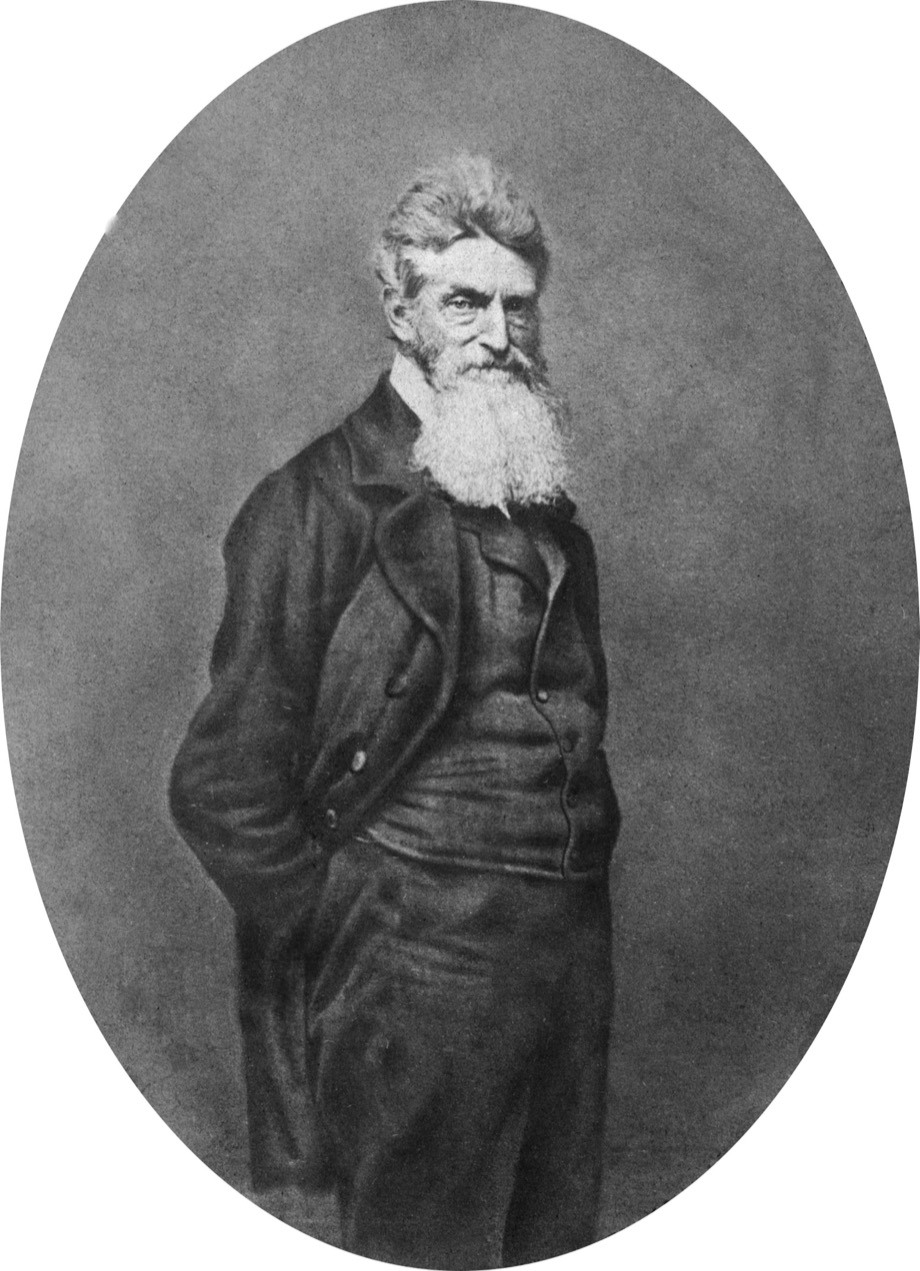
Portrait of John Brown
The Man Who Believed the Vision Was Not His Own
On the morning of December 2, 1859, John Brown handed a guard at the Charles Town jail a scrap of paper. “I John Brown am now quite certain that the crimes of this guilty land will never be purged away but with Blood,” it read. He had written it hours before his hanging, and it was not a prediction so much as a report — the last dispatch from a man who had been watching the same future unfold behind his eyes for thirty years. Within eighteen months the country would begin proving him right at a cost of six hundred thousand lives.
Nothing in the outward record explains him. He was a failed businessman many times over — tanneries, sheep, wool brokerage, land speculation — a Calvinist from Torrington, Connecticut who bankrupted himself in one venture after another and buried children with grim regularity. He was not eloquent in the way Wendell Phillips was eloquent, not organized in the way William Lloyd Garrison was organized. What he had instead was a single fixed image of himself as an instrument chosen for one purpose, and an absolute refusal to let evidence revise it.
That combination — a private conviction treated as revelation, welded to a genuine and unusual warmth toward actual human beings — is the signature of a INFJ operating at the far edge of what the type can do. Brown is the archive’s hardest case precisely because the same machinery that made him morally clear-eyed a decade before the respectable abolitionists also made him capable of dragging five men from their cabins at midnight on Pottawatomie Creek and hacking them to death.
An INFJ whose dominant Ni had hardened into prophecy — the vision arrived once, complete, and every subsequent fact was made to serve it.
The Vision Arrived Once and Never Moved
Brown’s sons remembered him swearing an oath against slavery in the family kitchen sometime in the 1830s, decades before he had any plausible means of acting on it. By 1847, sitting in his Springfield rooms with Frederick Douglass, he was already describing the plan he would die attempting: a chain of armed refuges running down the Allegheny spine, drawing enslaved people out of the plantations in a slow hemorrhage that would make the system economically unholdable. Douglass thought it fantasy. Brown described it as a map he had been shown.
This is the tell of dominant Introverted Intuition rather than ordinary political conviction: the picture came first, whole, and the twenty years that followed were spent looking for a world that would accommodate it. When he went to Kansas in 1855 to join the fight over whether the territory would enter free or slave, he did not go as a settler with a grievance; he went because Kansas had finally produced a landscape that matched the image. When Kansas subsided into an uneasy truce, he did not conclude that the moment had passed. He concluded that Kansas had been rehearsal.
Ni-dominance of this severity is unfalsifiable from the inside. Every setback was read as confirmation — the failure of the free-soil legislature proved that ballots were useless, the Fugitive Slave Act proved that the North was already conquered territory, the eventual collapse at Harpers Ferry he interpreted, on the scaffold, as the necessary opening of a longer war. He was right about that last one, which is the uncomfortable part. A vision immune to evidence is usually just delusion. Brown’s happened to be aimed at something real, and he saw its shape a full decade before Abraham Lincoln would concede that the Union could not endure half slave and half free.
He Felt It as a Wound, Not a Position
The abolitionist movement was full of white men who opposed slavery and could not sit at a table with a Black man as an equal. Brown was the conspicuous exception, and the exception was not theoretical. In 1849 he moved his family to North Elba, New York, into the Black farming settlement Gerrit Smith had established at Timbuctoo, and lived there as a neighbor. He ate with Black families in an era when white guests did not. Douglass, who had every reason to be sparing with such praise, wrote that Brown was “in sympathy a black man,” and that though a white man, “he is in sympathy as deeply interested in our cause as though his own soul had been pierced with the iron of slavery.”
Harriet Tubman, whom he called “General Tubman,” helped him map Underground Railroad contacts in Canada and would have joined the raid had illness not kept her away. Shields Green, an escaped man from South Carolina, sat through the 1859 quarry meeting near Chambersburg where Douglass warned Brown he was walking into a steel trap — and when Douglass rose to leave, Green said he believed he would go with the old man. He hanged for it. That kind of loyalty is not extracted by charisma alone; it is extended to people who have demonstrated, over years, that they mean it.
Auxiliary Extraverted Feeling is what turned the vision outward and made it recruitable. Brown did not merely hold a belief about slavery; he absorbed the suffering of enslaved people as a felt injury to himself and could not put it down. The same faculty appears in the domestic record — twenty children, a long correspondence full of tenderness and anxiety, letters to Mary Ann Brown that read like a man apologizing for a life he could not stop living. Two of his sons died at Harpers Ferry. He had brought them himself.
A Constitution for a Country That Did Not Exist
In May 1858, at a convention in Chatham, Ontario, Brown presented delegates with a forty-eight-article document titled the Provisional Constitution and Ordinances for the People of the United States. It established a congress, a supreme court, a treasury, rules for the disposition of captured property, and a prohibition on profanity and drunkenness in the ranks. It was internally coherent, legally literate, and attached to no territory, population, or army. The convention elected him commander-in-chief of a force that consisted of about twenty men.
Tertiary Introverted Thinking works exactly this way: it builds elegant, self-consistent frameworks and never audits their premises. Brown could reason with real rigor once the goal was fixed — his fundraising with the Secret Six was shrewd, his cover story as “Isaac Smith” renting the Kennedy farmhouse was competently maintained, his arms procurement (nearly a thousand pikes ordered from a Connecticut forge) was executed methodically. What he never subjected to the same scrutiny was whether the plan itself could work.
The gap shows plainly at Harpers Ferry. He seized the federal armory on the night of October 16, 1859 with twenty-one men, took hostages, and then simply stopped — no line of retreat prepared, no messenger sent into the countryside, no mechanism for the uprising he had assumed would ignite on its own. He had allowed himself to be surrounded in a town between two rivers. Within thirty-six hours a company of Marines under Robert E. Lee broke the engine-house door. Ten of his men were dead, including two sons. Douglass had told him, at the quarry, exactly this.
Pottawatomie, and the Violence That Came Out Sideways
On the night of May 24, 1856, three days after pro-slavery forces sacked Lawrence, Brown led a party including four of his sons along Pottawatomie Creek in Kansas. They called five men out of three cabins — Doyle and two of his sons, Wilkinson, Sherman — and killed them with broadswords in the dark. None was a slaveholder. None was armed. Brown never publicly confessed to the killings and never expressed regret for them, describing the act only as something done under the authority of God.
Inferior Extraverted Sensing is the shadow function of the INFJ, and it does not surface as competence. It surfaces as an eruption — the abstract vision suddenly demanding physical enactment, and the physical world being handled with a crudeness the rest of the personality would never tolerate in thought. Brown’s relationship to the concrete was always like this: businesses run into the ground because he could not manage the material facts of ledgers and markets, and then, when he finally reached for action, an action of shocking bodily literalism.
Harpers Ferry has the same structure at larger scale. He understood the armory symbolically, as the place where the war would be lit, and gave almost no thought to it as terrain — rivers, rail lines, a militia within an hour. His genuine gift for the sensory world was narrow and one-directional: he could stage an image. The pikes, the provisional constitution, the long white beard grown in his last years, the calm on the scaffold. He could not operate the world, but he could give it a picture it would not be able to forget.
Why INFJ Over INFP
Why not INFP?
The INFP reading is tempting — the private moral absolutism, the religious interiority, the refusal to compromise. But dominant Introverted Feeling guards a value system rather than imposing a future; its characteristic move is withdrawal into integrity, not the organization of other people toward a plan. Brown did the opposite at every turn: he convened a constitutional convention, recruited a standing corps, cultivated the Secret Six for years, and traveled to Rochester and Chambersburg to press Douglass into a campaign Douglass did not want. Fi keeps itself uncoerced; Brown’s Ni-Fe axis was built to conscript.
Why not ISFJ?
The Calvinist upbringing and the dutiful, patriarchal household invite an Si reading, and ISFJs do carry moral obligation heavily. But Si reasons from precedent and works inside inherited structure, and Brown broke with essentially every structure available to him — the churches, the Republican Party, the Constitution he proposed to replace, the nonviolent abolitionism of Garrison that had defined the movement for thirty years. A man who drafts his own government for a country that does not exist is not tradition-bound.
What settles it is the direction of travel. Brown’s conviction was not a possession he protected but a future he intended to install, and installing it required other people — money from Gerrit Smith, theological cover from Theodore Parker, drilled recruits, a chain of command. That is Ni supplying the destination and Fe building the vehicle, with Ti drafting the paperwork and inferior Se finally reaching for the sword. The Pottawatomie killings are not an argument against the typing; they are what the stack looks like when the vision at the top has stopped accepting correction from anything below it.
Connected Figures
Further Reading
- John Brown, Abolitionist — David S. ReynoldsThe fullest modern biography, and the strongest case for Brown as a political actor rather than a fanatic.
- Midnight Rising: John Brown and the Raid That Sparked the Civil War — Tony HorwitzNarrative account of the conspiracy and the raid itself, hour by hour at Harpers Ferry.
- To Purge This Land with Blood: A Biography of John Brown — Stephen B. OatesThe standard earlier life; unsparing on Kansas and the Pottawatomie killings.
- Life and Times of Frederick Douglass — Frederick DouglassContains Douglass's own account of the Springfield conversations and the quarry meeting at Chambersburg.
- The Life and Letters of John Brown — Franklin B. SanbornCompiled by a member of the Secret Six; partisan, but the primary source for much of the correspondence.
