 Historical Figure MBTI
#822 · 6-14-26 · The American Civil War
Mary Ann Day Brown
The Wife Left to Bury Him
1816–1884
3 min read
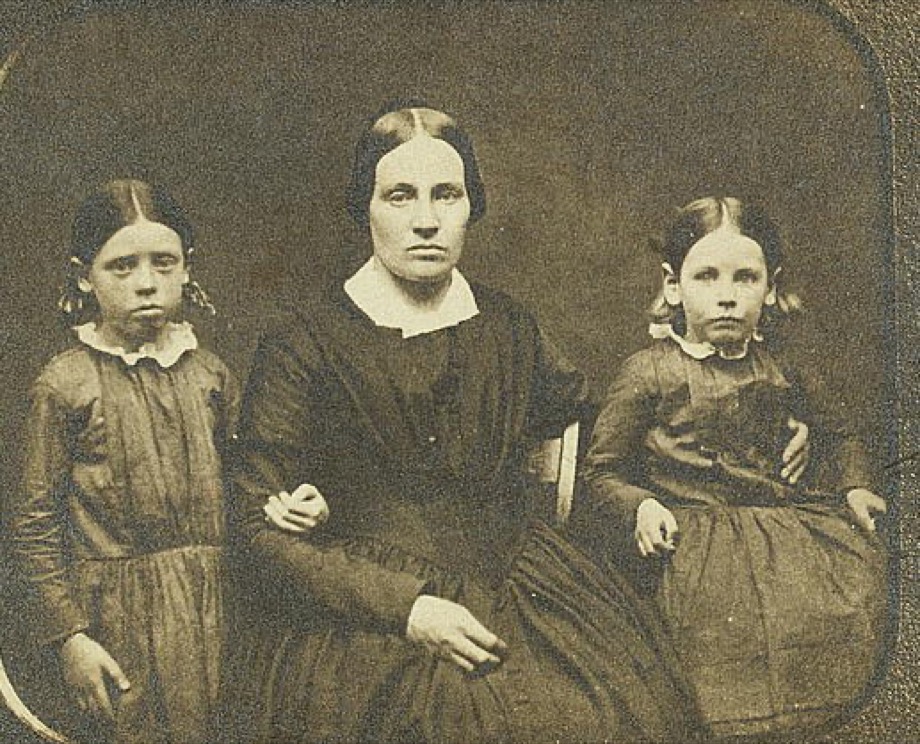
Portrait of Mary Ann Day Brown
The Farm She Never Let Fail
Mary Ann Day was seventeen when she married John Brown in 1833, a widower twice her age with five surviving children and a business already prone to collapse. Over the next three decades she bore him thirteen more children of her own, buried more of them than she raised, and ran the household — first in Ohio, then on the hard, thin soil of North Elba, New York — through years when her husband was gone chasing wool contracts, land schemes, and eventually a war he believed God had assigned him. None of it broke into disorder. Bills got paid or didn't, but the accounts were kept; children were fed on whatever the season allowed; the farm kept functioning as a going concern because someone had to hold the actual, physical shape of a family together while its patriarch was off holding the shape of the country's conscience instead.
She was not an ideologue and never pretended to be one. Brown's abolitionism was his cause, argued and organized and eventually armed; Mary Ann's cause was narrower and, in its way, harder — this specific man, these specific children, this specific plot of land, kept intact against the odds for as long as intact was possible. When Harpers Ferry ended in his capture, she went to Virginia not to make a statement but to see him before the state hanged him, and stayed to claim his body when it was over. She then spent the remaining decades of her life exactly as she'd spent the ones before it — managing, enduring, defending the record of a marriage that history had made public property.
Mary Ann Brown was ISTJ to the bone — a temperament built for unglamorous continuity, married to a man who supplied all the drama a household could survive.
Her dominant Si held two decades of domestic and financial detail in working order without complaint or improvisation; her auxiliary Te turned that memory into decisions — what got sold, what got planted, what got paid first — when there was no one else to make them. Underneath, a tertiary Fi kept her loyalty fixed on the marriage itself rather than on the cause that consumed it, and an inferior Ne that rarely surfaced meant she was never tempted toward the speculative ventures that kept sinking her husband's finances. She was, in short, the type that made his type survivable — and the type that outlived him to tell the story straight.
Connected Figures
Further Reading
- John Brown, Abolitionist — David S. ReynoldsThe definitive modern biography of John Brown, with substantial detail on Mary Ann's role in the household.
- Midnight Rising: John Brown and the Raid That Sparked the Civil War — Tony HorwitzA narrative account of Harpers Ferry that follows Mary Ann's journey to Virginia after the raid.
- The Tribunal: Responses to John Brown and the Harpers Ferry Raid — John Stauffer and Zoe Trodd (eds.)Primary-source collection situating the family's private life against public reaction to the raid.
