 Historical Figure MBTI
#821 · 6-14-26 · The American Civil War
Theodore Parker
The Preacher Who Called for Holy War
1810–1860
6 min read
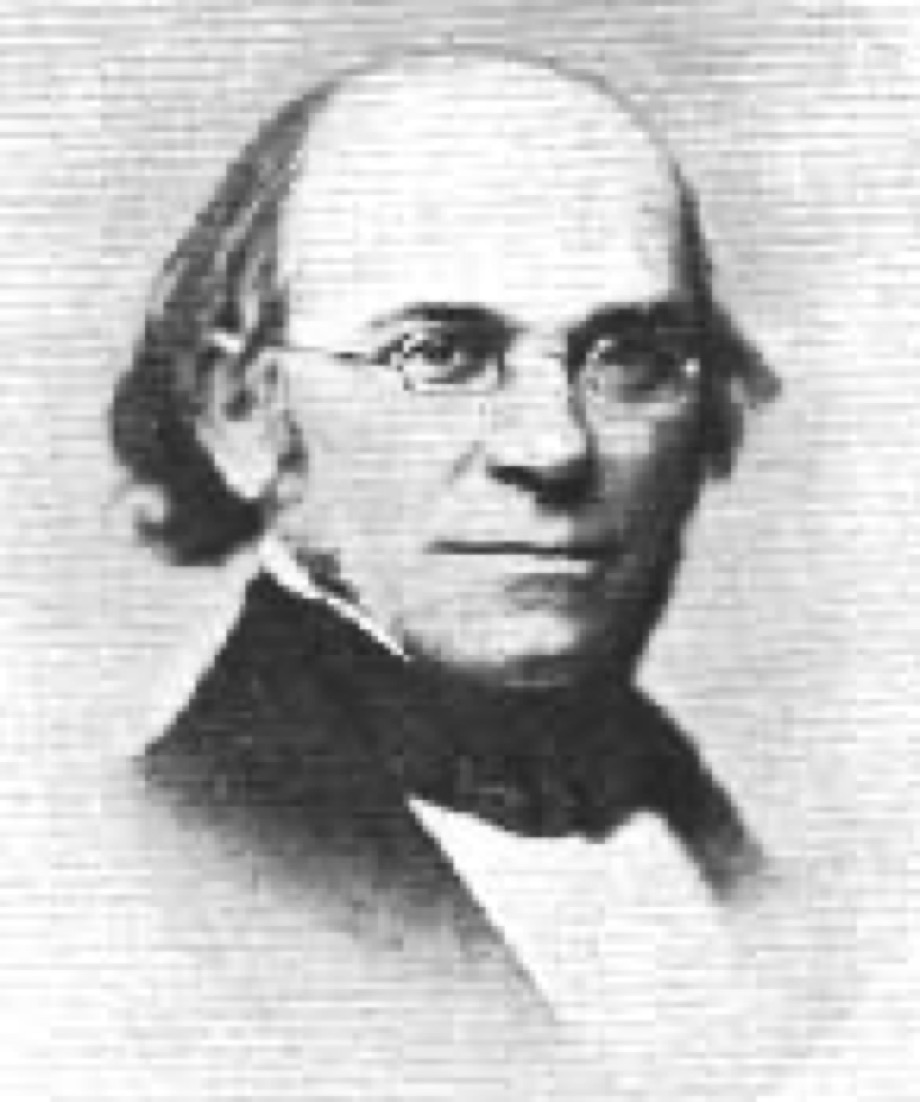
Portrait of Theodore Parker
A Library Turned Into a Weapon
Theodore Parker read in twenty languages and preached to two thousand people every Sunday in Boston's Music Hall, and he treated both facts as tools rather than trophies. Contemporaries called him the most learned man in America; Parker himself seemed to regard erudition as wasted unless it could be aimed at something. He spent two decades building a theological system that stripped Christianity down to what he called its permanent, universal core — and then spent that same authority insisting slavery was not a regrettable policy but a violation of a moral order higher than the United States Constitution.
That is the signature of an INTJ: a mind that does not react to injustice case by case but constructs, patiently and from first principles, an entire architecture for why the injustice cannot stand — then spends the rest of its life executing the blueprint. Parker preached, published, organized fugitive slave rescues, and eventually helped bankroll the raid on Harpers Ferry, each act flowing from the same long-held conviction rather than from the passions of the moment. He died in Florence in 1860, still defending John Brown in print while healthier men on the same committee scattered for the border.
Parker did not stumble into radicalism through outrage. He arrived at it through argument, built it into doctrine, and then organized men and money to make the doctrine real — the whole arc of an INTJ conviction, from private vision to executed plan.
The Long View From the Pulpit
Parker's dominant Ni shows up first as theology, not politics. His famous 1841 sermon "The Transient and Permanent in Christianity" argued that scripture and ritual were disposable scaffolding around a small, unchanging moral core — an argument that cost him most of his fellow Unitarian ministers' pulpits and forced him into an independent congregation of his own. That willingness to discard the entire visible structure of his profession in favor of an inward, long-range pattern he trusted more than consensus is Ni in its purest form.
The same faculty drove his politics. Where most abolitionists argued slavery case by case — this cruelty, this auction, this runaway — Parker built a single totalizing frame: slavery violated a "higher law" that stood above the Constitution and above any statute Congress could pass, including the Fugitive Slave Act. It is not incidental that the phrase later immortalized by Martin Luther King Jr., that the arc of the moral universe bends toward justice, originated in Parker's own sermons. It is exactly the kind of image a dominant-Ni mind produces: history compressed into a single, quietly confident shape, seen whole before anyone else has finished describing the parts.
By the time he was advising the men who would fund Harpers Ferry, Parker had already lived inside that vision for twenty years. Brown's raid was not a plan Parker was talked into; it was the terminus of a trajectory he had been tracing since his first heretical sermon.
Building the Infrastructure of Resistance
Vision alone does not organize a fugitive slave rescue or move money to a man planning an armed raid on a federal armory. That took Parker's auxiliary Te, the function that converts conviction into operations. He was, informally, the most effective administrator among the Secret Six — the loose committee of Northern intellectuals and philanthropists who bankrolled John Brown. Parker corresponded, coordinated, kept the group's nerve steady, and pushed the abstract case for "higher law" resistance into concrete acts: sheltering escaped slaves, disrupting renditions, raising money.
His preaching itself was an act of Te discipline as much as inspiration. Parker wrote and delivered sermons at a volume that startled even his admirers, effectively mass-producing the intellectual infrastructure of radical abolitionism one Sunday at a time, because he understood that a movement needs institutions and repeated argument, not a single electrifying speech. When Harpers Ferry collapsed and most of the Secret Six fled to Canada or recanted, Parker — already dying of tuberculosis in Europe — kept defending the raid in print. It was the same executive instinct that had built the case for a decade, refusing to let the project go slack even as his own body failed.
A Conscience That Would Not Bargain
Underneath the system-building sat a tertiary Fi that gave Parker's politics their absolutist edge. Other Boston reformers hedged, negotiated, or waited for the political process; Parker treated compromise on slavery as a personal moral injury, not a tactical setback. That is why "higher law" language mattered to him specifically — it let him say, in effect, that his own conscience outranked an act of Congress, and mean it literally enough to break federal law over it.
That private, unnegotiable core is also what let him keep supporting Brown after the raid failed, when doing so carried real legal risk and had already ruined the reputations of colder-headed allies. Fi at this depth in an INTJ rarely shows itself in warmth; it shows itself in refusal — the flat, quiet unwillingness to recant a conviction just because the world has made it costly.
Why INTJ Over ENTJ
Why not ENTJ?
An ENTJ abolitionist would have led from the front — running for office, commanding attention, negotiating coalitions in public. Parker did the opposite: he built his case in the study and the pulpit, in twenty languages of reading most of his allies never saw, and let the conclusions speak for him rather than his presence. His energy ran toward introverted synthesis, not external command, and his organizing with the Secret Six was conducted quietly, by letter and by trusted small groups, never as a public campaign for authority.
The clearest tell is what Parker did with disagreement. An ENTJ meets resistance by contesting it directly and rallying people to a stated position; Parker met it by retreating further into doctrine, writing more, and trusting that the argument itself — once fully built — would eventually be vindicated. He was proven right by history, but not because he out-argued his critics in the moment. He simply outlasted them, one sermon and one pamphlet at a time, which is the mark of Ni conviction working through Te execution rather than the reverse.
Connected Figures
Further Reading
- Theodore Parker: American Transcendentalist — Dean GrodzinsThe standard modern biography, tracing Parker's theology into his radical politics.
- Midnight Rising: John Brown and the Raid That Sparked the Civil War — Tony HorwitzCovers the Secret Six and Parker's role in financing and defending the Harpers Ferry raid.
- The Transient and Permanent in Christianity — Theodore ParkerParker's landmark 1841 sermon, the theological break that defined his independent ministry.
