 Historical Figure MBTI
#819 · 6-14-26 · The American Civil War
Gerrit Smith
The Millionaire Who Funded the Raid
1797–1874
3 min read
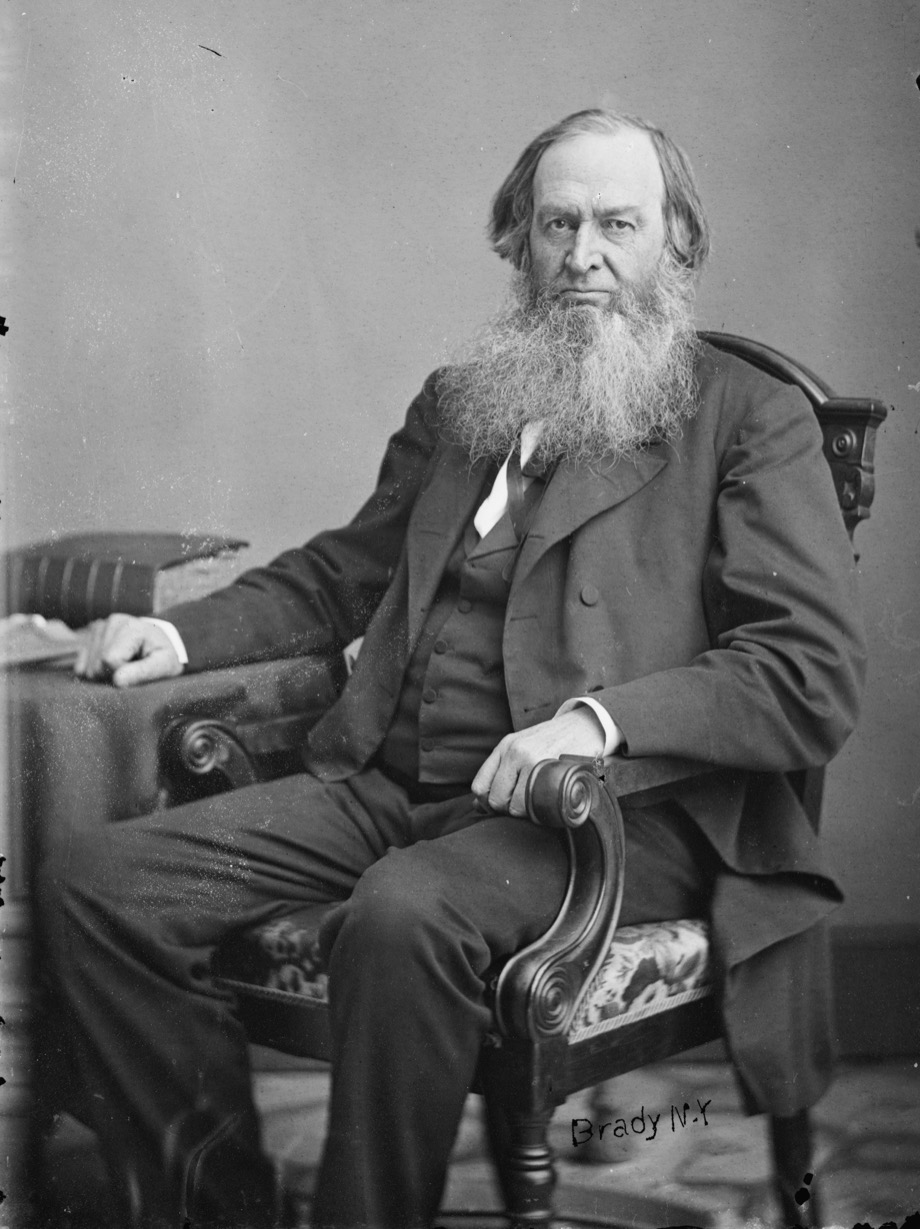
Portrait of Gerrit Smith
A Fortune Spent on One Idea
Gerrit Smith inherited one of the largest private landholdings in New York State and spent most of his adult life giving it away in pursuit of a single, unwavering vision: a nation without slavery, without drink, and without the caste lines that kept Black Americans landless and poor. In 1846 he deeded 120,000 acres in the Adirondacks to roughly three thousand Black families, hoping to create a self-sufficient farming settlement — Timbuctoo — that would also satisfy New York's property requirement for Black male suffrage. The land was rocky and remote and the settlement never truly took hold, but among the families who tried was Thomas and Mary Brown, whose son John Brown would later buy a farm nearby at North Elba specifically to help guide the settlers.
Smith ran for president three times on abolitionist third-party tickets he knew he could not win, sat in Congress briefly, and bankrolled temperance societies, prison reform, and Black colleges — always the same pattern, a fortune converted into leverage for a fixed moral picture of what America should become. That pattern reached its limit in 1859, when Smith, as one of the "Secret Six," helped finance John Brown's raid on Harpers Ferry without knowing its exact shape. When the raid collapsed and Brown's papers surfaced naming his backers, Smith did not flee to Canada as some of his co-conspirators did. He came apart at home, and was committed to an asylum within weeks.
Smith was an INFJ whose Ni vision of a just society ran so far ahead of the world's consent that the gap between them, once exposed, broke him rather than the other way around.
What makes Smith legible as an INFJ isn't the money — plenty of wealthy men funded causes. It's the totalizing, single-track quality of the vision itself, pursued for decades without regard to its odds of success, and the collapse that followed once that private conviction collided with a public consequence he hadn't fully priced in.
Connected Figures
Further Reading
- Gerrit Smith: A Biography — Ralph Volney HarlowThe standard biography, covering the Timbuctoo grants and the 1859 breakdown.
- Midnight Rising: John Brown and the Raid That Sparked the Civil War — Tony HorwitzCovers the Secret Six and Smith's collapse after Harpers Ferry.
- The Secret Six: The True Tale of the Men Who Conspired with John Brown — Edward J. Renehan Jr.Focused study of Smith and his co-conspirators.
- Gerrit Smith's Land Gifts to Black Families — John Brown Lives! (Timbuctoo scholarship)On the Adirondack settlement and its ties to John Brown's North Elba farm.
