 Historical Figure MBTI
#818 · 6-14-26 · The American Civil War
Wendell Phillips
The Aristocrat Who Became an Agitator
1811–1884
6 min read
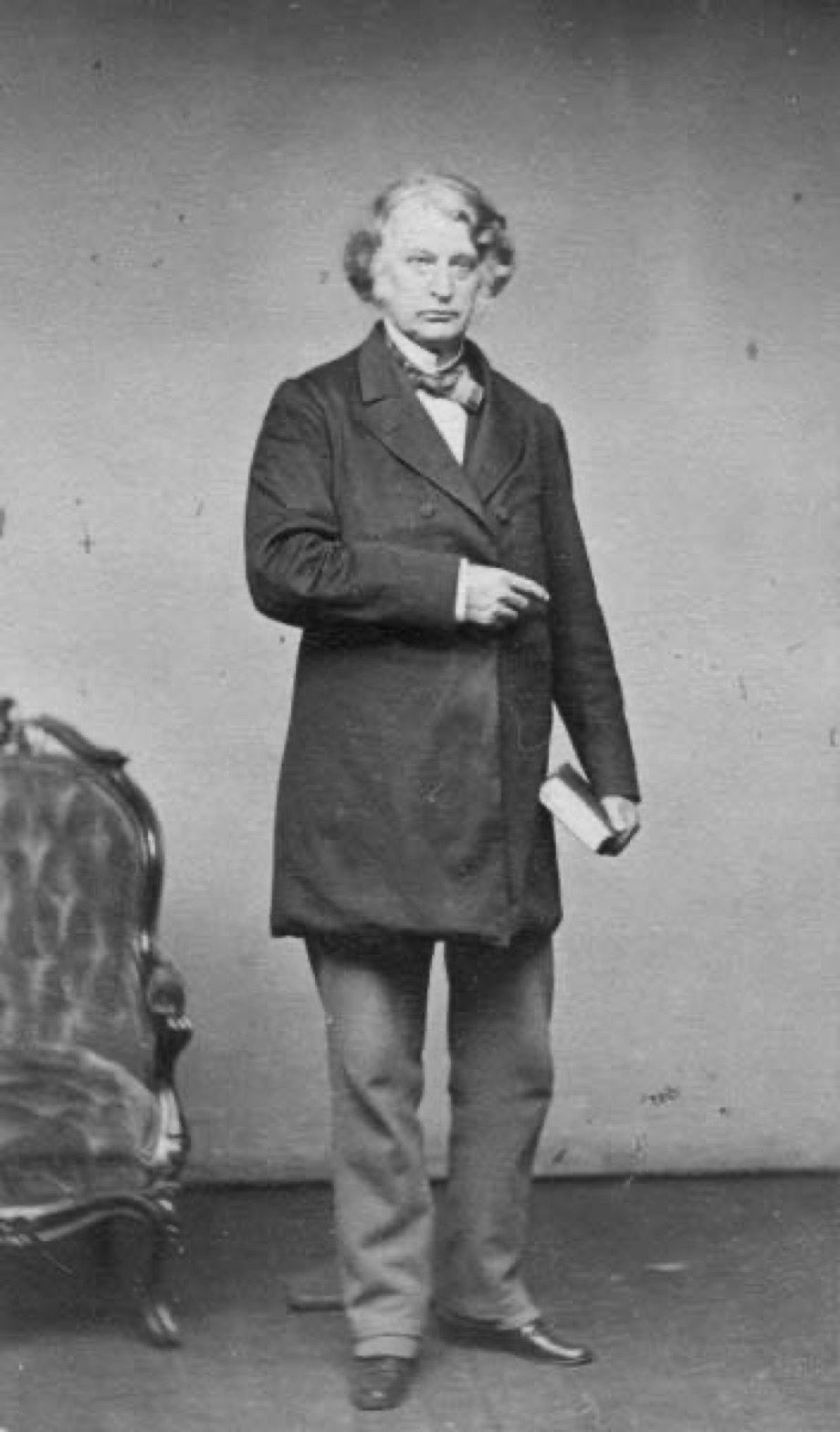
Portrait of Wendell Phillips
The Brahmin Who Chose the Mob
Wendell Phillips was born in 1811 into everything Boston had to offer a young man of promise — old money, a Harvard law degree, a name already carved into the city's civic monuments. The easy path lay open in front of him: a quiet practice, a seat among the merchants and Federalists who ran the state, a life spent agreeing with people exactly like himself. In 1835 he watched that path close. A pro-slavery mob dragged William Lloyd Garrison through the streets of Boston by a rope, and Phillips, a young lawyer watching from the crowd, found something in himself that would not let the sight go. Within a few years he had given up the courtroom, the clubs, and the class that had raised him, and become one of the most electrifying public speakers of his century.
What made Phillips extraordinary was not conviction alone — plenty of Bostonians came to oppose slavery on paper. It was his gift for making a crowded hall feel the injustice as though it were happening to them personally, night after night, for thirty years, at real and lasting cost to his own standing. He is best read as an ENFJ: a dominant Fe that turned moral persuasion into a kind of public performance art, run by an auxiliary Ni that had settled, early and permanently, on where the country was headed and refused to let expedience talk him out of it. Where Garrison edited a newspaper and held a line, Phillips filled halls and moved it.
Phillips read the mob that attacked Garrison as clarifying rather than discouraging — a certainty that would define him for the next three decades.
The Voice That Filled the Hall
Phillips's power was almost entirely oral. He wrote little that endured on its own; what endured was the memory of hearing him speak, of watching a room of skeptical, even hostile, Bostonians turn over the course of an hour. Contemporaries described a delivery that seemed conversational rather than declaimed, as if he were simply reasoning with each listener in turn — a technique that let him land arguments too radical for print in halls that would have booed a pamphlet reading of the same words. That is Fe doing what Fe does best: reading a room's temperature in real time and adjusting the pressure without ever losing the thread of the argument.
It also explains the scale of what he gave up. Fe-dominant types build their sense of self around the good they can do for the collective, and Phillips redirected that instinct wholesale, away from the collective he was born into — Boston's elite — toward one that had disowned him for the choice. His former peers called him a traitor to his class; he treated their contempt as confirmation he had chosen correctly, because the harmony he was oriented toward was never theirs to withhold.
It is also why he, more than Garrison, could follow the movement's emotional logic all the way to John Brown. Garrison's commitment to nonviolence was a principle held independent of outcome; Phillips's commitment was to the felt moral truth of the moment, and by 1859 that truth had outgrown pacifism. His eulogy for Brown did not argue that violence was justified in the abstract — it simply insisted, with the same intimate, room-filling conviction that had built his career, that Brown was a martyr and that the country now knew it.
Pushing the Line Past Reasonable
Underneath the oratory sat a settled, almost stubborn certainty: slavery would end, the country would eventually be forced to reckon with it, and the abolitionist's job was to keep dragging the acceptable range of public opinion toward that end point faster than comfort allowed. That is Ni auxiliary at work — a single long-range read of where events were converging, held with enough conviction to organize an entire adult life around it, decades before the war made it obvious to everyone else.
It is also what separated him from moderates who wanted incremental gradualism and from allies who thought the movement had already asked for as much as the public could bear. Phillips consistently argued for more: not just abolition but full civil and political rights for Black Americans, a position that put him ahead of most of his own coalition. He was rarely interested in what was achievable this legislative session; he was interested in what history was going to demand eventually, and he treated the gap between the two as something to be closed by pressure, not patience.
A Willingness to Meet Force with Force
Tertiary Se shows up in Phillips as a taste for confrontation that Garrison never shared. He did not flinch from hostile crowds — he seemed to feed off the physical charge of a hall that might turn ugly, and he was, by nearly every account, fearless in front of audiences that had every intention of shouting him down or worse. That same appetite for the immediate and physical is what let him embrace John Brown's raid on Harpers Ferry as a necessary escalation rather than a tactical disaster, at a moment when most of the movement recoiled from it.
Where Garrison's pacifism held as a matter of principle, Phillips's support for direct action was reactive and situational — a sense that words had done what words could do, and that the moment now called for something more concrete. It is the tertiary function's signature: real, but activated only once the dominant and auxiliary have already decided the stakes justify it.
Why ENFJ Over INFJ
Why not INFJ?
An INFJ with Phillips's convictions would have written the case for abolition, or made it in small, intense private conversations, and let a smaller number of people feel deeply persuaded. Phillips instead built a public career almost entirely out of live oratory to large, often hostile crowds, drawing energy from the room rather than retreating from it — the mark of Fe leading, not Ni leading with Fe in support. An INFJ's Ni would also tend toward more private certainty and less public escalation; Phillips's willingness to publicly champion Brown's violence, in front of an audience he needed to keep winning over, reads as Fe's outward orientation paired with Se's comfort with confrontation, not Ni's introspective caution.
The distinction matters because Phillips and Garrison are so often collapsed into a single abolitionist archetype. Garrison was the movement's conscience, uncompromising on paper and content to hold a line for decades without necessarily winning the room. Phillips was its voice, built to win the room every single time, then push whatever ground he'd gained a little further the next night. ENFJ captures that difference precisely: the type that cannot separate its moral certainty from its need to persuade a crowd of it, out loud, in person, immediately.
Connected Figures
Further Reading
- Wendell Phillips: Brahmin Radical — James Brewer StewartThe standard biography, tracing his break from Boston's elite
- William Lloyd Garrison: A Radical's Life — Henry MayerEssential context for the Phillips–Garrison partnership
- American Slavery As It Is — Theodore Dwight WeldContemporary abolitionist source material Phillips drew on
- The Impending Crisis of the South — Hinton Rowan HelperA period text on the moral and economic case against slavery
