 Historical Figure MBTI
#815 · 6-14-26 · The American Civil War
Frederick Douglass
The Man Who Escaped Slavery to Argue It Down
1818–1895
11 min read
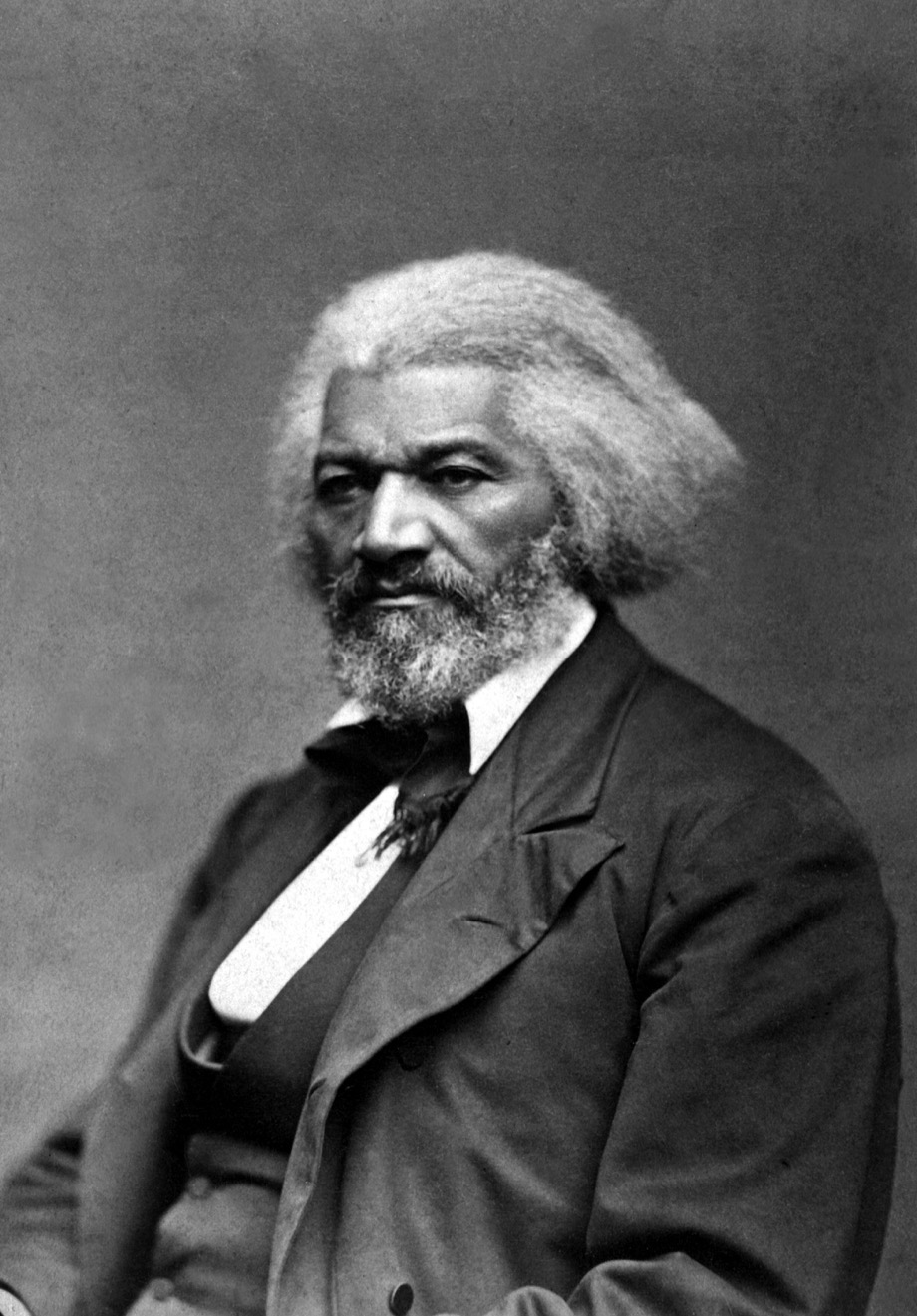
Portrait of Frederick Douglass
A Man Who Built Himself Out of Nothing but Argument
He was born on a Maryland plantation around 1818 and never learned the date. He was separated from his mother as an infant, saw her perhaps four or five times, and was told nothing about his father except what everyone on the place already assumed. He was, by the law of the state he was born in, a piece of property with no surname, no birthday, and no future that anyone was obliged to consider. Fifty years later he was arguing policy with the President of the United States, and the argument was about pay scales for Black soldiers, and he was winning it.
The interval between those two facts is the most remarkable feat of self-construction in American history, and it was not luck. Frederick Douglass taught himself to read by trading bread to white boys on Baltimore streets for lessons, escaped north on a borrowed sailor’s protection paper in September 1838, and then — this is the part that matters — did not simply become a free man. He became an institution: a lecture career, a publishing house, a political faction, a channel of influence that ran into the White House itself. Every one of those was built deliberately, out of nothing, by a man who kept asking the same question about every situation he entered — what is the machinery here, who controls it, and how do I get my hands on it?
That question is the signature of dominant extraverted thinking, and Douglass asked it with a ruthlessness that unsettled his allies as often as his enemies. He is one of the clearest ENTJ portraits the nineteenth century offers. He did not want sympathy. He wanted the vote, the uniform, the printing press, and the platform — and he understood, earlier and more coldly than almost anyone around him, that sympathy without those things was a form of delay.
Douglass did not ask the nation to feel for him. He asked it to be reorganized — and then set about acquiring the tools to do the reorganizing himself.
Te — The Man Who Bought His Own Printing Press
When Douglass began lecturing for William Lloyd Garrison’s American Anti-Slavery Society in 1841, he was given a role: tell the story, show the scars, let the white gentlemen supply the analysis. He was explicitly coached to keep “a little of the plantation” in his speech, because audiences found a polished Black orator harder to believe. Douglass complied for a while and then stopped complying, because the arrangement was inefficient and he could see exactly what it cost him. A witness has no authority over strategy. An editor does.
So in 1845 he published the Narrative of the Life of Frederick Douglass — naming his master, his county, the ships he had caulked, everything a slave-catcher would need — because a testimony no one could verify was worth less than a testimony that put him in danger. It sold in the thousands, forced him into two years of exile in Britain and Ireland, and returned him with something no lecturer had: British subscribers who purchased his legal manumission outright and handed him seed capital. He took the money to Rochester and in December 1847 founded The North Star, later Frederick Douglass’ Paper, which he ran for sixteen years, mortgaging his house when the accounts ran short. The point of it, operationally, was that no white editor now stood between Frederick Douglass and the American public.
Garrison was furious, and the fury reveals the type. Garrisonian abolitionism was a doctrine of moral suasion: the Constitution was a covenant with death, voting under it was complicity, and the work was to purify the national conscience and wait. To Douglass that was a program on no timetable he could accept. By 1851 he had announced publicly that the Constitution was an antislavery document properly read, that abolitionists should vote, and that parties were instruments to be used. The break was permanent and ugly; Garrison’s circle accused him of ingratitude and worse. He had simply run the calculation Te always runs — which method produces the outcome, and what is this loyalty actually buying me — and acted on the answer, at the cost of nearly every friendship he had.
Ni — The Quarry at Chambersburg
Most abolitionists wanted slavery abolished. Douglass, from remarkably early, wanted something larger and further off: full citizenship — the ballot, the courts, the schools, the army commission — on the theory that emancipation without political power would be reversed within a generation by the same men who had held the whip. He said so when it was an eccentric position, including to allies who thought freedom itself was ambition enough. The entire tragedy of Reconstruction is a footnote to a warning he had been issuing since the 1840s.
That long sight is auxiliary intuition serving the dominant judgment, and its sharpest demonstration is also the most painful episode of his life. In August 1859 John Brown summoned him to an abandoned stone quarry outside Chambersburg, Pennsylvania. Douglass had known Brown for a decade, had hosted him, had helped raise money for him, had listened for years to his plan for an armed refuge in the Alleghenies. But what Brown laid out at the quarry was not the mountain plan. It was a seizure of the federal arsenal at Harpers Ferry. Douglass argued against it for the better part of two days. He told Brown he was going into a “perfect steel trap” and would never get out alive; that attacking federal property would turn the whole machinery of the United States against him and hand the slaveholders their best argument. Brown embraced him and asked him to come anyway — I will defend you with my life. Douglass said no, and walked out of the quarry, and left behind him the man he admired most in America.
Every element of the refusal was vindicated within ten weeks. What makes it diagnostic is not that Douglass was correct but that he was correct against his own feelings, which ran entirely the other way. He never repudiated Brown; he fled to Canada and then England to avoid the warrant, and spent the rest of his life calling Brown the man who had begun the war. He had judged the operation, not the cause. That distinction — between a thing being right and a thing being the correct move now — is exactly where Te-Ni lives, and almost nobody else in the movement could hold both halves of it at once.
Se — Two Hours in Covey’s Barnyard
In 1834 Douglass, then sixteen and considered unmanageable, was hired out for a year to Edward Covey, a farmer with a local reputation for breaking difficult slaves. Covey broke him for six months — worked him past exhaustion, beat him in the fields, reduced him, in his own account, to a brute. Then one August morning Douglass put his hands on Covey’s throat in the stable, and the two of them fought for close to two hours, until Covey gave it up bleeding and never touched him again. Douglass returned to that fight in all three autobiographies and called it the turning point of his life as a slave: the moment that made him a free man in fact long before he was one in law.
The significance for the type is that the decisive event of his inner life was physical. Not a book, not a sermon, not a resolution — a body refusing in real time. Tertiary sensing in an ENTJ shows up as this appetite for direct, concrete engagement, and Douglass had it in abundance: he caulked ships in the Baltimore yards, was beaten nearly blind there by white apprentices, and fought a mob at Pendleton, Indiana, in 1843 until they broke his right hand, which never set properly. He walked into hostile halls on purpose.
It also made him an extraordinary instrument on a platform. Contemporaries who disagreed with everything he said still described the same experience — six feet of him, the leonine head, a voice that carried to the back of an unamplified hall. He was the most photographed American of the century, more than Lincoln, and it was deliberate: he sat for roughly 160 portraits because he had worked out that the camera was a weapon against caricature, and that the way he looked in a room was an argument in itself.
Fi — The Grief He Would Not Discuss
The inferior function in an ENTJ is a private, unmanaged reservoir of personal feeling that the dominant judgment keeps offstage until it erupts. Douglass’s erupts in the prose. The famous passage in the Narrative where he stands on the Chesapeake shore addressing the sails moving toward the ocean — “You are loosed from your moorings, and are free; I am fast in my chains, and am a slave” — is not argument at all. It is naked interior lament from a man who otherwise spent his life marshalling evidence, and it is the single most quoted thing he ever wrote.
It surfaced under provocation too. At Rochester in July 1852, invited to celebrate Independence Day, he asked what the Fourth of July was to the slave and answered with something closer to a wound than a speech — “a day that reveals to him, more than all other days in the year, the gross injustice and cruelty to which he is the constant victim” — before shifting, within minutes, back into close constitutional argument. That is the inferior function’s rhythm in a Te dominant: a sudden hot interior register, fully sincere, then a firm return to the machinery of the case.
What he could not do was administer his own affections. He wrote almost nothing about Anna Murray Douglass, the free Black woman in Baltimore who financed his escape and then kept his household for forty-four years while he was on the road and while European admirers moved through his home; his silence about her is the loudest gap in three volumes of self-examination. He quarrelled irreparably with Garrison, who had made him, and never fully repaired it. He mourned John Brown for thirty-six years with an intensity that he never once allowed to alter the judgment he had made at the quarry. Douglass could organize a nation’s conscience. His own he mostly left where it fell.
Why ENTJ Over INTJ
Why not INTJ?
The long vision and the cold strategic reads at Chambersburg tempt an INTJ call, and it is the most common alternative. But an INTJ authors strategy privately and from a distance; Douglass executed his in public, in person, and organizationally — a newspaper he ran himself for sixteen years, thousands of platform appearances, recruiting offices, party conventions, delegations to the White House. His thinking was not a plan he handed to operators. It was a set of institutions he stood at the front of and adjusted in real time, in front of audiences, week by week. That is Te in dominant outward use, with Ni supplying the horizon — not Ni-dominant vision looking for an executor.
The proof is in how he handled Lincoln. Through 1862 Douglass hammered the administration in print — too slow, too conciliatory, too willing to save the Union with slavery intact — and when emancipation came he pivoted instantly to recruiting, signing up his own sons for the 54th Massachusetts. Then he discovered that Black soldiers were paid seven dollars a month against a white private’s thirteen, were denied commissions, and were being murdered rather than exchanged when captured. He stopped recruiting, went to Washington in August 1863, and put the demands to the President in person. Lincoln conceded on retaliation and eventual equal pay and told him plainly the rest would come slower than either wanted; Douglass resumed recruiting anyway, having calculated that the uniform itself was the durable prize — a man who has carried a rifle for the republic is harder to deny a ballot. Pressure, bargain, partial win, resume. An INTJ builds the argument. Douglass worked the room.
Connected Figures
Further Reading
- Frederick Douglass: Prophet of Freedom — David W. BlightThe definitive modern biography (2018) — best on the Garrison break, the Brown meeting, and the long post-war disappointment.
- Narrative of the Life of Frederick Douglass, an American Slave — Frederick DouglassThe 1845 book that made him famous and endangered him — the Covey fight and the Chesapeake sails passage are here.
- My Bondage and My Freedom — Frederick DouglassThe 1855 rewrite, written after the split with Garrison and far more candid about being managed by white allies.
- Life and Times of Frederick Douglass — Frederick DouglassThe final memoir (1881, revised 1892), covering the Lincoln meetings, the war, and Reconstruction's unravelling.
- Picturing Frederick Douglass: An Illustrated Biography of the Nineteenth Century's Most Photographed American — John Stauffer, Zoe Trodd, and Celeste-Marie BernierCollects the roughly 160 portraits and shows how deliberately he used the camera as an argument.
