 Historical Figure MBTI
#816 · 6-14-26 · The American Civil War
William Lloyd Garrison
The Printer Who Refused to Compromise
1805–1879
7 min read
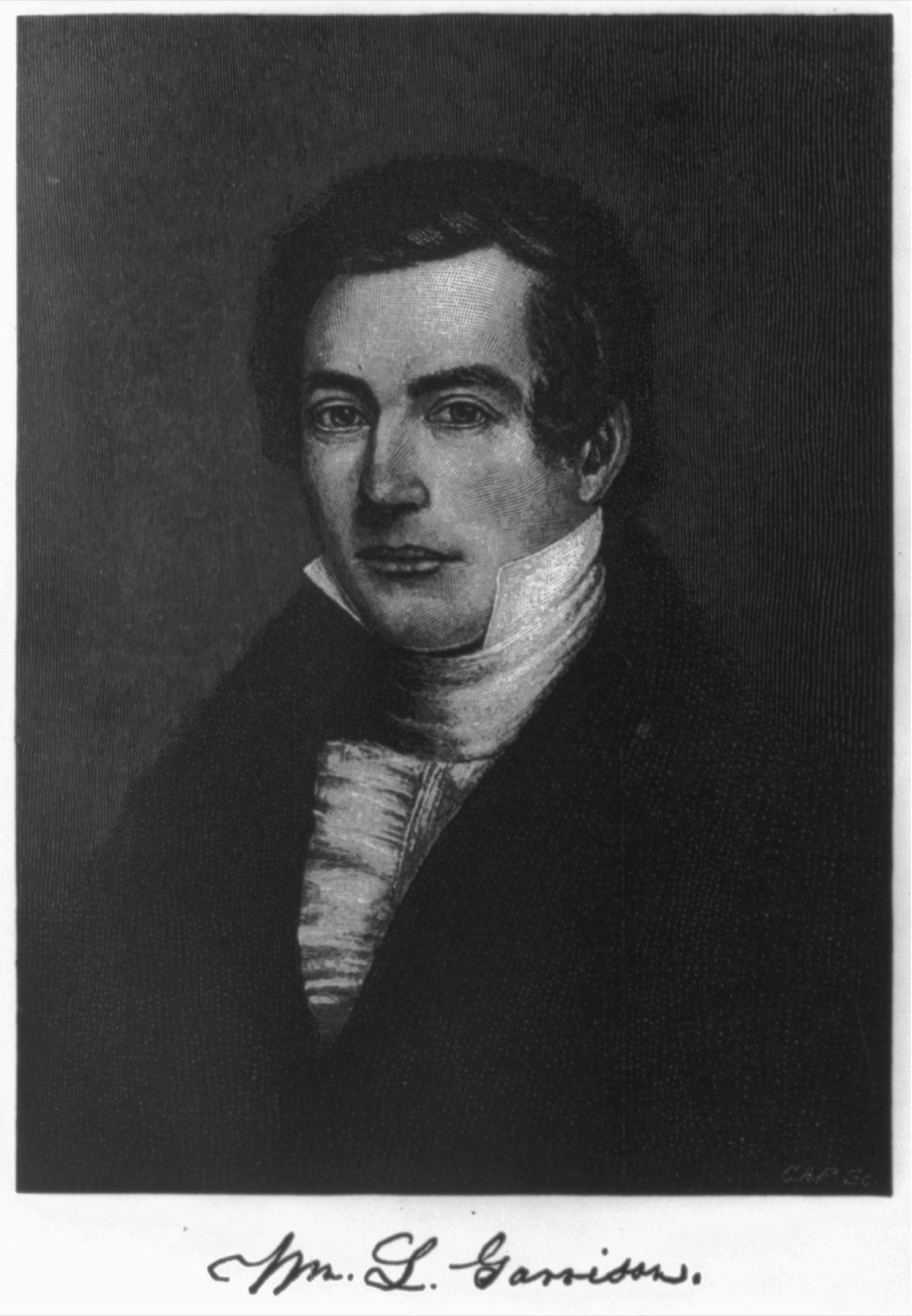
Portrait of William Lloyd Garrison
I Will Be Heard
On January 1, 1831, a 25-year-old Massachusetts printer with no money, no institutional backing, and no political office launched a newspaper out of a rented Boston attic and declared war on the entire American consensus about slavery. "I will not equivocate — I will not excuse — I will not retreat a single inch — AND I WILL BE HEARD." It was not a plan. It was a vow, and William Lloyd Garrison spent the next three decades keeping it with a stubbornness that outlasted mockery, mob violence, and the defection of his own most gifted student.
Garrison was not a legislator, a general, or even, by his own insistence, a politician of any kind. He was an editor who believed that the right words, repeated without compromise, could remake a nation's conscience. Every gradualist scheme — colonization, phased emancipation, working within the existing parties — struck him as a moral evasion dressed up as prudence. He wanted immediate abolition, said so in the loudest possible terms, and treated any softening of that demand as a personal betrayal of the enslaved.
That combination — an inexhaustible stream of new angles of attack paired with one conviction that never bent an inch — is the signature of an ENFP. Garrison reframed the same argument a thousand ways because his imagination never stopped generating them; he never once softened the argument itself, because for Fi, some things are simply not negotiable.
Garrison did not build the antislavery machine — he was its conscience, refusing every compromise the machine tried to offer him.
A Thousand Angles on One Sin
The Liberator ran for thirty-five years without once running out of ways to say the same thing. Garrison attacked slavery as a religious sin, a constitutional fraud, an economic parasite, a stain on republican virtue, and a personal crime against every reader who tolerated it — sometimes all four in a single issue. He printed slave auction notices next to hymns, reprinted proslavery sermons so his readers could see the reasoning laid bare, and turned each week's outrage into fresh copy. That restless capacity to keep reframing the argument, to find the next provocation before the last one had cooled, is Ne working exactly as it works best: never repeating itself, never running dry.
It also made him a magnet for talent he could not always keep. Garrison drew brilliant, combative people into his orbit — abolitionists, feminists, pacifists, all pursuing tangents he had opened up — because his newspaper felt less like an institution than an idea factory that anyone could plug into. He founded the American Anti-Slavery Society in 1833 not because he wanted to administer an organization but because he wanted the widest possible platform for the argument to keep spreading.
The same restlessness that made him prolific made him allergic to narrowing his fight to one lane. He folded women's rights, pacifism, and temperance into the antislavery cause until some allies complained he was diluting the mission — to Garrison, it was all the same moral thread, and Ne experiences an artificial boundary as a betrayal of the whole picture.
A Covenant With Death
In 1854, at a Fourth of July rally, Garrison set fire to a copy of the United States Constitution in front of a crowd, calling it "a covenant with death and an agreement with hell" for its accommodations to slavery. No political calculation produced that gesture — it was Fi in its purest form, a conviction held so absolutely that the nation's founding document itself was expendable next to it. He refused to vote, refused to join a political party, and rejected the entire machinery of compromise that American politics runs on, because to Garrison, participating in a corrupt system was itself a moral stain.
That same unbending inner compass made the break with Frederick Douglass in 1847 wound him in a way that outmaneuvering an opponent never could. Douglass had been Garrison's protégé, a living rebuke to every argument for gradualism — and when Douglass concluded that moral suasion alone would never free anyone and founded his own paper to pursue political abolitionism, Garrison took it as something closer to defection than disagreement. He never fully forgave it, not because his ego was wounded, but because Fi does not easily separate a difference of strategy from a difference of soul.
It is the same trait, pointed two directions. Toward the cause, it produced three decades of unwavering moral clarity when the respectable classes wanted quiet. Toward the people closest to him, it produced a rigidity that made a personal rift out of what could have remained a tactical one.
The Machinery Behind the Vow
For all his reputation as an uncompromising idealist, Garrison ran The Liberator as a functioning enterprise for thirty-five consecutive years — soliciting subscriptions, coordinating a national lecture circuit, and building the American Anti-Slavery Society into a real organization with chapters, funding, and a distribution network. None of that happens on conviction alone. Tertiary Te gave the Fi vow an engine: deadlines met, printers paid, agents dispatched, results tracked.
It shows most clearly in how doggedly he kept score. Garrison tallied conversions, catalogued proslavery arguments to rebut them systematically, and treated the abolition movement as a campaign to be measured in newspapers sold and societies founded, not just souls stirred. The idealism supplied the mission; the Te supplied the discipline that kept an underfunded, widely hated newspaper in print for a generation.
Why ENFP Over INFP
Why not INFP?
Garrison shares the INFP's fixed inner conviction, but not its introversion. An INFP tends toward private reflection, refining a value quietly before speaking it. Garrison did the opposite: he processed everything in public, at volume, in print, week after week, thinking out loud in front of the whole country. That is extraverted intuition organizing a public campaign, not introverted intuition working alone — Garrison needed the newspaper, the podium, and the crowd the way an INFP does not.
The clearer tell is the sheer output. An INFP's conviction tends to concentrate into a small number of deeply worked statements; Garrison's conviction sprayed outward into thirty-five years of weekly reinvention, alliance-building, and institution-founding — women's rights, pacifism, temperance, all drawn into orbit around the same fixed core. That is Ne generating endless entry points for a Fi that never moved, which is ENFP's signature far more than INFP's.
Connected Figures
Further Reading
- All on Fire: William Lloyd Garrison and the Abolition of Slavery — Henry MayerThe definitive biography
- Frederick Douglass: Prophet of Freedom — David W. BlightCovers the Garrison-Douglass split in depth
- William Lloyd Garrison and the Fight Against Slavery — William E. Cain (ed.)Selected writings and speeches
- The Liberator — William Lloyd Garrison (ed.)The newspaper itself, 1831–1865
