 Historical Figure MBTI
#820 · 6-14-26 · The American Civil War
Thomas Wentworth Higginson
The Minister Who Financed an Insurrection
1823–1911
6 min read
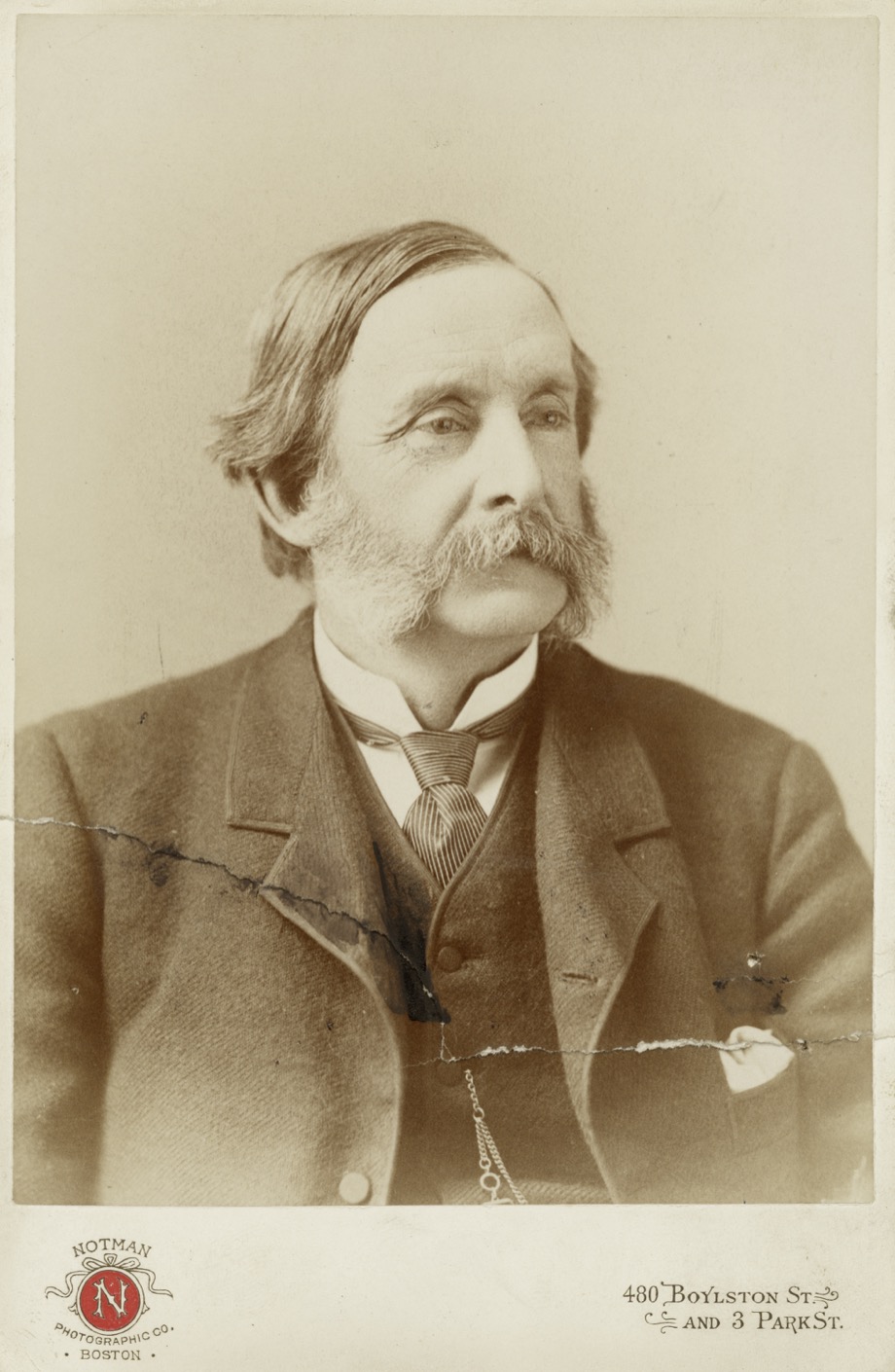
Portrait of Thomas Wentworth Higginson
The Preacher Who Went Armed
Thomas Wentworth Higginson never fit the image of the mild Unitarian clergyman. He preached emancipation from the pulpit, but he did not stop there — in 1854 he led an armed party against the Boston courthouse holding the fugitive Anthony Burns, was cut across the chin by a saber for his trouble, and walked away more convinced, not less, that the law itself was the enemy. He gave money and cover to John Brown as one of the Secret Six, knowing full well what Brown intended to do with it. And when the Union began recruiting formerly enslaved men into uniform, Higginson did not merely bless the experiment from a distance — he took the colonelcy of the 1st South Carolina Volunteers and led Black soldiers into the field himself.
What runs underneath all of it is a rare combination: a minister's warmth turned outward onto a whole people, married to a private, almost stubborn certainty about where history was headed and what it would cost to get there. He organized, wrote, recruited, and rallied — always in service of other people's dignity, never his own advancement. That is the signature of an ENFJ: a dominant feeling function that turns moral conviction into constant, visible advocacy for others, backstopped by a long private vision of what justice required and the physical nerve to enact it.
Higginson preached with his voice and legislated with his conscience, but when the moment came he fought with his body — an ENFJ for whom advocacy was never separable from action.
A Colonel Who Wrote With Tenderness
Higginson's command of the 1st South Carolina Volunteers is the clearest window into his dominant Fe. Most white officers who took commissions over Black regiments in 1862 wrote about their men in the vocabulary of the era — as curiosities to be managed, or as raw material to be disciplined into soldiers. Higginson wrote instead as an advocate, and his accounts of camp life, worship, and combat treat his soldiers' courage, humor, and grief as facts worth recording in their own right, not as evidence for or against a theory about race. That instinct to represent other people's experience faithfully, and to use his own visibility on their behalf, is Fe doing what Fe does at its best.
The same warmth shows up earlier, in the pulpit and on the lecture circuit, where Higginson never treated abolition as an abstract policy question. He built coalitions, raised money, organized rescue attempts, and kept faith with people — Brown, the Burns rescuers, his own troops — long after prudence would have counseled distance. Fe users lead with the emotional and ethical temperature of the group; Higginson spent three decades reading that temperature correctly and then acting on it in public, at real cost to himself.
The Long View From the Courthouse Steps
Beneath the advocacy sat a private, unwavering conviction — the auxiliary Ni that let Higginson commit to actions most contemporaries considered reckless or premature. He did not arrive at the Anthony Burns rescue or the Secret Six by incremental persuasion; he arrived at them because he had already concluded, years in advance, that slavery would only end through direct confrontation, and that waiting for gradual consensus was itself a moral failure. That is a single, compressed insight held with total certainty — the hallmark of Ni — rather than a position built and rebuilt through argument.
It is also what separated him from the more cautious members of his own circle. Several of the Secret Six wavered, denied their involvement, or fled the country once Brown was captured. Higginson did neither. His long-range read on where the conflict was headed did not waver just because the immediate consequences turned dangerous, and by 1862 that same foresight told him a Black regiment, properly led, could prove a point no speech could make.
Willing to Bleed for It
Tertiary Se is what kept Higginson's convictions from staying convictions. At the Boston courthouse in 1854 he did not organize the rescue from a safe remove — he led the battering party against the door himself and took a saber cut to the chin. In South Carolina he did not administer his regiment from headquarters; he marched and fought alongside it. Where most of the Secret Six preferred to fund and theorize, Higginson kept placing his own body in the moment of danger, a readiness to act physically, immediately, and in the present that Ni-dominant strategists rarely show to the same degree.
That appetite for direct, embodied risk also explains why he gravitated toward military command rather than staying a pamphleteer once the war began. A cause was never fully real to Higginson until he had tested it against consequence — an impulse that reads, again and again, as Se in service of an Fe-Ni conscience.
Why ENFJ Over INFJ
Why not INFJ?
Higginson's Ni-driven certainty about slavery's necessary end could look, from a distance, like an introverted visionary's. But INFJs tend to hold their conviction inward and express it through selective, carefully chosen action; Higginson expressed his outward, constantly, through preaching, organizing, fundraising, and public leadership of men in the field. His energy ran toward other people and toward visible causes rather than toward private reflection, and his instinct in a crisis was to gather allies and lead from the front — an extraverted feeling posture, not an introverted one. An INFJ funds a raid and writes about it quietly afterward; Higginson led the battering ram himself.
The clearest tell is command. Higginson did not merely believe Black soldiers could fight — he took a colonelcy, organized a regiment from nothing, and stayed visibly, personally responsible for hundreds of men in the field. That is Fe operating as leadership: taking public ownership of a group's welfare and reputation, and building consensus and morale around a shared cause, all sustained by an Ni conviction that had already decided the war's moral outcome long before the armies caught up.
Connected Figures
Further Reading
- Army Life in a Black Regiment — Thomas Wentworth HigginsonHigginson's own memoir of commanding the 1st South Carolina Volunteers
- The Life and Letters of Thomas Wentworth Higginson — Mary Thacher HigginsonBiographical collection drawing on his correspondence and journals
- Midnight Rising: John Brown and the Raid That Sparked the Civil War — Tony HorwitzCovers the Secret Six and Higginson's role in financing Brown
- The Story of the Trial of Anthony Burns — Charles Emery StevensContemporary account of the 1854 fugitive slave rescue attempt
