 Historical Figure MBTI
#824 · 6-14-26 · The American Civil War
Shields Green
The Fugitive Who Chose to Stay and Fight
c. 1836–1859
3 min read
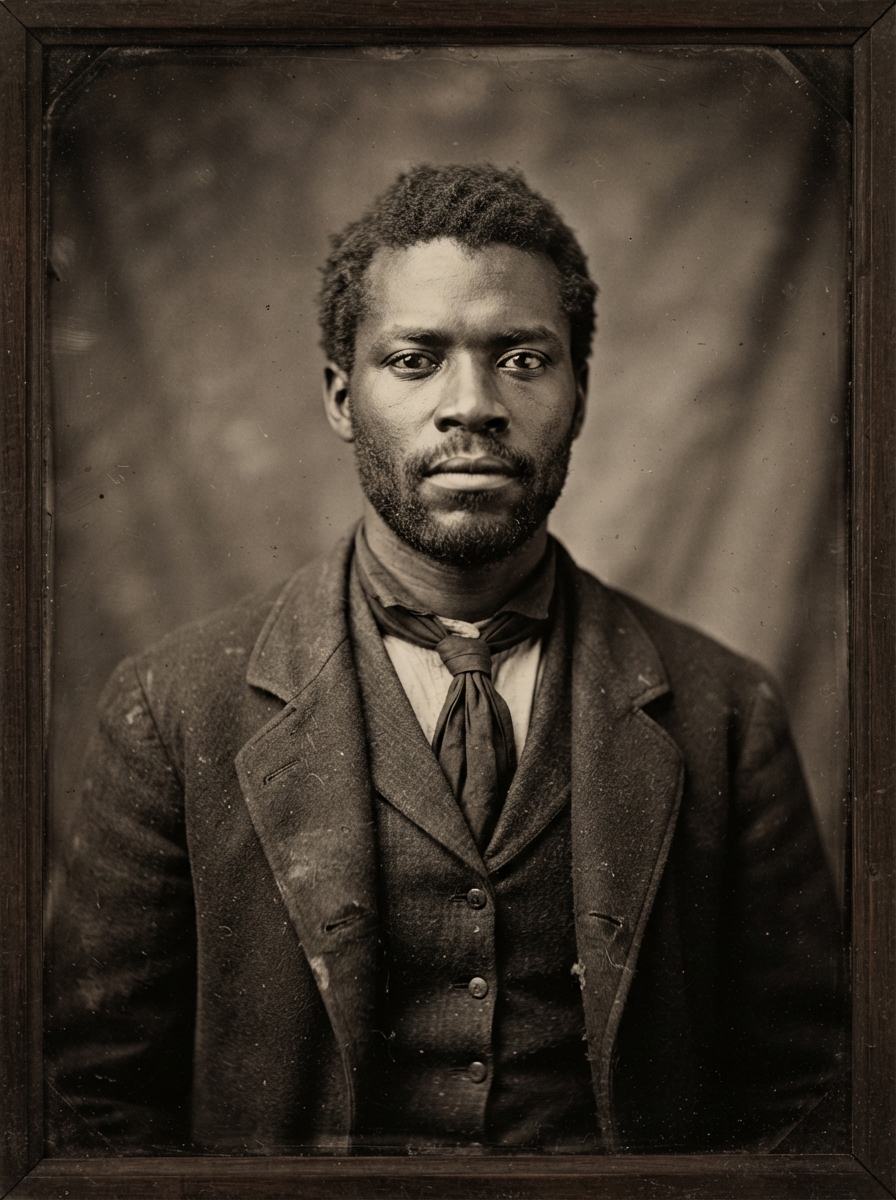
AI-assisted Portrait of Shields Green
“I B’lieve I’ll Go Wid De Old Man”
Shields Green had already done the hard part once. Born enslaved in South Carolina, he escaped north sometime in the 1850s and made his way to Rochester, New York, where he found work, a measure of safety, and the friendship of Frederick Douglass — the most famous fugitive in America. By the standard of his era, Green had won. He had no obvious reason to risk that freedom again.
In October 1859, John Brown asked him to risk it anyway. Brown wanted Douglass for the raid he was planning on the federal armory at Harpers Ferry, and he arranged a secret meeting at an abandoned quarry to make his case. Douglass listened, weighed the plan, and refused — he told Brown plainly that the armory was a trap, that Virginia and the federal government would crush any force that seized it. Green was there for the whole exchange. He heard the same argument Douglass heard, drew the same bleak conclusion about the odds, and went with Brown anyway.
That split-second choice, made after — not despite — a clear-eyed read of the danger, is the whole of what survives of Shields Green as a person. There is no diary, no long correspondence, barely a paper trail before Rochester. What there is amounts to a single decisive act, and it is enough to type him.
Green agreed with Douglass’s assessment and joined anyway — the mark of an ISTP who trusted his own judgment on what the fight was worth more than he trusted the odds.
He fought at Harpers Ferry, was captured with the survivors, and was hanged in December 1859. Under interrogation he gave his captors nothing — no names, no plans, no confirmation of what they already half-knew. It was the same trait that had gotten him into the raid in the first place: a private, self-contained certainty about where he stood, immune to persuasion once his own mind was made up.
Connected Figures
Further Reading
- Midnight Rising: John Brown and the Raid That Sparked the Civil War — Tony HorwitzThe fullest account of the quarry meeting and Green's decision
- Frederick Douglass: Prophet of Freedom — David W. BlightCovers Douglass's refusal and his account of Green's choice
- To Purge This Land with Blood: A Biography of John Brown — Stephen B. OatesDetailed narrative of the raid and its aftermath
