 Historical Figure MBTI
#808 · 6-13-26 · The American Civil War
Joseph E. Johnston
The General Who Retreated His Way Into Controversy
1807–1891
7 min read
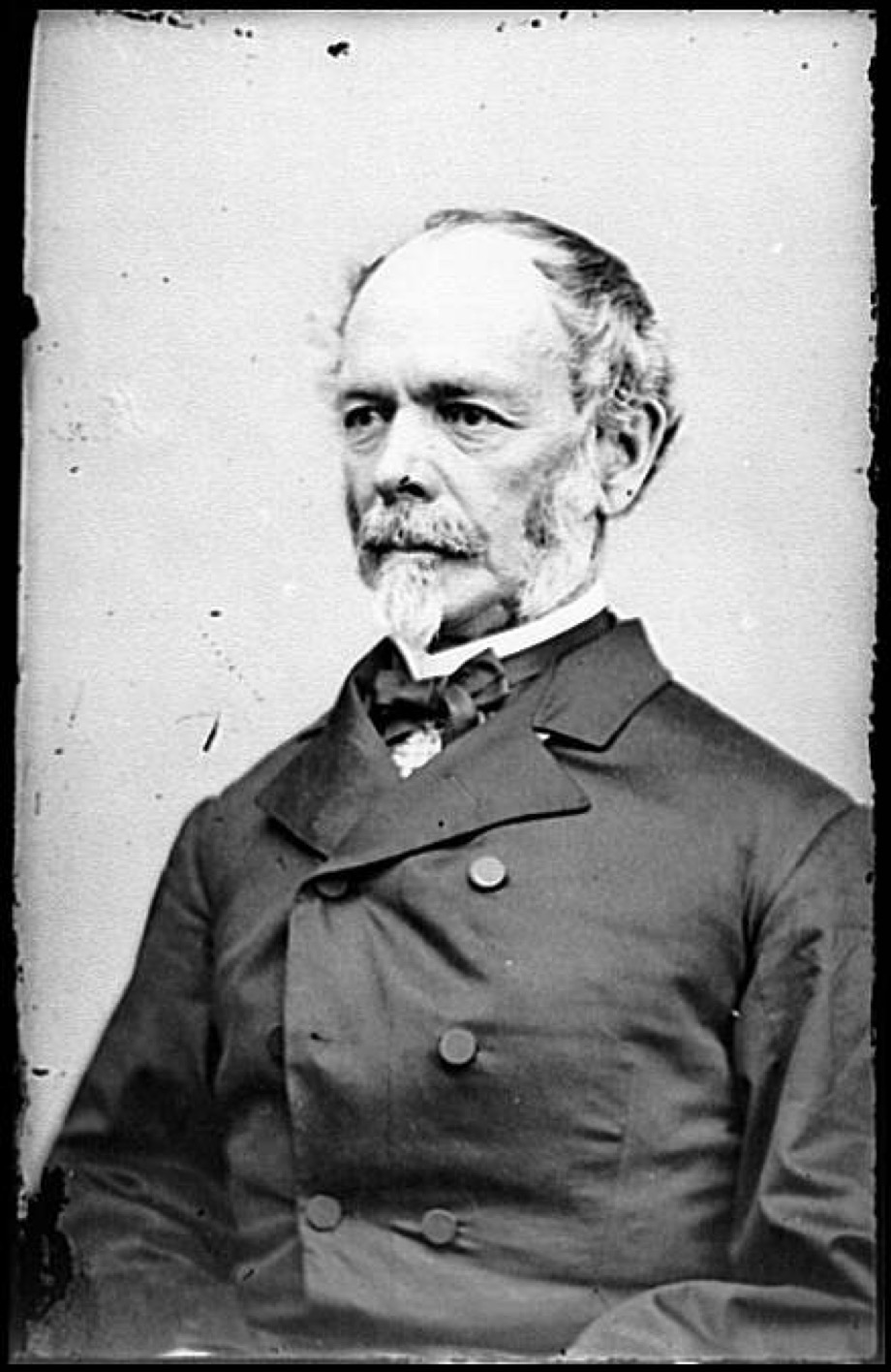
Portrait of Joseph E. Johnston
The General Who Would Not Be Spent
Joseph E. Johnston entered the Confederacy as one of its most respected soldiers — a West Point graduate and the highest-ranking officer in the old US Army to resign for the South — and spent the rest of the war convinced that everyone around him, Jefferson Davis above all, failed to grasp what he already saw coming. At First Bull Run in July 1861 he helped engineer the Confederacy's first great victory. Ten months later, badly wounded at Seven Pines outside Richmond, he was carried from the field and replaced by Robert E. Lee — a substitution that changed the course of the war and that Johnston never stopped resenting.
What drove him was not timidity but a mind built for long horizons. Johnston thought several moves ahead, in campaigns rather than battles, and he would not throw an army away to satisfy a newspaper or a president demanding immediate results. That instinct made him one of the war's most maddening subordinates and, arguably, one of its more clear-eyed strategists — a man whose caution looked like genius in hindsight and cowardice in the moment, depending entirely on who was doing the judging.
He is best read as an INTJ: a dominant intuition that mapped the war's shape before others could see it, a hard executive logic for handling armies and supply lines, and, beneath both, a bruised and unforgiving sense of personal honor that Jefferson Davis learned to dread.
Johnston did not lose wars of maneuver. He lost the war of temperament — with a president who needed obedience and got, instead, a general convinced he alone could see the board.
The Army Preserved Is the War Not Yet Lost
Johnston's dominant Ni showed up first as an instinct for shape — for reading a campaign as a single unfolding pattern rather than a sequence of isolated fights. At First Bull Run he read the field correctly when it mattered, shifting troops by rail to reinforce Beauregard at the decisive moment and helping hand the Confederacy its first victory. It was an early demonstration of a mind that worked in wholes: not what does the enemy want to do right now, but what does this campaign look like six weeks from now, and what does the Confederacy actually need to survive it.
That same intuition made him allergic to battles fought for their own sake. Johnston consistently preferred maneuver, position, and patience to the frontal collision his government kept demanding, on the theory — often correct — that an army kept intact was worth more than a battle won at ruinous cost. Critics called it evasiveness; Johnston called it strategy, and the distinction between the two positions defined nearly every argument he ever had with Richmond.
The cost of a dominant Ni this convinced of its own long view was an inability to explain itself in the moment. Johnston rarely spelled out his reasoning to Davis in terms the president found reassuring, preferring to trust his own read of the strategic picture and expect others to trust it too. When the picture in his head didn't match the picture Richmond wanted, the result wasn't compromise — it was stalemate.
An Army Run Like an Institution
Auxiliary Te gave Johnston his reputation as a genuinely capable administrator — a general who cared about supply, drill, seniority, and the mechanics of command as much as any battlefield maneuver. He was, by most accounts, excellent at the unglamorous work of building an army into a functioning organization, which is part of why his soldiers generally trusted him even when Richmond didn't.
That same executive logic made him ferociously literal about rank and precedent. When the Confederacy's 1861 seniority rankings placed him below three other generals he considered his juniors in the old US Army, Johnston treated it not as a political nuisance but as a structural error demanding formal correction — and said so, in writing, to the president himself. Te wants the org chart to be right; Johnston never fully accepted that this one wasn't going to be fixed.
Paired with his Ni, this made him a general who could run a war machine efficiently but who negotiated badly with the one man whose goodwill the machine depended on. Davis wanted deference wrapped around competence; Johnston offered competence wrapped around a grievance, and the friction between the two habits shaped Confederate command in the western theater for years.
A Slight Remembered Forever
Beneath the strategist and the administrator sat a tertiary Fi that took every perceived insult to his rank and reputation personally, and kept the ledger for decades. The seniority dispute of 1861 never really closed for Johnston; it hardened into a private, unshakable conviction that he had been wronged, one he carried into every subsequent dealing with Davis and reargued, implicitly or explicitly, for the rest of his life.
Seven Pines deepened it. Being wounded and losing his army to Lee was, on its face, a simple accident of war — but Johnston experienced it as one more theft of what was rightfully his, a command he had built being handed to someone else at the exact moment it mattered most. He was gracious about Lee's ability in public; privately, the wound to his standing never fully closed.
This is Fi's quiet cost when it sits this deep under Ni and Te: values and grievances that never get spoken plainly, only acted on — in cool replies to Davis, in memoirs written later to settle the record, in a lifelong insistence that history vindicate a case he felt no one in power had ever properly heard.
Why INTJ Over ENTJ
Why not ENTJ?
Johnston had the executive competence of an ENTJ but not the temperament — he built and administered armies well, but he did not lead by assertive, outward command the way an ENTJ does. His authority was quieter and more internally anchored: he formed his strategic judgment privately, through Ni, and expected the world to catch up to it, rather than projecting Te outward to force consensus in real time. An ENTJ in his position argues Davis into submission; Johnston simply withdrew into correctness and waited to be proven right.
The clearest tell is what happened when he was overruled. An ENTJ, blocked, escalates — argues harder, maneuvers politically, forces the issue. Johnston, blocked, went quiet, communicated less than Richmond wanted, and let the relationship curdle rather than fight it out. That withdrawal, paired with a private, unyielding sense of having been wronged, is Fi under Te, not Fe running the show — the mark of an INTJ convinced of his own long view rather than an ENTJ determined to bend the room to his will.
Connected Figures
Further Reading
- Joseph E. Johnston: A Civil War Biography — Craig L. SymondsThe standard modern biography, strong on the Davis feud and Johnston's strategic thinking
- Jefferson Davis, American — William J. Cooper Jr.The definitive Davis biography; essential for the Davis-Johnston relationship
- Narrative of Military Operations — Joseph E. JohnstonJohnston's own postwar memoir, written to settle the record with Davis
- Battle Cry of Freedom — James M. McPhersonThe single-volume Civil War history for broader campaign context
