 Historical Figure MBTI
#807 · 6-13-26 · The American Civil War
Judah P. Benjamin
The Cabinet Officer Who Vanished Into Legend
1811–1884
7 min read
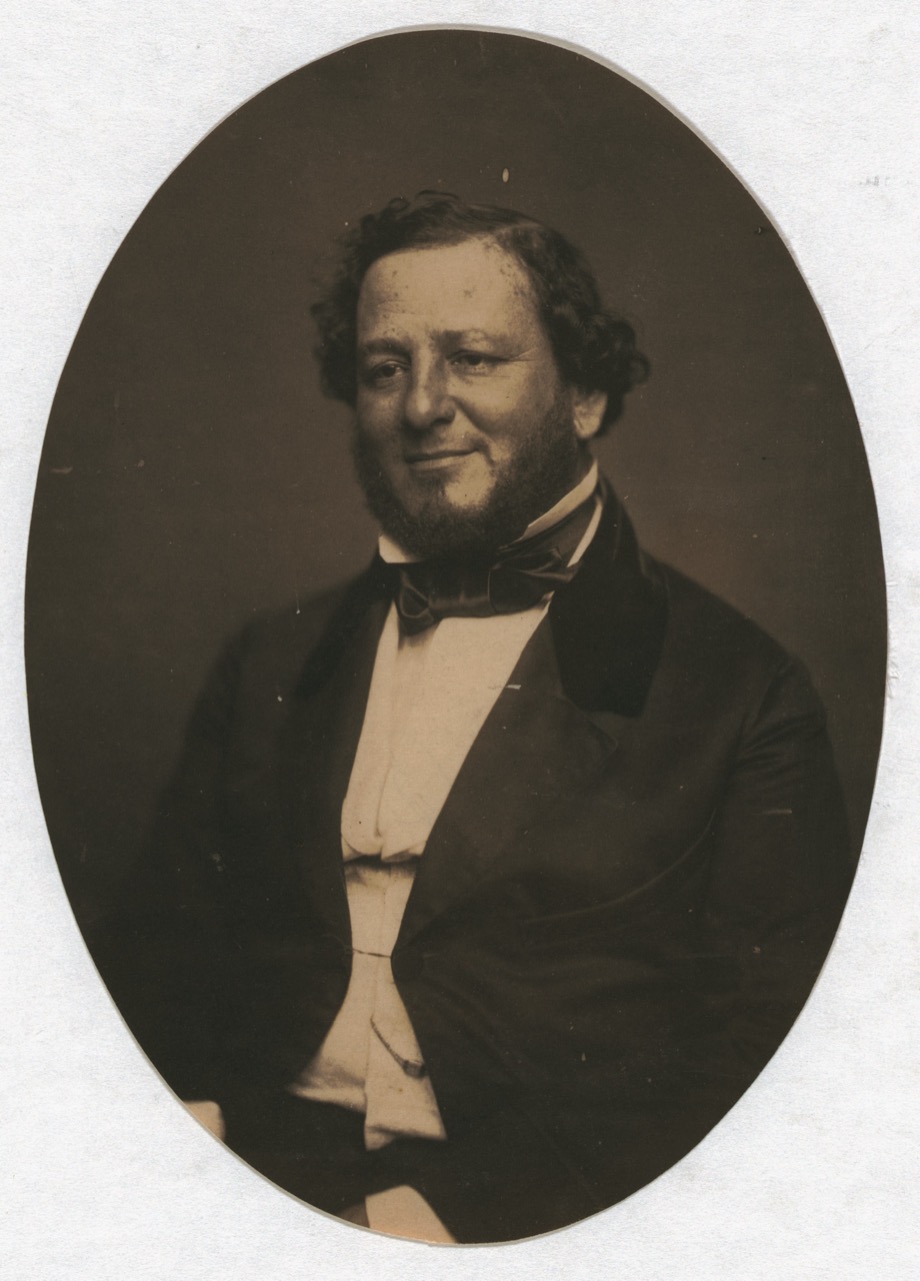
Portrait of Judah P. Benjamin
The Man Davis Could Move Anywhere
No one in the Confederate government moved through more portfolios than Judah P. Benjamin, and no one seemed less troubled by the moving. Born in 1811 on the island of St. Croix to a Sephardic Jewish merchant family, raised in Charleston and educated — briefly, before a mysterious expulsion — at Yale, he remade himself in Louisiana as a sugar planter, a star of the New Orleans bar, and eventually a United States Senator, arguing cases before the Supreme Court on the side. When the Confederacy formed in 1861, Jefferson Davis handed him Attorney General, then, within months, the desperately hard job of Secretary of War, then Secretary of State — three cabinet seats in barely two years, each a fresh problem with no relationship to the last.
Benjamin never flinched at the reassignment, and that alone marked him out. He treated each portfolio as a fresh puzzle to be reasoned through rather than a territory to be defended, and he treated the men who hated him — and many did, loudly, blaming him for battlefield failures that were never really his doing — as an audience to be charmed rather than a threat to be countered. He is best read as an ENTP: a mind that ran on possibility and improvisation, anchored by a private, almost mathematical logic, wrapped in a public warmth that never once cracked.
He was never the deepest believer in the Confederate cause. He was simply the best living argument for whichever cause he had been handed.
A Mind That Would Not Sit Still
Benjamin's career reads like a catalogue of reinventions, and each one came easily to him. He arrived in Louisiana with no fortune and no name, and within two decades had built a leading law practice, a working sugar plantation using experimental refining methods he studied and adopted himself, and a seat in the United States Senate — three entirely different games, each mastered in turn. Where a more settled temperament would have picked one lane and stayed in it, Benjamin kept sensing the next opening and stepping toward it.
That same restlessness made him invaluable to Davis precisely because it made him fungible in the best sense: he could be dropped into the War Department with no military background and reorganize its bureaucracy from first principles, then be moved to State and immediately start reading the diplomatic terrain in London and Paris as though he had trained for nothing else. He did not need continuity of subject matter — he needed only a new problem, and his attention would supply the rest.
It showed, too, in how little he was tied to any single argument. As a lawyer he had made his name arguing both sides of the same slavery-adjacent property disputes across different cases, not from cynicism exactly but because his mind generated the strongest possible case for whatever position needed one. Ideas arrived to him in bundles, and he trusted his own capacity to sort the useful ones out under pressure — which, given how much pressure Richmond produced, was tested constantly.
The Composure Nothing Could Break
Under Benjamin's improvisation ran a private, exacting logic that never left him, even when he was the most hated man in Richmond. When Roanoke Island fell to Union forces in early 1862, he took public blame for a defeat caused by resource shortages he had been ordered by Davis to keep quiet rather than expose to Congress — and he took it without a word of self-defense, because the private structure of the situation was clear to him even if it was invisible to everyone screaming for his resignation. He understood the actual mechanics of the failure better than his critics did; he simply declined to explain them, calculating, correctly, that silence served Davis and the cause better than vindication served himself.
That capacity for cool, internal reasoning under open contempt is what let him function as Davis's fixer rather than merely his friend. He could hold a legal argument, a military logistics problem, and a diplomatic cable in his head at once, test each against its own internal consistency, and arrive at a judgment without needing anyone else's validation of the process. Contemporaries who watched him work marveled less at his charm than at how untouched his reasoning seemed by the chaos around it — as though there were a locked room in him the war could not enter.
It is why he was never rattled in a courtroom, a cabinet meeting, or, later, a London barrister's chambers rebuilding a career from nothing at fifty-four. The externals changed constantly. The internal architecture of how he thought did not.
The Warmth That Disarmed His Enemies
Benjamin faced open antisemitic hostility for his entire public career — press cartoons, Senate floor slurs, whispered accusations that he was a foreign schemer manipulating Davis from the shadows — and he answered almost none of it directly. Instead he disarmed rooms with an unbroken, almost theatrical geniality: a ready smile, a quick wit, a genuine social fluency that made even men predisposed to distrust him enjoy his company against their own inclination. Colleagues who arrived hostile routinely left charmed, not because Benjamin had changed their politics but because he had made himself pleasant enough that the antagonism no longer seemed worth the energy.
This was not simple thick skin. It was an active, outward-facing skill — reading a room's temperature and adjusting his own presentation to lower it, smoothing Davis's relations with a fractious Congress, keeping cabinet meetings from curdling into personal feuds. Davis himself, notoriously prickly and hard to work for, trusted Benjamin more than almost anyone precisely because Benjamin never let their disagreements become personal; he managed the emotional register of the relationship as carefully as he managed its substance.
It is also the trait his enemies underestimated most. They read his good humor as weakness or slipperiness, when it was closer to a deliberate instrument — one he used to keep functioning, and keep Davis's government functioning, in conditions that would have broken a colder man.
Why ENTP Over INTP
Why not INTP?
An INTP would have generated the same brilliant legal and logistical solutions but recoiled from the constant public performance the role demanded — the courtroom theatrics, the Senate floor charm offensives, the willingness to be the smiling public face of an increasingly desperate government. Benjamin did not merely tolerate the social dimension of his career; he used it as a tool, actively deploying warmth to manage Davis, Congress, and hostile colleagues rather than withdrawing from them to protect his reasoning in private. That outward-directed, relationship-smoothing instinct is tertiary Fe, not an introvert's grudging concession to circumstance.
The clearer tell is the sheer breadth and speed of the reinvention. An INTP builds one deep, coherent system and defends it; Benjamin built three unrelated careers in three unrelated fields, packed a decade of survival lessons into a fourth in London, and never once looked back at what he'd left behind. That is Ne in its purest form — perpetual possibility over settled depth — married to a Ti sharp enough to make each new venture work, and an inferior Si so weak that continuity of place, home, or record meant almost nothing to him.
Connected Figures
Further Reading
- Judah Benjamin: Counselor to the Confederacy — James TraubThe definitive modern biography, tracing his three-continent, four-career life
- Judah P. Benjamin: Counsel for the Confederacy — Robert Douthat MeadeThe classic earlier biography, strong on his legal and cabinet career
- The Confederate Nation: 1861–1865 — Emory M. ThomasPlaces Benjamin's cabinet service within the broader collapse of Confederate governance
