 Historical Figure MBTI
#806 · 6-13-26 · The American Civil War
Alexander H. Stephens
The Vice President Who Said the Quiet Part Out Loud
1812–1883
6 min read
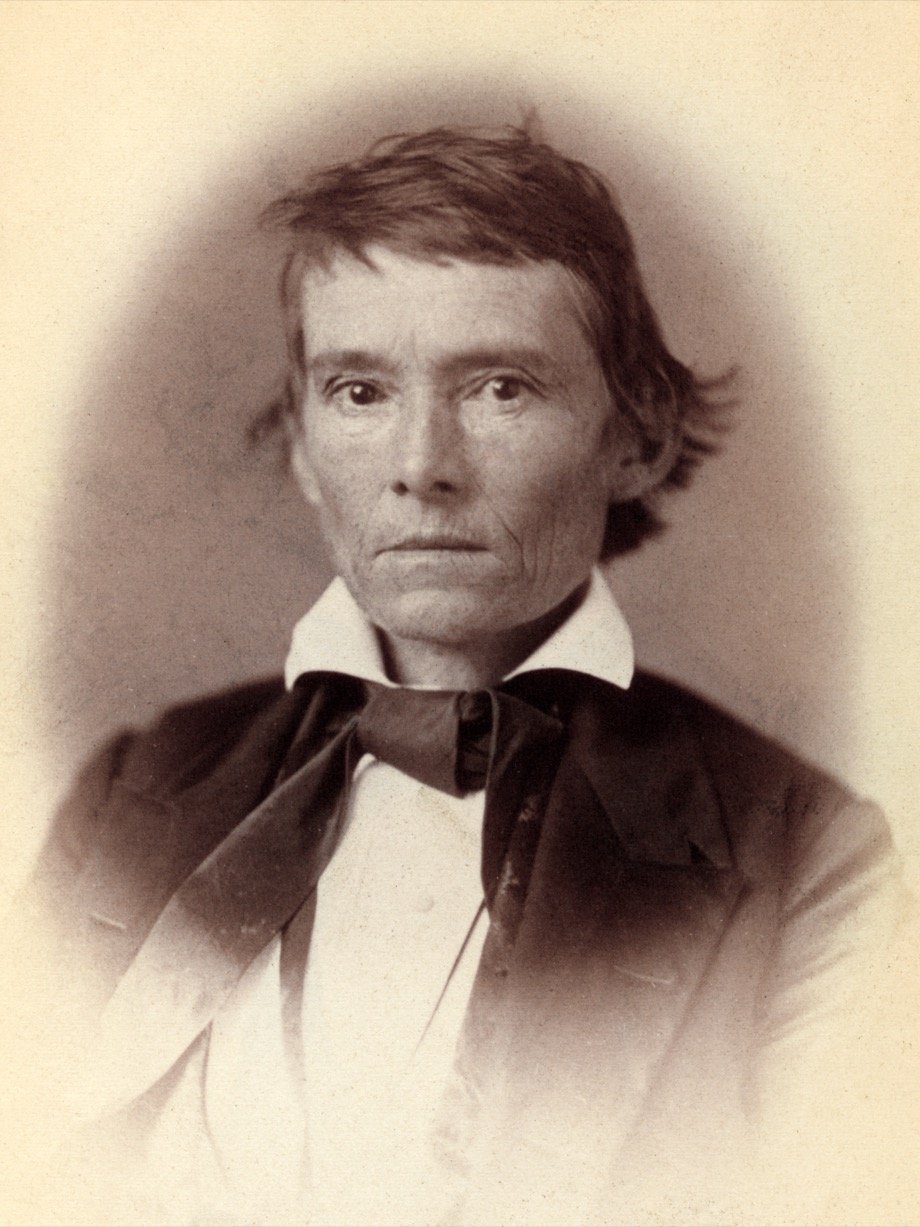
Portrait of Alexander H. Stephens
A Frail Man Who Would Not Soften a Syllable
Alexander Hamilton Stephens weighed barely a hundred pounds for the whole of his adult life, a shrunken, chronically ill Georgian whom colleagues described as looking half-dead even in youth. He had also opposed secession almost to the last vote, arguing in the Georgia legislature that the Union offered slavery more protection than disunion ever could. When the state seceded anyway, he did not retreat from politics to sulk — he joined the new government and became its Vice President, apparently on the strength of a mind so precise that even his opponents wanted it inside the tent.
That mind is the whole story. In March 1861, newly installed as Confederate Vice President, Stephens stood before a Savannah audience and delivered what history remembers as the Cornerstone Speech — a plain, analytical statement that the new government rested not on states' rights in the abstract but on the specific principle that Black people were unequal to white people and slavery was therefore their natural condition. Other Confederate leaders wrapped the same commitments in constitutional euphemism. Stephens simply said what the structure implied, because saying it was the logically honest thing to do, whatever it cost the cause politically. Later in the war he turned that same instrument on Jefferson Davis, opposing conscription and the suspension of habeas corpus not out of squeamishness but because he judged them constitutionally indefensible — consistency enforced without regard for unity, an INTP mind running its argument to the end regardless of where the end left him standing.
He did not soften the Cornerstone Speech because softening it would have been dishonest — and to an INTP, dishonesty about the internal logic of a thing is a worse failure than the shame of stating it.
The Compulsion to Say the True Thing
Stephens built his career on constitutional argument, and dominant Ti is what let him treat the Confederacy's founding document the way a mathematician treats an axiom set: work it out fully, then report the result without editing for effect. The Cornerstone Speech was not a slip or a boast. It was a man following a chain of reasoning — this government exists, its structure enshrines racial hierarchy, therefore that hierarchy is its cornerstone — to a conclusion he then delivered as flatly as a geometry proof, in a setting where every other leader in the room understood the wisdom of leaving the premise unstated.
The same faculty made him one of the war's most persistent internal critics. Habeas corpus suspension and conscription were, to Stephens, simply inconsistent with the constitutional framework the Confederacy claimed to be defending, and he pursued that inconsistency in speeches and letters for years, regardless of how badly the criticism landed while armies were dying in the field. A Ti dominant does not experience internal contradiction as a minor cost of wartime pragmatism; he experiences it as an open wound that must be named, even by the second-highest officer in the government naming it against the first.
Arguing Every Side Until One Wins
Auxiliary Ne is what let Stephens hold the Union's case and the Confederacy's case in his head at the same time, right up until Georgia forced the choice. Through the secession crisis he had been the loudest Southern voice warning that leaving the Union would jeopardize slavery rather than protect it — a genuinely contrarian position among fire-eaters, and one he could only sustain by generating and testing possibilities other men treated as settled. He did not need consensus to think a thing through; he needed the argument itself to hold up.
Once inside the Confederate government, that same appetite for possibility turned him into a legalist rather than a loyalist — someone who kept reopening questions Davis considered closed, less to obstruct the war effort than because unresolved implications genuinely bothered him. It is a very specific kind of restlessness: not the desire to build new coalitions, but the compulsion to keep generating alternative readings of the Constitution until the strongest one surfaces, whatever camp it happens to embarrass.
Indifferent to How It Sounded Out Loud
Inferior Fe is the missing ingredient that makes the Cornerstone Speech legible as psychology rather than mere ideology. A leader with stronger extraverted feeling would have felt, viscerally, how the room needed managing — would have sensed that naming the cause's foundation in those terms, to that audience, at that moment, required softening, framing, some concession to how it would be received and repeated. Stephens did not manage the room. He delivered the argument and let the reception happen to him, and it dogged his reputation for the rest of his life.
The same blind spot shaped his relationship with Davis. A leader more attuned to group harmony might have taken his constitutional objections into private counsel, trading candor for continued influence at the war's center. Stephens instead retreated to Georgia for much of the conflict and kept airing his disagreements publicly, seemingly unbothered by the fact that a Vice President criticizing his President from outside the government looked, to nearly everyone watching, like disloyalty. To Stephens it was simply the argument, made honestly, wherever that honesty happened to land.
Why INTP Over ENTP
Why not ENTP?
An ENTP would have turned the Cornerstone Speech into a performance — testing the room, reading how far the rhetoric could be pushed, enjoying the provocation as spectacle. Stephens showed none of that theatrical charge; contemporaries described a withdrawn, physically frail man who preferred correspondence and legal argument to public combat, and who kept up his constitutional feud with Davis through private letters and quiet retreat to Georgia rather than through public agitation. The energy is inward and analytical rather than outward and exploratory, which points to introverted, not extraverted, thinking in the lead seat.
What separates Stephens from a more sociable, rhetoric-loving contemporary is that he never seemed to enjoy the fight for its own sake. He pursued constitutional consistency because leaving a contradiction unresolved felt intolerable, not because arguing was fun or because an audience was watching. That is the signature of Ti in the driver's seat: logic as an internal obligation rather than a social performance, deployed with total indifference to whether it made him popular, useful, or even safe within his own government.
Connected Figures
Further Reading
- Alexander H. Stephens: A Biography — Thomas E. SchottThe standard modern biography, covering his constitutional thought and wartime break with Davis
- The Confederate Nation: 1861–1865 — Emory M. ThomasPlaces Stephens's dissent within the broader strains on Confederate governance
- A Constitutional View of the Late War Between the States — Alexander H. StephensStephens's own postwar defense of the constitutional case for the Confederacy
