 Historical Figure MBTI
#805 · 6-13-26 · The American Civil War
Varina Howell Davis
The First Lady of a Country That Failed
1826–1906
6 min read
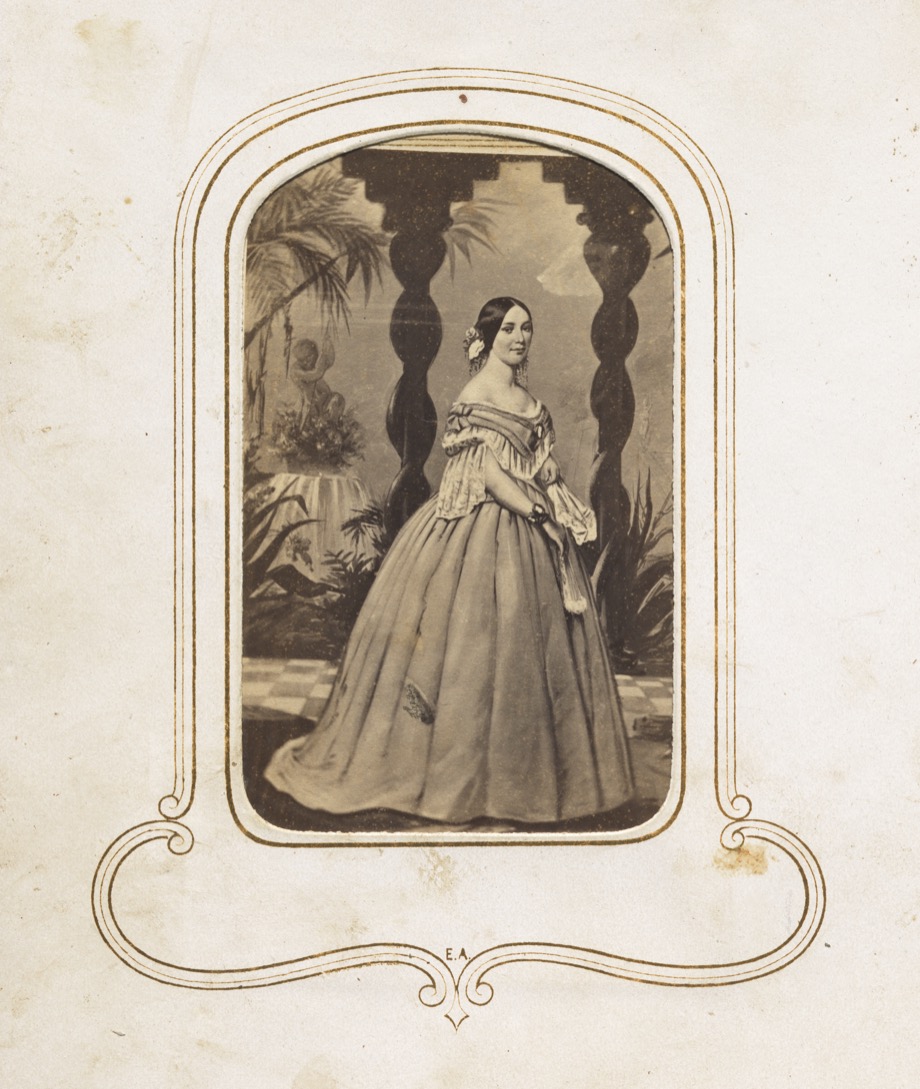
Portrait of Varina Howell Davis
The Wife Who Saw It Coming
Varina Howell Davis was eighteen when she met the man she would marry — a widower twice her age, formal to the point of stiffness, a man whose convictions arrived pre-formed and rarely moved again. She was the opposite of that on every axis that mattered: quick, curious, restlessly observant, a reader who devoured newspapers and novels alike and turned both into conversation. Contemporaries who met her expecting a planter's ornamental bride instead found a woman who argued politics, quoted poetry from memory, and said what she thought whether or not the room wanted to hear it.
That combination made her a strange fit for the role history handed her. As First Lady of the Confederacy she was expected to preside — graciously, decoratively, silently — over a government she privately doubted would survive its own contradictions. She ran the Confederate White House with real competence, hosted a salon that pulled in wits and dissenters alike, and kept up a stream of sharp, often prophetic private correspondence about the men running the war effort. She was, by nearly every account, more perceptive about the Confederacy's prospects than her husband — and considerably less careful about hiding it.
She read the room the government was standing in long before the government did — an ENFP's restless pattern-sense, married to a man who trusted only what he had already seen proven.
Reading the Room the Cabinet Couldn't
Varina's dominant Ne showed up first as sheer conversational range — she moved between literature, politics, gossip, and strategy in the same afternoon, and people who spent an evening with her came away startled by how much ground she covered without ever seeming to try. That same faculty, turned on the machinery of the Confederate government, produced something rarer: an early, unsentimental read on where the war was actually headed. While official Richmond traded in confident set-pieces about Southern resolve, she was privately tracking the cabinet's infighting, the mismatch between the Confederacy's resources and its ambitions, and the widening gap between what the government said and what it could deliver.
She did not keep these observations to herself the way a more cautious personality might have. Her letters and her table talk carried real skepticism about men her husband trusted, and about the cause's odds — expressed vividly enough that it occasionally embarrassed the administration she was supposed to be the public face of. It is the signature of dominant Ne under pressure: pattern-recognition that keeps generating new angles on a problem long after everyone else has settled on the official story, and a personality too animated to fully suppress what it sees.
Too Plainspoken for the Part
Richmond society had a template for a First Lady, and Varina did not fit it. She was expected to be gracious, decorative, and largely silent on matters of substance; she was instead intellectually assertive, quick to correct a wrong assumption in company, and visibly uninterested in performing modesty she did not feel. The criticism she drew — too outspoken, too clever by half, insufficiently ornamental — was really a complaint about a strong auxiliary Fi refusing to subordinate itself to a role it found hollow.
Her Fi surfaced most clearly in her friendships, which crossed political and social lines that a more image-conscious woman would have avoided, and in her private candor about people and causes she found wanting — including, at times, aspects of the Confederacy itself. She performed public loyalty to her husband's government because the circumstances demanded it, but the performance never fully closed the gap between what she said in public and what she believed in private. That gap is Fi's signature: a personal moral compass that keeps its own counsel even while outwardly complying.
Running a Household Under Siege
For all her restlessness, Varina was not merely a critic on the sidelines — she actually ran things. The Confederate White House functioned, under wartime scarcity and mounting anxiety, as a working household and a genuine social hub, and that took organizational follow-through her tertiary Te supplied without much fanfare. She managed a staff, a schedule, and a constant flow of visitors, dignitaries, and favor-seekers, converting her Ne-driven social instincts into something that actually held together administratively.
It shows too in the clarity of her private assessments of men and policy — not vague dissatisfaction but specific critiques of specific failures in the cabinet and the war effort, delivered with the bluntness of someone who wanted problems named and fixed rather than politely ignored. Tertiary Te in an Fi-led personality rarely seeks control for its own sake; here it mostly appears as impatience with incompetence and a practical hand keeping a household — and a fiction of normalcy — running through a war she suspected was already lost.
Why ENFP Over INFP
Why not INFP?
The Fi is real, but the engine driving it is not introverted intuition — it's an outward-facing hunger for people, conversation, and new angles that an INFP's inward focus doesn't match. Varina sought out company, ran a salon, and thrived on the friction of live argument rather than retreating to process things alone. Her assessments of the war and the cabinet arrived quickly, in conversation, refined against other people's reactions — Ne's method, not Ni's. An INFP reading of her mistakes the moral conviction for the whole picture and misses the restless, extroverted curiosity underneath it.
What separates Varina from her husband, and from a quieter Fi-dominant reading of her, is the same thing in both directions: an Ne that would not stop generating possibilities, married to a Te practical enough to act on the ones that mattered. She was not a passive moral witness to the Confederacy's failure. She argued, organized, hosted, and predicted — an ENFP working in public even when the public role she'd been handed asked her to do none of it.
Connected Figures
Further Reading
- Varina Davis: American First Lady, Confederate First Lady — Joan E. CashinThe standard modern biography
- Mary Chesnut's Civil War — ed. C. Vann WoodwardCross-reference for daily life inside Confederate high society
- Jefferson Davis, American — William J. CooperFor the marriage and the husband's contrasting temperament
- Behind the Scenes — Elizabeth KeckleyThe pre-war and wartime memoir linking the two First Ladies' households
