 Historical Figure MBTI
#812 · 6-13-26 · The American Civil War
Mary Boykin Chesnut
The Diarist Who Wrote the Confederacy's Autopsy
1823–1886
5 min read
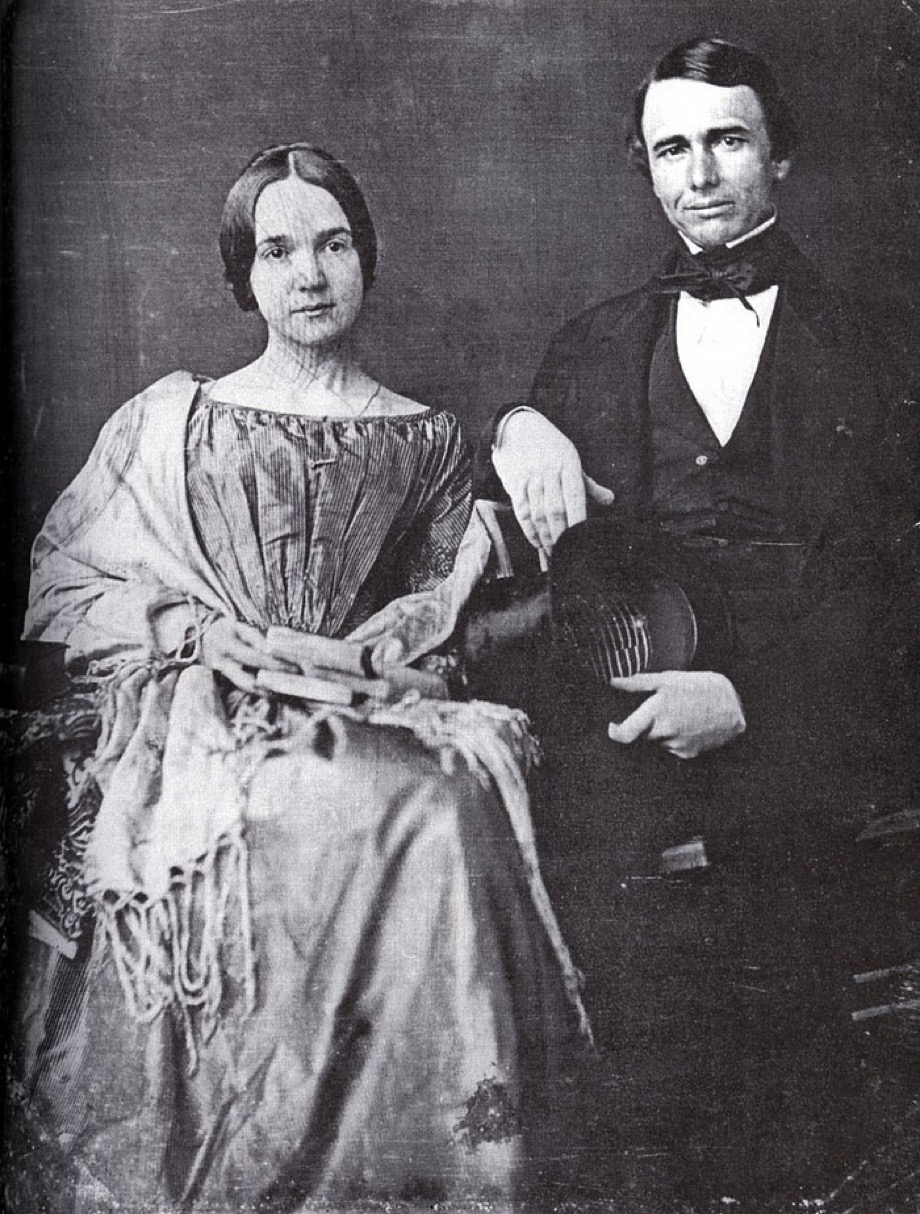
Portrait of Mary Boykin Chesnut
The Confederacy, Diagnosed From the Inside
Mary Boykin Chesnut had no office, no vote, no army — only a pen, a keen eye, and a front-row seat to the collapse of a civilization she belonged to and could not stop watching herself belong to. Married at seventeen to James Chesnut Jr., a South Carolina senator who became one of Jefferson Davis's closest aides, she spent the Civil War circulating through the drawing rooms of Charleston, Montgomery, and Richmond — present, by chance and connection, at nearly every hinge point of the Confederate experiment, from the bombardment of Fort Sumter to the war's exhausted final year.
What she did with that vantage point was extraordinary. In a diary she never intended for immediate publication, she recorded not the patriotic pageant her class told itself it was staging, but the thing underneath it: a slaveholding aristocracy proclaiming its own liberty while built on the total unfreedom of others, its men publicly pious and privately predatory, its women trained to smile through both. She was ENTP to the core — an mind that could not stop generating possibilities and could not stop testing them against cold logic, restless in a role that gave her nowhere legitimate to put either.
Chesnut's ENTP mind turned a life with no formal outlet into the single sharpest autopsy the Confederacy ever received — written by one of its own.
A Mind That Would Not Sit Still
Chesnut's diary reads like a mind refusing containment. In a single entry she could leap from a Richmond dinner-party joke to a meditation on the psychology of Southern men, from a rumor about a general's mistress to a prediction of how the war would end — each connection made instinctively, restlessly, before the last one had finished landing. This is Ne operating at full throttle: a hunger for pattern, possibility, and the unspoken implication behind every polite surface.
It made her a brilliant, occasionally cruel observer of her own society. She caught contradictions other diarists smoothed over — the hypocrisy of enslavers denouncing Northern tyranny, the open secret of white men fathering children on enslaved women while their wives said nothing. Where more conventional minds saw scandal to be managed, she saw a thesis to be pursued, turning gossip into evidence and evidence into argument almost against her own will.
That same restlessness made her a difficult fit for the passive domestic role assigned to a senator's wife. Childless, chronically bored by needlework and social ritual for their own sake, she treated the war itself as an unfolding intellectual problem — devouring newspapers, cross-examining generals at dinner, hunting always for the next angle on a catastrophe she could not otherwise touch.
The Private Court of Judgment
Underneath the social observation sat a colder, more exacting instrument. Chesnut's Ti shows up as the discipline that stopped her diary from becoming mere anecdote — she built arguments, not just impressions. Her famous line comparing the Confederacy's slave society to "a monstrous system" wasn't an emotional outburst; it was the end product of a mind that had turned the question over, tested it against what she'd actually witnessed, and arrived at a verdict she trusted more than the consensus around her.
She applied the same rigor to military and political judgment, often more clear-eyed than the men actually running the war. She distrusted Confederate optimism early, read the Union's material advantages correctly, and said so in writing — years before those conclusions became safe to hold. It cost her nothing socially, because she kept it in the diary; but the willingness to reach an unpopular conclusion and hold it privately, unblinking, is Ti's signature.
Fluent in the Room, Even While Dissecting It
For all her private severity, Chesnut was genuinely gifted at the social performance her class demanded. She moved easily through Richmond's wartime salons, was welcomed into Jefferson and Varina Davis's inner circle, and by every account charmed rooms full of generals and politicians who never suspected how thoroughly she was cataloguing them. That fluency is tertiary Fe — real, functional, even enjoyed, but never quite load-bearing the way Ne and Ti were.
It's why the diary works as literature and not just analysis: she could render Varina Davis's exhaustion or a soldier's terror with genuine warmth, not only diagnose it. But the warmth served the observation rather than replacing it — she used her social gifts to gain access to rooms and confidences that a colder, more withdrawn temperament never could have entered.
Why ENTP Over INTP
Why not INTP?
An INTP diarist would likely turn inward, building private systems of thought with little appetite for the social theater Chesnut clearly relished. But Chesnut sought out rooms, cultivated access, and drew energy from conversation — she needed the party to have something to dissect. Her Ne was extraverted and expansive, not the internally churning Ni-adjacent abstraction of an INTP; she generated material from the world outside her, not from a closed internal system. And she was, by every account, socially adept and sought-after — not the withdrawn observer INTP's Fe-inferior would suggest.
The combination is what makes the diary singular: the extraverted hunger for pattern and possibility (Ne) paired with the private, unsentimental rigor to actually reach conclusions (Ti), wrapped in enough social fluency (Fe) to gain entry everywhere the material was. Take away any one piece and you get either a brilliant recluse with no access, or a charming socialite with no argument. Chesnut was both, and that is precisely what ENTP predicts.
Connected Figures
Further Reading
- Mary Chesnut's Civil War — ed. C. Vann WoodwardThe definitive scholarly edition, restoring the full scope of Chesnut's wartime revisions.
- A Diary from Dixie — Mary Boykin ChesnutThe original abridged edition that first brought her diary to wide readership.
- Mary Chesnut: A Southern Girl of Sixty — Elisabeth MuhlenfeldA biographical study of Chesnut's life before and beyond the diary years.
- Fighting for the Confederacy — E. Porter AlexanderA companion Confederate memoir useful for cross-referencing Chesnut's social and military observations.
