 Historical Figure MBTI
#811 · 6-13-26 · The American Civil War
Joseph Emory Davis
The Brother Who Made Jefferson Davis Possible
1784–1870
3 min read
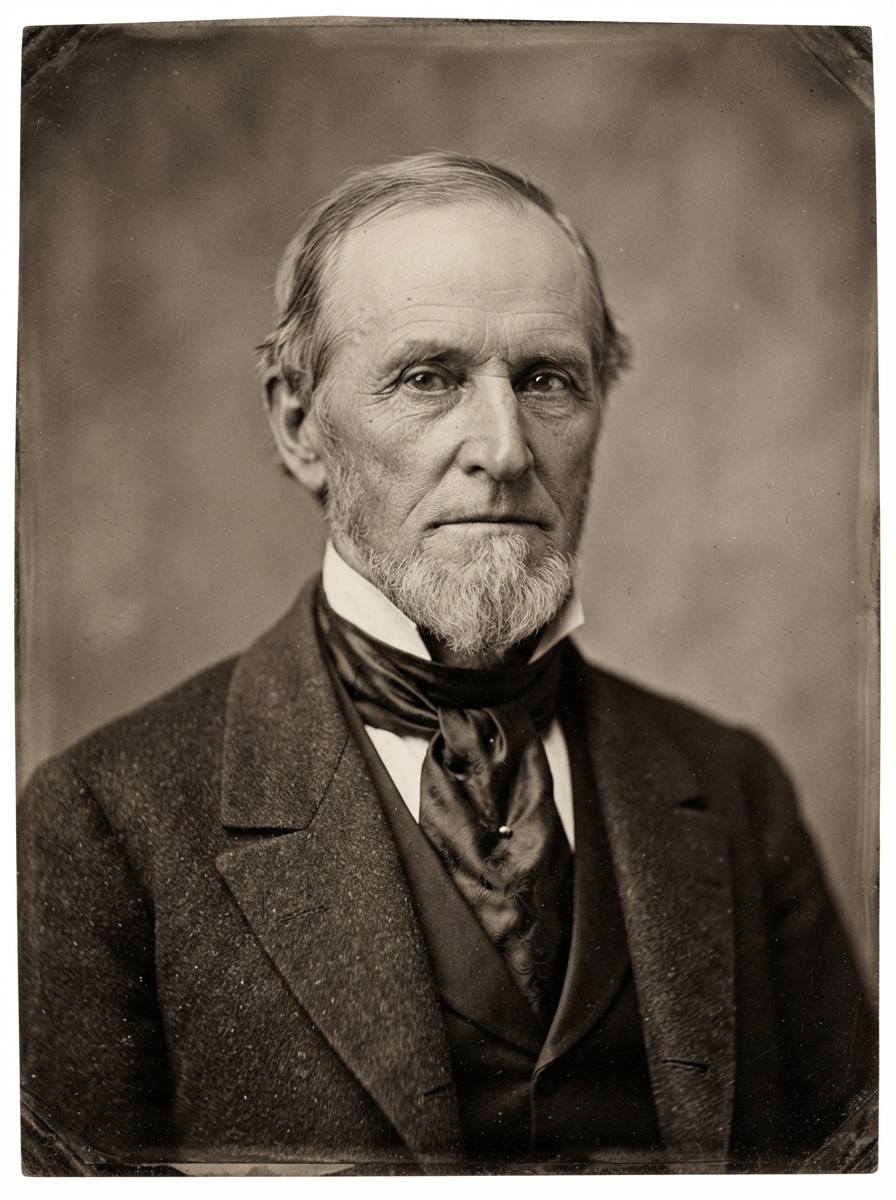
AI-assisted Portrait of Joseph Emory Davis
The Architect Behind the President
Joseph Emory Davis was born in Georgia in 1784, twenty-four years before his half-brother Jefferson, and by the time Jefferson was orphaned of a working father, Joseph had already become something closer to a second one. Self-made as a lawyer and planter, Joseph built his fortune methodically in frontier Mississippi, eventually assembling the Davis Bend plantation complex on a bend of the river south of Vicksburg — a holding large and prosperous enough that he could afford to experiment with it.
That experimentation is the most distinctive thing about him. At Davis Bend, Joseph instituted a plantation court where enslaved people could bring grievances and receive rulings, along with limited authority over their own labor allocation and discipline — a system he framed not as moral reform but as an incentive structure, a long-horizon theory about how order and productivity actually worked. It was not benevolence in any modern sense; it was a planner's hypothesis, tested on human beings, and it made Davis Bend a minor curiosity among Southern estates.
Joseph's larger project, though, was Jefferson. He financed his half-brother's education, set him up at Brierfield — a plantation carved out of his own land — and stayed his closest adviser through law, the Senate, the War Department, and the Confederacy's presidency. Few men in American history did more to engineer another man's rise while remaining almost entirely offstage.
Joseph Davis thought in decades, not seasons — a builder of systems and of people, most visibly the brother he spent a lifetime constructing into a statesman. That is the signature of INTJ.
Every piece of the record points the same direction. The plantation court was not an emotional response to slavery's cruelty but a structural experiment in incentives — Ni generating a long-range theory, Te implementing it as policy and measuring its results. The decades-long, unsentimental investment in Jefferson's career reads the same way: not affection performed for its own sake, but a private conviction (Fi, tertiary and rarely surfaced) about his brother's worth, translated into decades of patient, practical engineering. Joseph rarely appears in the anecdotes of his own era — he preferred building the stage to standing on it, the quiet architecture of an inferior-Se introvert who trusted foresight over spectacle. When Union forces raided and occupied Davis Bend in 1862–63, the plantation experiment he had spent decades constructing came apart almost overnight, a blunt collision with the present-tense world his function stack was least equipped to master.
Connected Figures
Further Reading
- Jefferson Davis, American — William J. Cooper Jr.The definitive biography; covers Joseph's role in shaping Jefferson's early life and career
- The Pursuit of a Dream — Janet Sharp HermannA close study of the Davis Bend plantation experiment
