 Historical Figure MBTI
#833 · 6-16-26 · The American Civil War
Mary Anna Custis Lee
The Wife Who Lost Arlington
1808–1873
4 min read
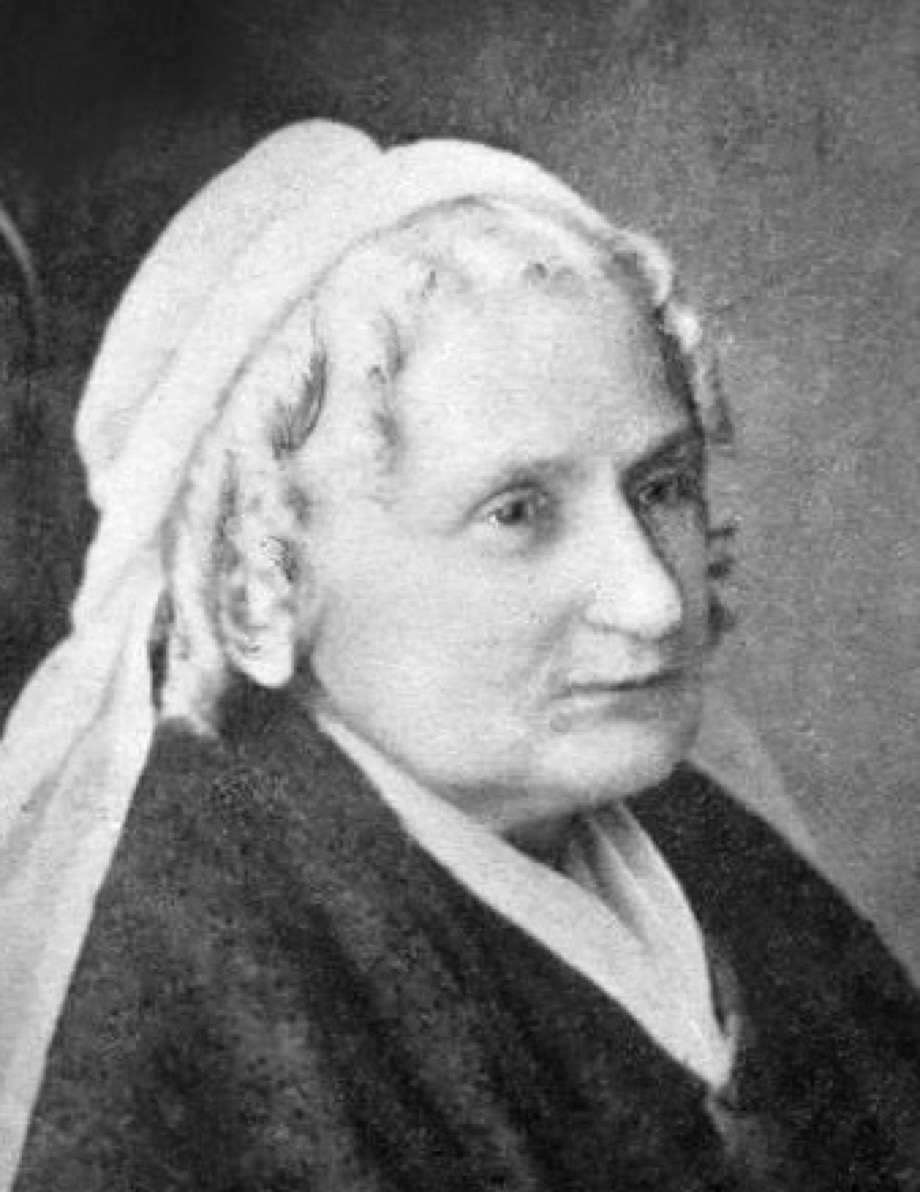
Portrait of Mary Anna Custis Lee
The Woman Who Never Stopped Grieving a House
Mary Anna Randolph Custis was born in 1808 into a name too large for any one life to carry comfortably. Her father, George Washington Parke Custis, was the adopted grandson of George Washington, and Mary grew up at Arlington House, the columned mansion he built on the heights above the new capital as a shrine to that inheritance. She was raised, in effect, inside a museum of someone else's greatness — surrounded by Washington relics, expected to be gracious, pious, and quietly accomplished, and given, unusually for a woman of her class, a real education in Latin, botany, and literature that she pursued for its own sake rather than for display.
In 1831 she married Robert E. Lee, a childhood acquaintance and a young army officer with none of her fortune, and for the next three decades Arlington remained the fixed point of her world even as his career pulled the family from post to post. She bore seven children, nursed her father through his final illness, and by midlife was living with a severe rheumatoid arthritis that slowly took her mobility, confining her increasingly to a chair. What she never lost was a private, stubborn interior life — a habit of judging the world by her own conscience rather than by what her class expected her to say aloud, including, quietly and imperfectly, about the people her family enslaved.
When her father died in 1857, Mary inherited Arlington and, with it, his will's instruction that the enslaved people there be freed within five years. She and Robert moved toward that obligation unevenly and too slowly by any honest modern measure — but she pressed for it in a way that mattered to her personally, not merely as an estate matter to be settled. Then came 1861. As Union troops advanced on Washington, Mary fled Arlington with what she could carry, certain she would return. She never did. The estate was seized, and the government began burying soldiers in its gardens — the origin of Arlington National Cemetery. She spent the rest of the war as a guest in other people's houses, sewing and organizing small comforts for Confederate soldiers from a wheelchair, mourning a home that had become a graveyard she was forbidden to enter.
An INFP measured everything against a private moral compass no one else could fully see — and lost the one place that had ever let her feel at home in the world.
A Private Conscience in a Public Catastrophe
Mary Custis Lee's psychology reads clearest in what she did without an audience: a running interior argument about slavery that she carried on largely with herself, in letters and private notes, years before it became fashionable or safe to have doubts aloud. That is dominant Fi — value formed inward, tested against her own sense of right rather than against prevailing opinion, and held to with quiet stubbornness even when it cost her comfort with the people around her. It shows too in her attachment to Arlington itself, which was never simply real estate to her; it was the physical form of everything she loved and believed she owed to memory, family, and faith, and its loss registered as something closer to a wound than an inconvenience.
Her auxiliary Ne surfaces in the education she pursued for its own curiosity and in a correspondence that ranged restlessly across botany, scripture, and news of the war rather than staying fixed on domestic minutiae. But it was tertiary Si — her devotion to inherited ritual, to the Washington relics, to the rhythms of a household she had known her entire life — that made Arlington's loss so total a rupture; she was not simply displaced, she was cut off from the accumulated texture of her whole identity. Under wartime pressure her weakest function, Te, showed in her difficulty managing practical negotiations over the estate and its people, leaving follow-through inconsistent even where her convictions were genuine. What remained constant through illness, exile, and grief was the interior compass itself — she kept judging by it to the end.
Connected Figures
Further Reading
- Reading the Man: A Portrait of Robert E. Lee Through His Private Letters — Elizabeth Brown PryorDraws heavily on Mary Custis Lee's own correspondence and the couple's private life at Arlington.
- Arlington House: The Robert E. Lee Memorial — National Park ServiceOfficial history of the estate, its confiscation, and its transformation into a national cemetery.
- Mary Custis Lee: A Biography — Elizabeth Pryor Brown (Virginia Historical Society archives)Primary-source-based sketch of her life, illness, and wartime displacement.
