 Historical Figure MBTI
#835 · 6-16-26 · The American Civil War
J.E.B. Stuart
The Cavalier Who Rode Circles Around the Union
1833–1864
7 min read
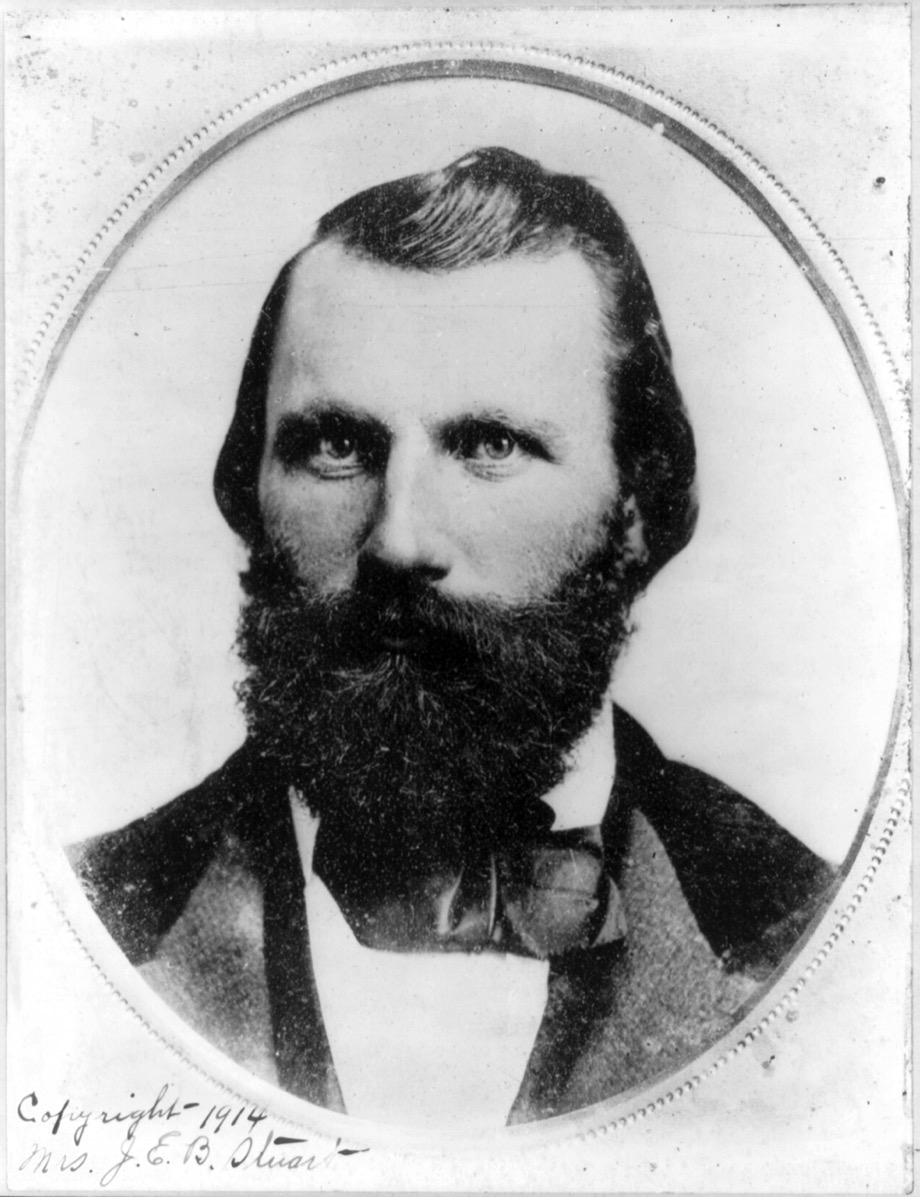
Portrait of J.E.B. Stuart
A Banjo, a Plume, and an Army He Rode Circles Around
In June 1862, James Ewell Brown Stuart took roughly 1,200 Confederate cavalrymen and rode entirely around George McClellan's Army of the Potomac — a four-day loop through Union-held Virginia that produced real intelligence Robert E. Lee needed, and also produced exactly the kind of story Stuart loved telling about himself. A banjo player rode with the column. Stuart wore a red-lined cape, a hat with an ostrich plume, and yellow sash, and he treated the raid less like a covert operation than a performance staged for an audience that included the enemy. That the performance also worked — Lee got the intelligence that shaped the Seven Days campaign — was the whole of Stuart's method in miniature.
He is best understood as an ESFP, a type built for exactly this kind of war: fast-moving, visible, improvised in the moment, and animated by a hunger for the theater of action itself. Stuart did not merely tolerate risk — he sought out the version of soldiering that put him at the front of a saber charge or the center of a daring loop around an army twice his size, and he did it with a showman's instinct for how the story would read afterward. Beneath the plume was something less decorative: a fierce, personal loyalty to Lee and to the men under him, the kind that made him one of the war's most trusted subordinates even when his judgment failed him.
And it did fail him, once, at the worst possible moment. In the last days of June 1863, Stuart took his cavalry on an extended ride around the Union army during the opening of the Gettysburg campaign, chasing the same kind of glory the 1862 ride had won him — and this time it cost Lee his eyes. Stuart did not reach the battlefield until the afternoon of July 2, by which point Lee had already fought the first day blind to where the Union army actually was.
Stuart was ESFP in his gifts and in his one great failure alike — a cavalier whose genius for seizing the moment left him no instinct at all for what the moment would cost later.
The Eyes and Ears of the Army
Stuart's core competence as a cavalry commander was pure Se: an appetite for direct, physical, in-the-moment engagement with terrain and enemy movement that made him exceptional at reconnaissance and screening — the two jobs Confederate cavalry existed to do. He read a battlefield the way other men read a room, moving his troopers with an improviser's speed to wherever the next piece of intelligence was sitting, and he did it under fire without hesitation. Through most of the war's major campaigns, Lee treated Stuart's reports as close to gospel because Stuart earned that trust the hard way, riding the ground himself rather than waiting on it to be described to him.
The Ride Around McClellan in June 1862 is the purest expression of that gift — and of its theatrical excess. Stuart did not need to circle the entire Union army to gather the intelligence Lee wanted; a shorter probe would have sufficed. He chose the loop because it was more audacious, more visible, and more fun, and he brought a banjo player along to prove it. That the raid also worked, rattling Union confidence and confirming exploitable gaps in McClellan's position, is exactly the ESFP paradox: the showmanship and the competence were never separate impulses.
Loyalty Without a Ledger
Underneath the plume and the sash was a code Stuart held to with real conviction, not for effect. His devotion to Lee was personal rather than merely hierarchical — he served with the loyalty of a man who had chosen his commander, not just been assigned to him, and he extended the same instinct downward to his own troopers, who by most contemporary accounts adored him in return. This is Fi doing what it does best: an internal, values-based commitment that does not need to be argued for because it is simply felt and then acted on.
That loyalty shaped how he led. Stuart was not a martinet running his cavalry by the book; he cultivated fierce personal bonds with his staff and subordinates, men like Wade Hampton, and led as much by earned affection as by rank. It made him one of the most effective and beloved commanders in Lee's army — and it is also part of why the Gettysburg failure stung so badly. Stuart's loyalty to Lee was never in question. What he lacked, when it mattered most, was the colder function that might have told him his devotion wasn't enough on its own.
The Blind Spot at Gettysburg
Ni asks a question Se rarely bothers with: what does this decision look like three days from now, from a vantage point I don't currently occupy? It is Stuart's weakest function, and its absence is the entire explanation for his gravest failure. In the final week of June 1863, as Lee's army marched north into Pennsylvania, Stuart chose an aggressive, glory-seeking route around the Union army rather than the tighter screening role Lee needed from him — a decision that made perfect sense in the moment and none at all in the longer arc Lee was trying to see.
The consequence was that Lee fought into Gettysburg on July 1 without reliable word of where the Union army actually stood, and Stuart himself did not rejoin the army until the afternoon of July 2 — a full day into the battle. Whether a present Stuart would have changed the outcome is unknowable, but the failure of foresight is not: an ESFP who reads terrain and momentum brilliantly in the present tense had no equivalent instinct for the strategic picture unfolding beyond his own horizon, and the army paid for it at the worst possible moment.
Why ESFP Over ISFP
Why not ISFP?
ISFP shares Stuart's Fi-driven personal loyalty and his sensory engagement with the world, but it leads with Fi and holds Se in reserve — a quieter, more private temperament that avoids the spotlight rather than seeks it. Stuart did the opposite. He staged his exploits, dressed for effect, and told his own story as he went, all hallmarks of dominant Se paired with auxiliary Fi rather than the reverse. An ISFP cavalry officer might have been just as brave and just as loyal to Lee, but he would not have brought a banjo player along to be sure everyone remembered it.
Set the two side by side and the order of the functions explains the whole career: Stuart's instinct was always to act first, in public, and let the values underneath justify the act afterward — the mark of dominant Se over auxiliary Fi. It made him the finest reconnaissance commander in Lee's army for most of the war, and it made him late to Gettysburg at the one moment reconnaissance mattered most.
Connected Figures
Further Reading
- Jeb Stuart: The Last Cavalier — Burke DavisThe standard biography, covering Stuart's rise and his controversial Gettysburg ride in full.
- Lee's Lieutenants — Douglas Southall FreemanThe classic study of Lee's high command, including Stuart's role in the army's major campaigns.
- Stuart's Cavalry in the Gettysburg Campaign — Warren C. RobinsonA focused account of the ride that left Lee without cavalry intelligence.
