 Historical Figure MBTI
#517 · 4-21-26 · The Wars of the Roses
Anthony Woodville, Earl Rivers
Earl Rivers · Chivalrous Scholar, Caxton's Patron
c. 1440 — 1483
7 min read
AI-assisted Portrait of Anthony Woodville, Earl Rivers
The Hair Shirt Beneath the Finery
The Woodvilles were the most resented family in fifteenth-century England — grasping, suddenly elevated, hated by the old nobility for the marriages and offices they swept up after Edward IV took Elizabeth Woodville as his queen. Anthony Woodville, her brother, was the family's great exception. He was a celebrated jouster who held the lists against the best of Burgundy, a crusader who took the cross against the Saracens and the Moors, and a serious scholar in an age when few great lords could be bothered to read. Beneath the cloth-of-gold he wore a hair shirt; between the tournaments he went on pilgrimage. The most cultured man of a despised clan was also its most devout.
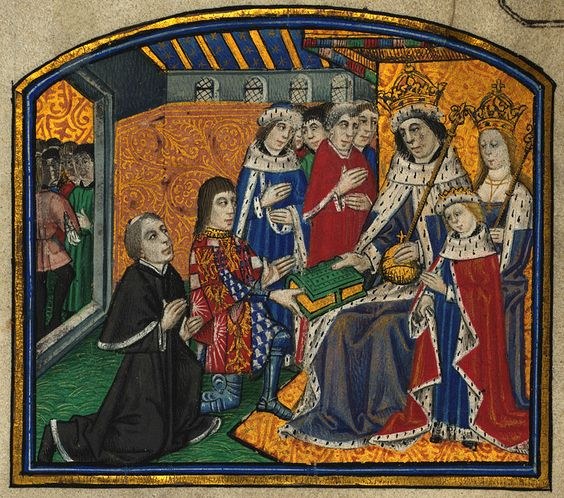
Born around 1440 and styled Earl Rivers after his father, he became the patron of William Caxton, the merchant who brought the printing press to England. Anthony's own translation, the “Dictes and Sayings of the Philosophers,” printed by Caxton in 1477, was the first book ever produced in the English language — a volume of moral maxims chosen, characteristically, by a knight who collected wisdom the way other lords collected land. Edward IV trusted him with the most intimate charge in the realm: governor and tutor to the young Prince Edward, raising the boy who would briefly be Edward V at Ludlow.
Anthony Woodville is the INFJ at court — an inward, idealistic mind that turned its private devotion outward into chivalry, tutelage, and a printed book, reaching for a vision of the good in a world that had no use for it.
When that world finally caught up with him, he met it with the quiet of a man who had rehearsed his own end in prayer for years.
The Inward Pilgrim
Ni — dominant
Dominant Ni is the faculty that lives inside — that fixes on a single deep image of meaning and lets the visible world fall away around it. In Anthony this took an explicitly religious shape. The hair shirt worn unseen beneath the tournament armor is almost too perfect a symbol: the entire public life of jousts and embassies was a surface, and the real life ran underneath it, private, austere, and turned toward God. He went on pilgrimage not as a political gesture but as a man genuinely convinced that the inner journey was the only one that finally counted.
That same inwardness gave him an unsettling composure about his own death. Arrested and held at Pontefract, denied any real defense, he did not rage or scheme. He composed a short poem — a quiet, resigned meditation on the turning of fortune and the vanity of worldly hopes — while he waited for the axe. It reads like a man for whom the verdict had long since been foreseen, who had carried the vision of his own ending inside him the way Ni carries everything: as a settled certainty, arrived at privately, well before the world confirmed it.
The Grace That Reached Outward
Fe — auxiliary
Auxiliary Fe is what kept Anthony's inwardness from curdling into mere withdrawal. It is the faculty of cultivated courtesy, of attunement to others, of grace as a moral practice rather than a manner — and it shaped the chivalric ideal he so visibly tried to embody. The gentleness with which he tutored the young prince at Ludlow, the refined courtliness that even his enemies acknowledged, the famous tournaments fought with the elaborate ceremony of an art form: these were Fe giving Ni's private ideals a public, social body.
The Caxton patronage is the clearest case. Choosing the “Dictes and Sayings of the Philosophers” — a book of moral counsel — and putting his weight behind England's first printer was an act of Fe in the largest sense: the wish to share wisdom, to improve the moral atmosphere of the realm, to give something good to a culture rather than merely take from it. Where the rest of the Woodvilles grasped, Anthony gave; and what he gave outlasted every office his family ever seized.
The Collector of Maxims
Ti — tertiary
Tertiary Ti shows up in Anthony as a genuine, slightly bookish love of distilled principle. He did not merely commission the “Dictes and Sayings”; he translated it himself, working through the sentences of ancient philosophers and rendering them into English — the patient, private labor of a man who enjoyed the internal logic of a well-made maxim. The choice of text is telling: not romance, not chronicle, but a compendium of moral reasoning, wisdom pared down to its working parts.
In the tertiary position this analytical bent served the dominant vision rather than competing with it. Anthony was never a systematizer or a debater; his Ti was the quiet pleasure of getting a principle exactly right, of grounding his piety and his chivalry in articulated thought rather than mere feeling. It is the scholar's cast of mind in a knight's body — reasoned conviction in service of an inner ideal.
The Jouster Who Was Too Fine for the Fight
Se — inferior
There is an apparent paradox in calling a champion jouster an inferior-Se type. But the tournament was Se in its most controlled, ritualized, almost spiritualized form — physical prowess governed by elaborate rule and chivalric meaning, the body made into an emblem. Anthony excelled at it precisely because he could load it with significance. What he lacked was the other face of Se: the brutal, present-tense political instinct for who holds power right now, and what they will do to keep it.
That blind spot killed him. As he escorted his royal nephew toward London for the coronation, Anthony seems not to have grasped, until it was far too late, how quickly and ruthlessly the boy's uncle Richard, Duke of Gloucester — soon Richard III — would move. He was arrested almost without resistance, sent to Pontefract, and executed in 1483, a refined and devout man undone by the one form of reality he could not read. The grasping Woodvilles, for all their faults, understood the present-tense scramble for power; their finest member, lost in a higher vision, did not.
Why INFJ Over INFP
Why not INFP?
The piety, the hair shirt, the inward devotion all point tantalizingly toward the INFP's private idealism — a faith kept for its own sake, sheltered from the world. But Anthony did not keep his ideals private. He shaped a future king, drove the Caxton project that gave England its first printed book, and built a whole public career out of embodying chivalry. His inwardness reached outward into deeds and institutions, which is the Ni-Fe signature, not the Fi-Ne one.
The distinction is between idealism kept and idealism enacted. The INFP guards an inner vision; the INFJ feels compelled to translate it into the shared world — to tutor, to publish, to model a way of being for others. Anthony's devotion was never merely his own; it became a book in the English language, a prince's education, and an ideal of the Christian knight pressed upon a court that did not want it. That outward, directed, world-shaping current is what makes him INFJ rather than INFP.
Connected Figures
Further Reading
- William Caxton and Early Printing in England — Lotte HellingaThe authoritative account of England's first printer and the patrons — Anthony among them — who launched English printing.
- The Woodvilles: The Wars of the Roses and England's Most Infamous Family — Susan HigginbothamA sympathetic study of the much-maligned clan that sets Anthony's culture and piety against his relatives' reputation.
- Edward IV — Charles RossThe standard biography of the king Anthony served — essential for the politics of the court that made and then destroyed the Woodvilles.
