 Historical Figure MBTI
#515 · 4-21-26 · The Wars of the Roses
Edward IV
King of England · The Warrior Who Won the Crown at Towton
1442 — 1483
11 min read
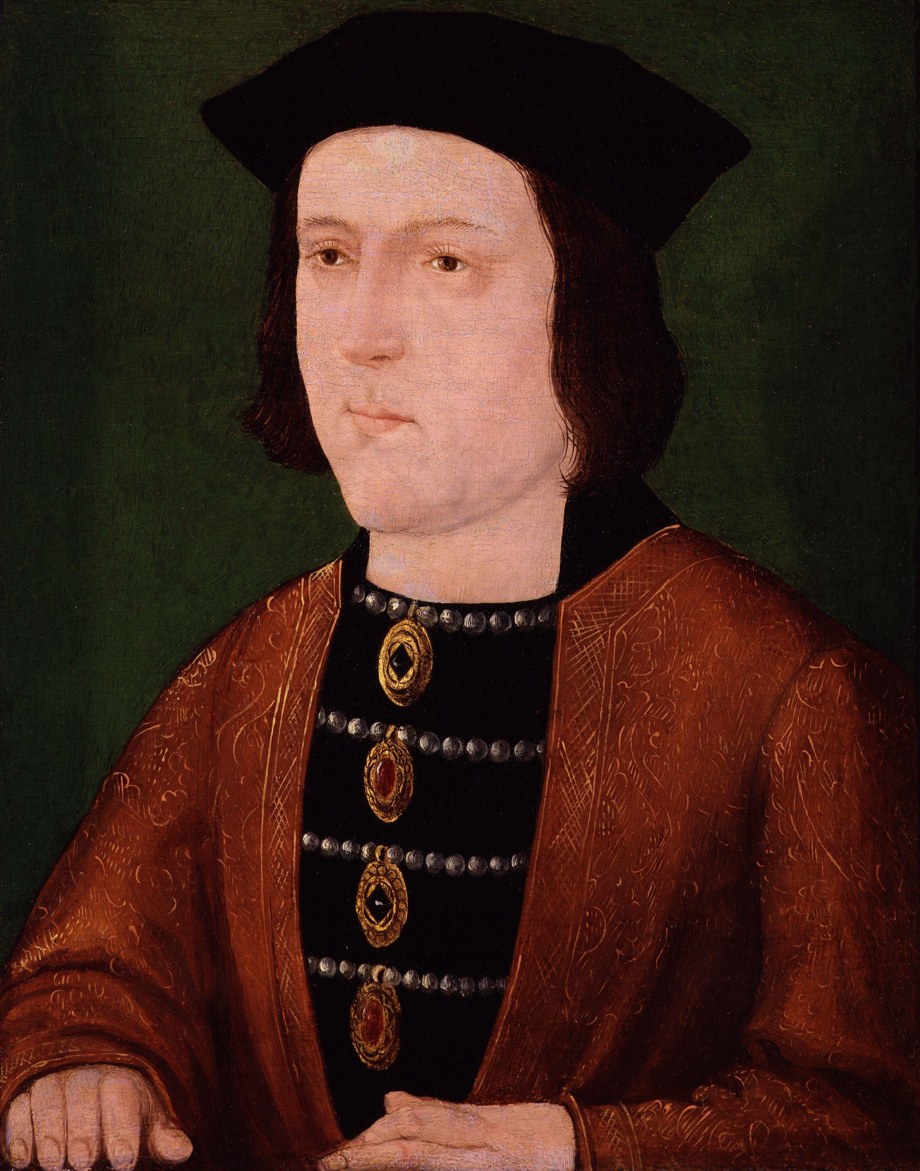
AI-assisted Portrait of Edward IV
The Sun in Splendour
He was eighteen years old, six feet four inches tall, and he had just won a kingdom in a snowstorm. On Palm Sunday of 1461, on a frozen field near the Yorkshire village of Towton, Edward, Earl of March, broke the House of Lancaster in the bloodiest battle ever fought on English soil — perhaps twenty-eight thousand dead in a single day, the snow running red, the rout pursued for miles. A few weeks earlier his father, Richard, Duke of York, and his younger brother had been killed at Wakefield, their heads spiked over the gates of the city that bore their name. Edward did not mourn long. He marched, he fought, he won, and he had himself crowned. The Yorkist dynasty was founded by a teenager who solved the problem of his own succession with a sword.
Everything about Edward was outsized — his height, his beauty, his appetite, his charm. Contemporaries called him the handsomest man of his age, and he knew it; he wore his badge, the radiant “sun in splendour,” as a literal advertisement of his magnetism. He could remember the name and face of any commoner he had met once. He ate and drank to excess, bedded half the court, and could still rise before dawn to outmarch an army. For twenty-two years — with one humiliating interruption — he held the throne by sheer force of presence and tactical genius, and he is the ESTP rendered in royal scale: the warrior who lived entirely in the charged, physical present and was supremely, dangerously alive there.
And then, at forty, he simply burned out — dead in his bed in 1483, worn down by his own pleasures, leaving two small sons and a crown that his brother would steal within weeks. The man who had been so brilliant at seizing the moment had never once planned for the day after.
Edward was the ESTP on a throne — Se dominance married to a hard tactical Ti, a king who read a battlefield, a balance sheet, and a woman with the same instantaneous, predatory clarity, and who could not, to save his own dynasty, see past the end of the week.
The Man Supremely Alive
Se — dominant
Dominant Se is total immersion in the sensory present — the body, the room, the moment of action — and Edward inhabited it more completely than almost any king England produced. On the battlefield this was genius. He fought in person, at the front, and he read terrain and momentum in real time the way other men read a page. At Towton he held a disintegrating line through a day-long blizzard and turned it into annihilation. At Barnet, in fog so thick the armies misaligned, he kept his nerve and his bearings while Warwick's host blundered into its own flank. Three weeks later at Tewkesbury he destroyed the last Lancastrian army in the field and extinguished the rival line. He never lost a battle he commanded. The Se warrior does not theorize about war; he is faster, calmer, and more present in the chaos than anyone across the field.
Off the battlefield the same dominant function ran toward pleasure. Edward was a glutton and a womanizer on a scale that scandalized even a tolerant age — the Italian observer Mancini noted that he gorged himself, then took emetics so he could gorge again. His mistresses were legion; the most beloved, the witty London merchant's wife Jane Shore, he called the “merriest” of them. He loved fine clothes, feasts, hunting, and display. This is Se with no governor on the throttle: the appetite for vivid, immediate experience that made him so compelling in a room and so magnetic to the people who, uniquely among medieval kings, simply liked him.
What makes Edward's Se specifically royal is that it scaled. His charm was not idle — it was the instrument of his rule. A king who could make every man he met feel singularly seen, who could win a crowd by walking into it, who could turn his own physical splendour into political capital, governed through presence the way a lesser man governed through fear. The problem was that presence has no memory of tomorrow.
The Solvent King
Ti — auxiliary
It would be easy to mistake Edward for a pure hedonist, all body and no head. The historical record refuses the caricature. Beneath the feasting was a genuinely shrewd, analytical mind — auxiliary Ti, the cold logical machinery that the ESTP runs underneath the pleasure-seeking, and it showed most clearly in money. Edward was the first English king in living memory to die out of debt. He restructured the royal finances, took the customs revenue firmly in hand, traded as a merchant prince through his own ships and agents, leaned on benevolences and the wool trade, and drove the crown from chronic insolvency to actual surplus. Where the Lancastrian kings had begged Parliament for money and squandered it, Edward made the monarchy pay for itself.
The same impersonal logic governed his statecraft. He patronized the Burgundian merchant William Caxton and the printing press Caxton brought to Westminster — not out of bookish sentiment but because Edward grasped, quickly and concretely, what a new technology and an expanding trade could do for a realm. His diplomacy with France in 1475 ended not in a heroic campaign but in the Treaty of Picquigny: he marched an army to Calais, then accepted a large pension from Louis XI to march it home again. Critics called it a sellout. Edward called it profit. Ti does not care how a thing looks; it cares whether the arithmetic works.
This is the dimension that separates Edward from a mere reveler. His judgment, when he chose to apply it, was ice-clear and unsentimental — he could weigh a war, a marriage alliance, or a customs duty with the same detachment he brought to a battle line. The tragedy is that he applied it so unevenly. The man who balanced the royal books could not be bothered to secure his own succession, because securing a succession is a problem that lives entirely in the future, and the future was the one country Edward never visited.
The King Who Married for Love
Fe — tertiary
Tertiary Fe gave Edward an instinctive read on people — whom to charm, whom to flatter, how to make a hall warm to him — but it was an unstable, often impulsive instrument, and it produced the single greatest blunder of his reign. In 1464, at the height of his power, Edward secretly married Elizabeth Woodville, a Lancastrian widow of no royal blood and modest fortune, for no reason any contemporary could see except that he wanted her and she would not have him otherwise. Kings married for alliance, for territory, for cash. Edward married for desire and affection, in secret, and then sprang it on a court that had been negotiating a French match on his behalf. It was a decision of the heart taken with no thought for its political weather — Fe and Se overriding the Ti that should have known better.
The fallout was enormous. The marriage humiliated Richard Neville, Earl of Warwick — the “Kingmaker,” the cousin and ally whose armies and money had put Edward on the throne — who had been brokering the French alliance in good faith and now learned he had been made a fool. The flood of Woodville relatives into court offices and rich marriages curdled Warwick's resentment into rebellion. In 1470 Warwick allied with Edward's own treacherous brother George, Duke of Clarence, drove Edward into exile in Burgundy, and briefly restored the broken Lancastrian king. Edward's warmest, most human act had nearly cost him everything.
Yet the same Fe was also a source of real strength. Edward forgave easily — too easily, some said. He took Clarence back after open treason. He could bind men to him with genuine affection, and his court had a conviviality the dour Lancastrians never managed. In an ESTP this is exactly the tertiary's double edge: a power to gather people and a tendency to let feeling and impulse make decisions that judgment should have made.
The Future He Never Saw
Ni — inferior
Inferior Ni is the ESTP's blind spot: the long arc, the consequence three moves out, the quiet work of building something that will outlast the present moment. Edward's reign is a case study in its absence. He was magnificent at the immediate crisis — show him an army and he would destroy it, show him a rebellion and he would crush it — and almost incapable of the patient, anticipatory governance that secures a dynasty after the strongman is gone. He never reconciled the factions his Woodville marriage created. He never resolved the deadly rivalry between his queen's family and his brother Richard. He left those fractures open, trusting, in effect, that he would always be there to manage them in person.
His body made that assumption fatal. Edward in his late thirties was no longer the lean giant of Towton; the gluttony and the dissipation had thickened and slowed him, and in April 1483, after a short illness, he died at forty — suddenly, without warning, a man worn out by his own excess decades before his time. The Se appetite that had made him so vivid in life simply consumed the life. And because he had never done the future-facing work, he left a ten-paragraph problem with no solution: a boy king of twelve, a second son of nine, a hated Woodville faction, and an immensely capable, immensely ambitious younger brother holding the office of Protector.
What followed is the inferior function's bill come due. Within three months Richard had set aside both boys as illegitimate, taken the crown as Richard III, and lodged his nephews — the Princes in the Tower — in the fortress from which they were never seen again. Everything Edward had won at Towton and Tewkesbury, the whole Yorkist achievement, unraveled in a single summer because the king who could win any battle had never once planned for the day he would not be there to fight it.
Why ESTP Over ESFP or ENTJ
Why not ESFP?
The pleasure-loving, crowd-pleasing, present-focused Edward looks at first like a textbook ESFP — the warm entertainer who lives for the moment. But the ESFP leads with feeling, and Edward led with a cold tactical edge that never softened. The same man who married for love also read a battlefield like a ledger, balanced the royal treasury, and took Louis XI's pension at Picquigny without a flicker of sentiment. His decisive function in a crisis was the impersonal logic of the strategist, not the values-driven warmth of the ESFP. He was an improviser, but a calculating one.
Why not ENTJ?
His father, Richard, Duke of York, was the ENTJ — the systematic, future-driven builder who pursued a long campaign for the crown and never lived to wear it. Edward was the opposite kind of man. He won by reacting faster and fighting better in the actual moment, not by executing a master plan, and his fatal weakness — the unguarded succession, the unresolved factions — was precisely the long-range, visionary planning the ENTJ does in its sleep. A strategist with Edward's gifts and inferior Se would have secured the dynasty and skipped the battles; Edward did the reverse.
The whole of Edward IV lives in that contrast. He was not the visionary architect his father was, nor the feeling-led charmer the ESFP reading would make him. He was the supreme tactician of the present moment — magnetic, shrewd, and lethal in any contest he could see and touch, and blind to every contest scheduled for after he was gone. That is the ESTP at the height of its power and the depth of its blind spot, written across an entire reign.
Connected Figures
Further Reading
- Edward IV — Charles RossThe standard scholarly biography — measured, authoritative, and still the starting point for the reign.
- Edward IV — Michael HicksA sharper, more critical reassessment that weighs Edward's failures of governance against his battlefield brilliance.
- The Wars of the Roses — A. J. PollardThe clearest concise account of the dynastic conflict that made and nearly unmade Edward's crown.
- The Hollow Crown: The Wars of the Roses and the Rise of the Tudors — Dan JonesThe most readable narrative history of the period — vivid on Towton, Tewkesbury, and the collapse that followed Edward's death.
