 Historical Figure MBTI
#511 · 4-20-26 · The Wars of the Roses
Richard, Duke of York
The Yorkist Claimant Who Challenged the Throne
1411 — 1460
8 min read
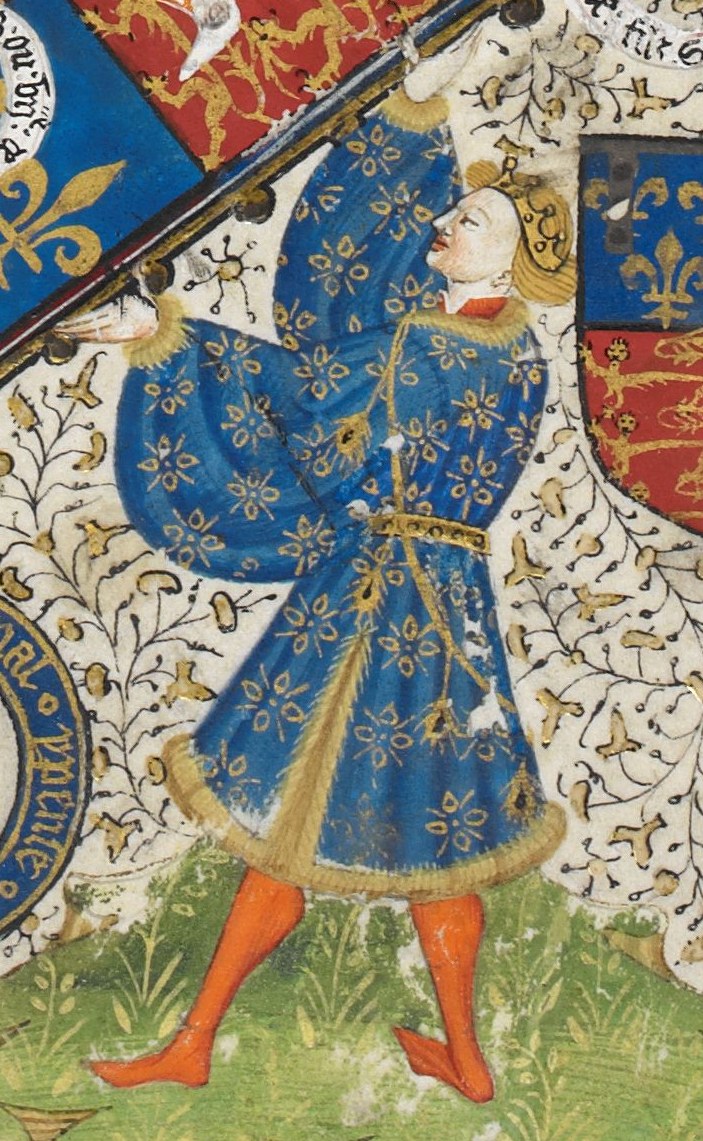
AI-assisted Portrait of Richard, Duke of York
The Man With the Better Claim
Richard Plantagenet, Duke of York, was the richest and most powerful magnate in fifteenth-century England, and he never let anyone forget it. Through a double royal descent from Edward III — from the second surviving son through his mother and from the fourth through his father — he carried a claim to the throne arguably stronger than that of the man who actually wore the crown. For most of his life he served that crown loyally enough: as lieutenant in France, as the king's premier subject, as a great landholder whose word moved counties. But York could not abide being shut out of the power his blood and his lands entitled him to, and the court of Henry VI — pious, pliable, and bankrupt — shut him out at every turn.
Born in 1411, orphaned young and raised a ward of the crown, York spent decades accumulating titles, estates, and grievances in roughly equal measure. The court that ran England in the king's name was dominated by his rival Edmund Beaufort, Duke of Somerset, and increasingly by the formidable queen, Margaret of Anjou. York watched France lost, the treasury emptied, and his own claims to office and influence stonewalled — and he pressed back, harder each time, until pressing became rebellion and rebellion became a war. He is the great Yorkist claimant whose challenge began the Wars of the Roses, and the relentless ambition that drove him is unmistakably that of the ENTJ.
York carried the ENTJ signature into the heart of English politics: dominant Te marshalling lands, money, and armies into a faction; auxiliary Ni bending it all toward a single distant target — not an office, not a regency, but the crown itself.
The Engine of a Faction
Te — dominant
Dominant Te is the assertion of power through structure: command, organization, the marshalling of resources toward a result. York had more raw material to work with than any subject in England, and he worked it relentlessly. His estates spanned the Welsh Marches, Ireland, and the north; he could field private armies, advance loans to a chronically broke crown, and bind lesser lords to his cause through the network of patronage that fifteenth-century power ran on. Where another magnate might have been content to be the wealthiest man in the realm, York treated his wealth as infrastructure — a war-chest and a faction waiting to be deployed.
His instinct, when blocked, was always to systematize the grievance into a campaign. Twice he was made Lord Protector during the king's bouts of incapacity, and both times he governed with brisk competence, attacking corruption and waste in the royal household with the manner of a man auditing a failing enterprise. He pressed his claims to unpaid wages from his French service, to the lieutenancy he felt was owed him, to a seat at the centre of government — not as abstract principle but as ledger entries that demanded settling. Te keeps accounts, and York's accounts with the Lancastrian court grew longer every year.
When persuasion failed he reached for force, and even his rebellions had the look of organized procedure rather than wild revolt. He marched on London demanding the reform of the king's council and the removal of Somerset; he won the field at St Albans in 1455 and immediately set about governing as Protector again. The pattern is unmistakably Te: identify the obstruction, build the apparatus to remove it, apply it, and convert victory into administration. The crown was simply the largest result his machinery was ever pointed at.
The Long Game for the Crown
Ni — auxiliary
If Te supplied York's means, auxiliary Ni supplied his trajectory. What separates York from the ordinary overmighty subject is the strategic, escalating shape of his ambition — a design built over years, each step raising the stakes toward an end he seems to have glimpsed long before he dared name it. He did not lurch at the throne. He moved toward it through a sequence so deliberate it reads, in retrospect, like a single converging line: loyal magnate, then aggrieved claimant, then armed reformer, then Protector, and at last claimant to the crown itself.
The pivot came in 1460. After years of insisting he sought only to reform the king's government and remove evil counsellors, York walked into Parliament, strode to the empty throne, and laid his hand upon it — an open declaration that the grievance had always been about the crown. The result was the Act of Accord, the compromise that named York and his heirs successors to Henry VI and disinherited the queen's son. It was a half-victory engineered out of decades of pressure: he did not depose the king, but he made himself the future. Ni works backward from the envisioned end, and the Act of Accord was the end made visible at last.
That single-mindedness was also his blind spot. The vision fixed on the throne could not quite see the immediate danger of a queen with an army and a disinherited son to fight for. York read the long arc correctly — his line would take the crown — but the strategist who saw the dynasty's future could not see the trap a few weeks ahead of him.
The Field and the Sword
Se — tertiary
Tertiary Se gave York a taste for the decisive physical stroke — the moment when argument ends and the sword settles the matter. He was a soldier by training and temperament, comfortable on campaign in France and unhesitating about taking the field at home. When the political machinery jammed, he reached for the immediate, tangible solution: raise the levies, march, and force the confrontation. The first Battle of St Albans in 1455 was Se in action — a sudden, violent settling of a quarrel that years of petitions had failed to resolve, and which left his rival Somerset dead in the street.
But tertiary Se is a strength that curdles into impatience under pressure, and at the end it betrayed him. In December 1460, holed up at Sandal Castle near Wakefield with a smaller force, York chose to sally out and give battle rather than wait behind his walls for reinforcements. The decision was rash — the boldness that had served him in his prime now overreaching the situation. At the Battle of Wakefield his army was destroyed and York was cut down. The man who had spent a lifetime building a careful apparatus died because, in the end, he could not resist the immediate fight.
The Wound of Right Denied
Fi — inferior
Beneath York's cold competence ran a deep, inflexible conviction of his own rightness — the inferior Fi that gives the ENTJ its private sense of justice and, when wounded, its inability to let an injury go. York genuinely believed that what he claimed was owed him: by blood, by law, by the loyal service the crown had failed to reward. This was not naked greed dressed up as principle; he seems to have felt the slights of the Lancastrian court as moral affronts, and that felt sense of grievance gave his ambition a stubbornness that pure calculation never would.
Inferior functions are clumsy, and York's Fi could not modulate. He could not bring himself to accept a lesser settlement, swallow an insult, or share the future gracefully. The same rigid certainty of being right that powered his rise also made compromise nearly impossible — the Act of Accord, which disinherited a sitting queen's son, was the kind of all-or-nothing demand a man makes when he is sure his cause is just. His enemies repaid the conviction in kind. After Wakefield they cut off his head, crowned it with a paper crown in mockery of the man who would be king, and set it above the gates of York. It was a cruelty aimed precisely at his Fi: a parody of the right he had felt so deeply, displayed for a city to see.
Why ENTJ Over ESTJ
Why not ESTJ?
The ESTJ is the consummate administrator of an existing order — the man who runs the office he is given well, enforces the rules, and keeps the institution functioning. York could administer; his protectorates prove it. But he was not content to steward the realm on another's behalf. His ambition was strategic and mounting, built over years toward a single far-reaching design — a claim on the crown itself — not the steady management of a post within a hierarchy he accepted. That escalating, future-directed vision is auxiliary Ni, not the ESTJ's Si-grounded loyalty to the established structure.
The distinction is the difference between a manager and a claimant. An ESTJ of York's capacity would have made an indispensable lieutenant of the crown, pressing his grievances within the system and accepting, however bitterly, the limits of his office. York reached past all of that. He pointed his lands, his money, and his bloodline at the throne and aimed his whole house at it — and when he died short of it, that design did not die with him. It is the ENTJ's Te-Ni ambition, not the ESTJ's administrative diligence, that started a dynastic war and founded a line of kings.
Connected Figures
Further Reading
- Richard, Duke of York: King by Right — Matthew LewisA sympathetic modern biography that takes seriously York's claim and the strength of his case against Henry VI.
- Duke Richard of York, 1411–1460 — P. A. JohnsonThe standard scholarly study of York's career, landholding, and politics — the authoritative academic account.
- The Wars of the Roses — Dan JonesA vivid narrative history of the dynastic conflict York set in motion, tracing it from Wakefield to Bosworth.
