 Historical Figure MBTI
#510 · 4-20-26 · The Wars of the Roses
Margaret of Anjou
Queen of England · The 'She-Wolf' Who Led the Lancastrian Cause
1430 — 1482
8 min read
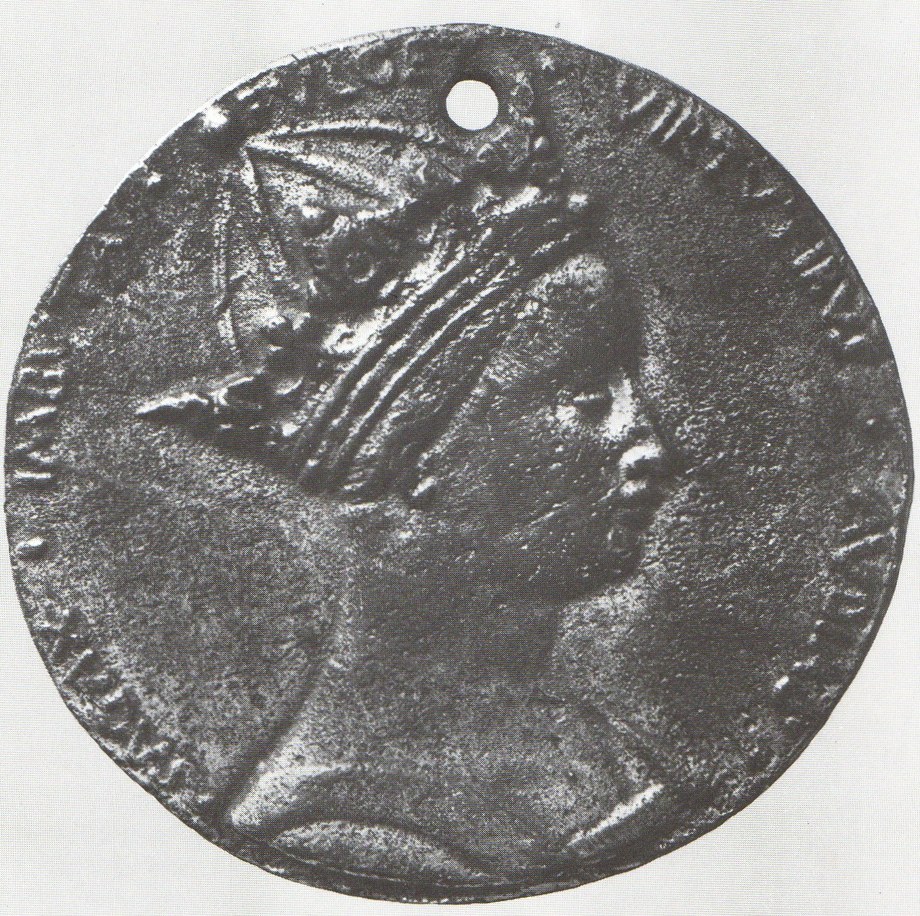
AI-assisted Portrait of Margaret of Anjou
The Queen Who Became the War
She married a king and ended up commanding an army. When Margaret of Anjou arrived in England in 1445 as the fifteen-year-old French bride of Henry VI, no one expected her to do anything but produce an heir and grace the court. What no one had reckoned with was that her husband was a gentle, devout, fundamentally unwarlike man—ill-suited to rule a fractious kingdom of armed magnates, and in 1453 felled by a complete mental collapse that left him catatonic for over a year. Into that vacuum stepped a queen who turned out to have exactly the iron the throne lacked.
For the next two decades Margaret was the real driving force of the Lancastrian cause in the Wars of the Roses. She built and led a faction, raised armies and the money to pay them, and fought—literally, through the field commanders she directed—against Richard, Duke of York, and the Yorkists who meant to displace her son. She won savage victories and suffered catastrophic defeats, was driven into exile, ransomed, and finally broken; yet she fought on long after almost anyone would have surrendered. Shakespeare would later brand her the “she-wolf of France,” and modern audiences reach for figures like Cersei Lannister to describe her—the indomitable, ruthless warrior-queen who refused to let a lost cause die.
Margaret of Anjou was the ENTJ as wartime commander: a dominant drive to organize, marshal, and lead, fused to a single fixed strategic vision—her son's inheritance—that she pursued through defeat after defeat until there was nothing left to pursue.
The Will the Throne Was Missing
Te — dominant
Dominant Te is the impulse to take a disordered situation and impose structure on it—to organize people, resources, and force toward an outcome. Margaret's whole career is a study in that impulse filling a void. Her husband could not command; she could. When Henry's 1453 breakdown left the Crown leaderless, Margaret did not retreat into the queen's traditional role of intercession and prayer. She tried to seize the regency outright, and when York took the protectorship instead, she set about building the rival power base that would contest him for the rest of the decade.
What she built was an actual war machine. She marshalled the northern and Welsh lords, secured the money to keep armies in the field, and drove the Lancastrian cause with a relentlessness its nominal king never supplied. The Battle of Wakefield in 1460 was her instrument's grimmest triumph: York was killed, and his severed head was mockingly crowned with a paper crown and set above the gates of the city he had claimed—a piece of brutal political theatre entirely in keeping with the war Margaret was waging. Months later her forces won the Second Battle of St Albans. She did not administer a cause; she generated it.
This is the Te signature taken to its hardest edge. Margaret organized men and money the way a commander does—by results, by leverage, by sheer mobilizing drive—and she did it in a fifteenth-century world that gave a foreign queen no formal warrant to do any of it. The authority she wielded was authority she manufactured.
One Crown, One Fixed Idea
Ni — auxiliary
If Te supplied the drive, auxiliary Ni supplied the single point that all of it aimed at. Ni is the orientation toward one converging vision, held across time and circumstance, and Margaret's was unmistakable: the inheritance of her son, Edward of Westminster. Everything she did after his birth in 1453—every alliance, every campaign, every reversal of fortune—was subordinated to securing his place in the line of succession. When the Yorkists forced the Act of Accord disinheriting Edward in favour of York's line, they did not weaken her resolve; they gave it its enemy.
The mark of Ni is that the vision survives the destruction of the means to reach it. Margaret was beaten at Towton in 1461—the bloodiest battle ever fought on English soil, and the end of Lancastrian rule—and she did not stop. She took her son into exile, intrigued across courts, and spent a decade assembling whatever coalition might restore him: a deal even with the Earl of Warwick, the very man who had done most to topple the Lancastrians. She bent pride, alliance, and circumstance around the one goal that never moved.
That is the difference between stubbornness and strategic fixation. Margaret was not merely refusing to quit; she was holding to a destination and reorganizing the route to it again and again. The cause had a king in name, but it had its long game from her.
At Home on the Field
Se — tertiary
Tertiary Se shows up as a readiness to act in the physical world directly—to ride to the army, to be present where force is decided, to meet a crisis with motion rather than deliberation. Margaret had it in abundance. Where other queens worked through letters and proxies from a safe distance, she put herself at the head of the Lancastrian war effort, moving with her forces, rallying lords in person, and treating the battlefield as the place where her cause would be won or lost. Her armies were known and feared—the northern host she led south after Wakefield left a trail of plunder that hardened opinion against her even as it won ground.
This appetite for decisive physical action gave her command its formidable, immediate quality. It is also what made the “she-wolf” image stick: a queen who did not flinch from the violence of her age but waded into it. Se in the tertiary slot is a real strength here—the nerve to be where the danger was—though it could also tip toward the kind of ruthless, in-the-moment harshness that cost her support she could not afford to lose.
The Purpose That Hardened
Fi — inferior
The ENTJ's inferior Fi is the buried, undeveloped seat of personal value—and under enough pressure it tends to fuse with the dominant drive rather than soften it. In Margaret that fusion is the whole tragedy. The love and loyalty at her core were genuine: fierce devotion to a husband too weak to protect himself, and an absolute maternal commitment to her son's right. But because that feeling never developed into anything supple or self-questioning, it calcified into something pitiless. Loyalty became a reason to forgive no betrayal; protectiveness became a licence for any cruelty in its name.
The paper crown set on York's severed head, the executions in cold blood, the willingness to unleash a marauding army on her own kingdom—these are inferior Fi at its most warped, a private wound transmuted into public ruthlessness. Margaret never bent, never compromised her central allegiance, never admitted the cause might be unworthy of its cost. The same immovable conviction that made her indomitable made her unable to cut her losses when wisdom demanded it.
The end came at the Battle of Tewkesbury in 1471, where her son was killed and the Lancastrian cause destroyed for good. Captured and imprisoned, later ransomed by Louis XI of France, she died in poverty in 1482—the one thing she had organized her entire life around taken from her on the field. The will that had carried her through every defeat had nothing left to carry.
Why ENTJ Over ESTJ
Why not ESTJ?
The ESTJ is the dutiful administrator of an existing order—a manager who executes the responsibilities of an office well and within its established bounds. Margaret did the opposite. She had no office to administer; the structures she needed did not exist, so she generated them, building a faction from nothing and driving it across a decade toward a goal that lay far in the future. That is the strategic, vision-led Te-Ni signature of the ENTJ, not the present-focused Te-Si of the ESTJ, who organizes what is rather than forging what must be.
The distinction is generative reach. An ESTJ in Margaret's position would have run the queen's household and the king's affairs with competence and waited for the rightful machinery of state to resolve the crisis. Margaret supplied the machinery the Lancastrian cause was missing—the strategy, the coalition, and above all the will—and aimed it all at a single far-reaching dynastic vision: her son on the throne. She was not maintaining an inheritance; she was fighting one into being.
Connected Figures
Further Reading
- Margaret of Anjou: Queenship and Power in Late Medieval England — Helen E. MaurerThe essential scholarly reassessment — recovers the political queen beneath the 'she-wolf' caricature.
- Shadow King: The Life and Death of Henry VI — Lauren JohnsonA rich modern biography of Henry that illuminates the failing kingship Margaret stepped in to fill.
- The Wars of the Roses — Dan JonesA propulsive narrative of the whole dynastic conflict — the clearest single account of the campaigns Margaret led.
