 Historical Figure MBTI
#512 · 4-20-26 · The Wars of the Roses
Richard Neville, Earl of Warwick
'The Kingmaker' · Who Made and Unmade Kings
1428 — 1471
9 min read
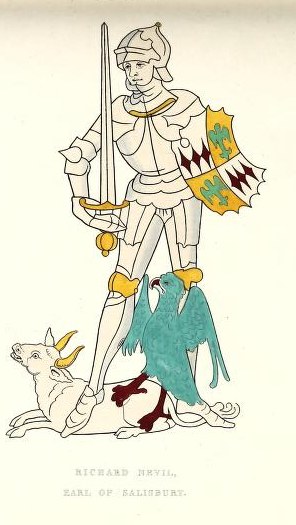
AI-assisted Portrait of Richard Neville, Earl of Warwick
The Man Who Treated the Crown as His to Give
He was the richest and most powerful subject England had ever produced, and he came to believe the throne itself was a thing in his personal gift. Richard Neville, Earl of Warwick, has been known for five centuries by a single, astonishing nickname — the Kingmaker — and it was earned literally. Over the bloody decade of the Wars of the Roses he installed one king, then deposed him and restored the rival he had himself helped to overthrow. No English magnate before or since has so openly behaved as though the crown were an instrument of his own ambition rather than the other way around.
Born in 1428 into the vast Neville affinity and married into the even vaster Beauchamp inheritance, Warwick controlled wealth, lands, retainers, and a private army on a scale that dwarfed the resources of the king he served. He was also a brilliant self-publicist: he kept open house in London, fed the city crowds at his expense, commanded a fleet that made him a popular hero against pirates and the French, and cultivated a reputation as the people's champion. He backed Richard, Duke of York, and after York's death helped put York's son on the throne as Edward IV in 1461 — then made himself the power behind it.
When that king slipped his grip, Warwick did not retire to nurse the grievance. He rebelled, allied with his old mortal enemy Margaret of Anjou, drove Edward out of the kingdom in 1470, and restored the deposed Henry VI to the throne — the so-called Readeption, the supreme act of kingmaking. He was the supremely capable, charismatic, and treacherous power-broker of his age, and his every move bore the fingerprints of one cognitive signature.
Warwick was the ENTJ as overmighty magnate — commanding Te marshalling unmatched wealth and armies, fused to a strategic Ni vision that saw the crown itself as a piece to be moved, and a king as merely the man you chose to place upon the board.
The Engine of Power
Te — dominant
Dominant Te organizes the external world into instruments of effect — resources, hierarchies, logistics, leverage — and asks of everything a single question: what can this be made to do? Warwick was Te at industrial scale. He did not merely possess the largest fortune in England; he ran it like a war machine. His estates funded standing retinues, his harbours funded a fleet, and his patronage network turned lesser lords and gentry into a private power structure that could put thousands of armed men into the field on his word. Where others inherited wealth and let it sit, Warwick converted it into kinetic, political force.
The Te competence showed most clearly in how he bent the formal machinery of the state to his ends. He used Parliament, the Calais garrison, the City of London, and the popular press of broadsheets and rumour with equal fluency — not as ends in themselves but as tools to be marshalled toward an outcome. When he wanted Edward of York crowned, he organized the men, the money, the propaganda, and the timing, and the thing was done. When he wanted Edward gone, he assembled the rebellion with the same administrative thoroughness. He was, above all, supremely capable, and capability for the Te dominant is its own argument for command.
What distinguishes Warwick's Te from mere ambition is its restlessness in the face of resistance. A king who would not be managed was, to him, simply a malfunctioning instrument — and Te does not sulk over a broken tool, it reaches for another. The decision to unmake the very king he had made was not a fit of pique but the cold logic of a man for whom the throne was a position to be filled, optimally, by whoever served his design.
The Long Game of the Crown
Ni — auxiliary
If Te supplied the machinery, auxiliary Ni supplied the design it served. Ni in the ENTJ is the convergent strategic intuition that sees past the immediate quarrel to the single outcome that matters — and Warwick's outcome was always the same: control of the throne, through whoever could be made to sit on it. He did not fight for a faction the way lesser lords did, out of loyalty or grievance. He fought toward a vision in which the crown was permanently within his reach, and the identity of the man wearing it was a detail to be arranged.
This is why his career reads as a series of moves rather than a record of allegiances. He backed the Yorkist claim not because he was a Yorkist partisan to the bone but because York — and then Edward — was the vehicle through which his design could be realized. The moment Edward married a queen of his own choosing in secret, Elizabeth Woodville, and began stacking the court with her relatives, the vehicle stopped serving the design. Warwick's response was not to argue but to reach for a different vehicle — even one as improbable as the broken, captive Henry VI he had spent a decade fighting to destroy.
The Readeption of 1470 is the purest expression of this Ni vision. To restore the king he had himself deposed, in alliance with the queen who had sworn to see him dead, required a mind willing to subordinate every loyalty, memory, and appearance to one converging end: the crown back under his hand. It was a breathtaking act of strategic imagination — kingmaking as a long game, where the pieces are interchangeable and only the board itself is the prize.
The Showman and the Battlefield
Se — tertiary
Tertiary Se gave Warwick his command of the present moment — the theatrical instinct for spectacle, the feel for a crowd, and the physical courage to put himself where the action was. He was a magnificent self-publicist in an age that had barely invented the concept. He kept a famously lavish London household where, the chroniclers report, men could carry away as much roast meat as they could spear on a dagger; he understood that visible, sensory generosity bought a loyalty no charter could. The Se showman knew that power not seen is power not felt.
That same function made him a creature of the immediate field. He won his early fame as a naval commander in the Channel, where the gratifications were tangible and the glory instant. On land he fought at the front of his own battles rather than directing from safety — a habit that built his legend and, in the end, killed him. Tertiary Se in service of dominant Te is the warlord's appetite for decisive, physical resolution: when a problem could be settled by force in the present, Warwick reached for the sword with relish.
The Wound of Wounded Pride
Fi — inferior
Inferior Fi in the ENTJ is the buried, undeveloped sense of personal value — and when it is touched, it does not negotiate. For all his strategic command, Warwick's great rupture with Edward IV was not, at root, a calculated move. It was an injury. He had made the king; he expected to be the king's indispensable partner, the hand that guided the realm. Edward's secret marriage and his elevation of the Woodvilles read to Warwick as a personal repudiation — a denial of the worth he had earned in his own eyes. The inferior function turns such a slight into something existential.
This is the crack in the Te-Ni edifice. A purely strategic operator might have swallowed the loss of influence and waited for a better hand. Warwick could not. His sense of his own value, normally drowned out by the louder functions, surfaced as pride that demanded satisfaction, and it drove him into the most reckless gamble of his life: an alliance with the one enemy his every instinct should have warned him against. The Readeption was strategic genius animated by something less rational — the felt need of a proud man to prove that he, not the king, decided who reigned.
The bill came due at the Battle of Barnet in 1471. Edward returned within months, and in the fog of that April morning Warwick — for once dismounted to share the danger of his men — was cut down in the rout. The inferior function had led the dominant one onto a field it could not control, and the maker of kings was unmade by the king he had made.
Why ENTJ Over ESTJ
Why not ESTJ?
The ESTJ shares Warwick's commanding Te and his appetite for marshalling men and resources, and on the surface the overmighty magnate could pass for one. But the ESTJ serves the institution — it administers an office, upholds the established order, and finds its identity in duty discharged within a system. Warwick did the opposite. He did not dutifully serve the crown; he treated the crown as a piece on a board he alone was qualified to move. That is the signature of Ni, not Si: a visionary, abstract game to be the maker and master of kings, not a steward's loyalty to the thing as it stood.
The decisive evidence is the scope of the ambition. When one king escaped his control, Warwick did not resign himself to the diminished role an institutional loyalist would have accepted — he simply set out to install another, deposing the man he had crowned and resurrecting the rival he had ruined. That is an aim of breathtaking strategic reach, the Te-Ni combination playing the grandest game the age allowed: not the administration of power, but the ownership of its source. The ESTJ keeps the machine running. The ENTJ decides who the machine is for.
Connected Figures
Further Reading
- Warwick the Kingmaker — Michael HicksThe definitive modern scholarly biography — rigorous on Warwick's finances, retinue, and the machinery of his power.
- Warwick the Kingmaker — Paul Murray KendallThe vivid, narrative classic that fixed Warwick's romantic legend in the popular imagination.
- Warwick the Kingmaker: Politics, Power and Fame — A. J. PollardA focused study of how Warwick built and broadcast his fame — essential on the self-publicist behind the warlord.
