 Historical Figure MBTI
#521 · 4-21-26 · The Wars of the Roses
Cecily Neville
'The Rose of Raby' · Mother of Two Kings
1415 — 1495
7 min read
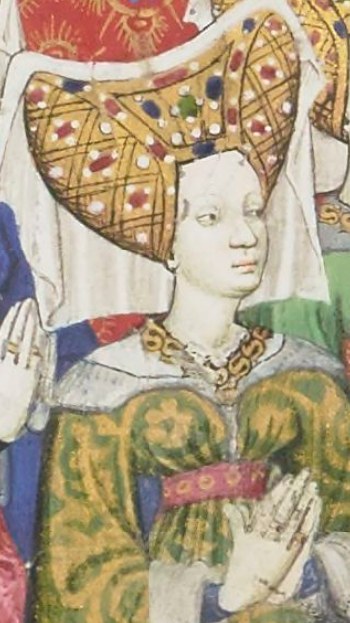
AI-assisted Portrait of Cecily Neville
The Matriarch Who Bent to Nothing
They called her the Rose of Raby, for the Durham castle where she was born, and later Proud Cis, for the quality that defined her to friend and enemy alike. Cecily Neville was the wife of Richard, Duke of York, the mother of two kings of England, and—through her granddaughter Elizabeth of York—an ancestress of the Tudor dynasty that would bury the very wars she lived through. Few people in English history watched so much fall and stood so unmoved.
Born in 1415, she married into the house of York and into the bloodiest dynastic quarrel of the age. Her husband was killed at Wakefield in 1460; several of her sons died violently in the Wars of the Roses; her son Edward IV seized the throne, and after him her youngest surviving son took it as Richard III. She endured the disappearance of her great-grandsons in the Tower, the collapse of her house, and the rise of a new dynasty, and she outlasted nearly all of them, dying in 1495 at the age of eighty. What carried her was not warmth or cunning but something harder: an unbreakable sense of duty, rank, and order that no grief could dislodge.
Cecily Neville was the ISTJ matriarch in full—Si loyalty to family and rank fused with Te command of a great house, a woman who ruled her own grief by rule and met every loss with the same granite steadiness.
The Endurance of the Steadfast
Si — dominant
Dominant Si is the function of continuity—of loyalty to what is established, fidelity to family and rank, and a memory that holds fast through decades. Cecily's whole life reads as an act of preservation. She did not reinvent herself with each turn of fortune; she remained, immovably, the Duchess of York, carrying her house's claim and dignity through reverses that would have broken a less anchored temperament. When Wakefield took her husband and a son in a single day, when battle and execution took more sons after, she did not waver in who she was or what she stood for.
Si's steadiness deepened with age into ritual. In her long widowhood at Berkhamsted, Cecily ordered her days by an almost monastic rule—rising before dawn for prayer, hearing multiple Masses, listening to devotional reading at meals, observing the offices with a discipline more severe than many in religious orders. Her household ran by a fixed horarium she set down in writing. This was Si seeking the consolation it trusts most: not novelty or escape, but routine, repetition, and the settled order of a remembered faith. She managed her grief the way she managed everything—by rule.
The Mistress of a Great House
Te — auxiliary
If Si supplied the loyalty, auxiliary Te supplied the competence. Cecily ran one of the largest noble households in England, and she ran it with an administrator's rigor. As Duchess of York she managed sprawling estates, vast retinues, and the practical machinery of a princely establishment, all while her husband pursued his claim to the throne. Te is the function of order imposed outward—structure, accounts, chains of command—and she wielded it without apology.
The same Te showed in her ferocious defense of her house's standing. She is said to have protested bitterly against Edward's secret marriage to the widowed commoner Elizabeth Woodville—not from spite alone, but because a king of York stooping to marry beneath his rank was, to Cecily, a breach of the proper order of things. Status and precedence were not vanity to her; they were structure, and structure was what kept a great house from ruin. Te does not ask whether a rule is comforting; it asks whether it holds the system together. Hers did, and she enforced it—over kings.
The Private Creed of Pride and Faith
Fi — tertiary
Tertiary Fi in an ISTJ is the quiet inner ledger of personal conviction—values held privately, intensely, and without need of an audience. In Cecily it took two forms. The first was her famous pride, which was not display but an inward, almost moral certainty about who she was and what was owed to her blood. She signed herself in later years “Cecily, the king's mother,” and held to a sense of her own dignity that no humiliation could touch.
The second was her devotion. The piety of her widowhood was not performance; it was a deeply personal interior life, a private reckoning with God conducted through her books of devotion and her unbroken rule of prayer. Fi is the function of conviction that answers to no one outside the self, and Cecily's faith was exactly that—hers, austere, uncompromising, and entirely her own. Where a more outwardly feeling temperament might have sought comfort in company, she withdrew into a creed she kept between herself and heaven.
The Future She Could Not Foresee
Ne — inferior
Inferior Ne is the weakest seat in the ISTJ stack—the function of open possibility, of unmade futures and shifting contingencies. It is precisely what the steadfast Si-Te mind trusts least, and Cecily's long life was, in a sense, a war against it. She met a world of relentless reversal—crowns won and lost, sons risen and slain, alliances made and shattered—with a temperament built for permanence in an age that offered none.
Where inferior Ne surfaces in such a person, it surfaces as dread: an anxious sense that the ground will not hold, met by ever-firmer routine. Cecily's answer to a future she could not control was to control the one thing she could—the order of her own days. The monastic rule of her widowhood was inferior Ne managed by dominant Si: when possibility itself becomes the enemy, the ISTJ retreats into ritual so fixed that no contingency can touch it. She could not foresee the Tudor dynasty that would rise from her own granddaughter's marriage; she could only keep the offices, and wait.
Why ISTJ Over ISFJ
Why not ISFJ?
The ISFJ shares the Si steadiness and the deep loyalty to family, and on the surface Cecily's endurance can look like the ISFJ's. But the ISFJ's warmth is caretaking—it soothes, comforts, and tends. Cecily's steadiness was austere and principled, ordered around rank, dignity, and rule rather than around the emotional needs of those near her. She commanded respect far more than she offered comfort, and her famous pride and firmness point to Te-and-Fi rather than the gentler Fe of the ISFJ.
The decisive tell is how she governed her grief. An ISFJ would have leaned on relationship and shared feeling to carry such loss; Cecily ruled hers by rule, withdrawing into a disciplined private creed and a household ordered like a clock. Her devotion was inward and uncompromising, not warm and consoling; her defense of her house was about order, not tenderness. That is the ISTJ signature—steadiness as principle, not as nurture.
Connected Figures
Further Reading
- Cecily Duchess of York — J. L. LaynesmithThe definitive modern biography — recovers Cecily from legend and reconstructs her household, piety, and political role with scholarly care.
- The Wars of the Roses — Dan JonesA vivid narrative history of the dynastic struggle that consumed Cecily's husband and sons and reshaped the English crown.
- The Hollow Crown: The Wars of the Roses and the Rise of the Tudors — Dan JonesTraces the long arc from York's claim to the Tudor settlement — the world Cecily lived through and, through Elizabeth of York, helped pass on.
- The Wars of the Roses: The Fall of the Plantagenets and the Rise of the Tudors — Michael HicksA rigorous account of the conflict's causes and course, strong on the house of York and the families, like the Nevilles, that drove it.
