 Historical Figure MBTI
4 min read
#168 · 3-18-26 · Ancient Athens
Anytus
ATHENIAN STATESMAN AND PRINCIPAL ACCUSER IN THE TRIAL OF SOCRATES.
c. 5th century — 4th century BCE
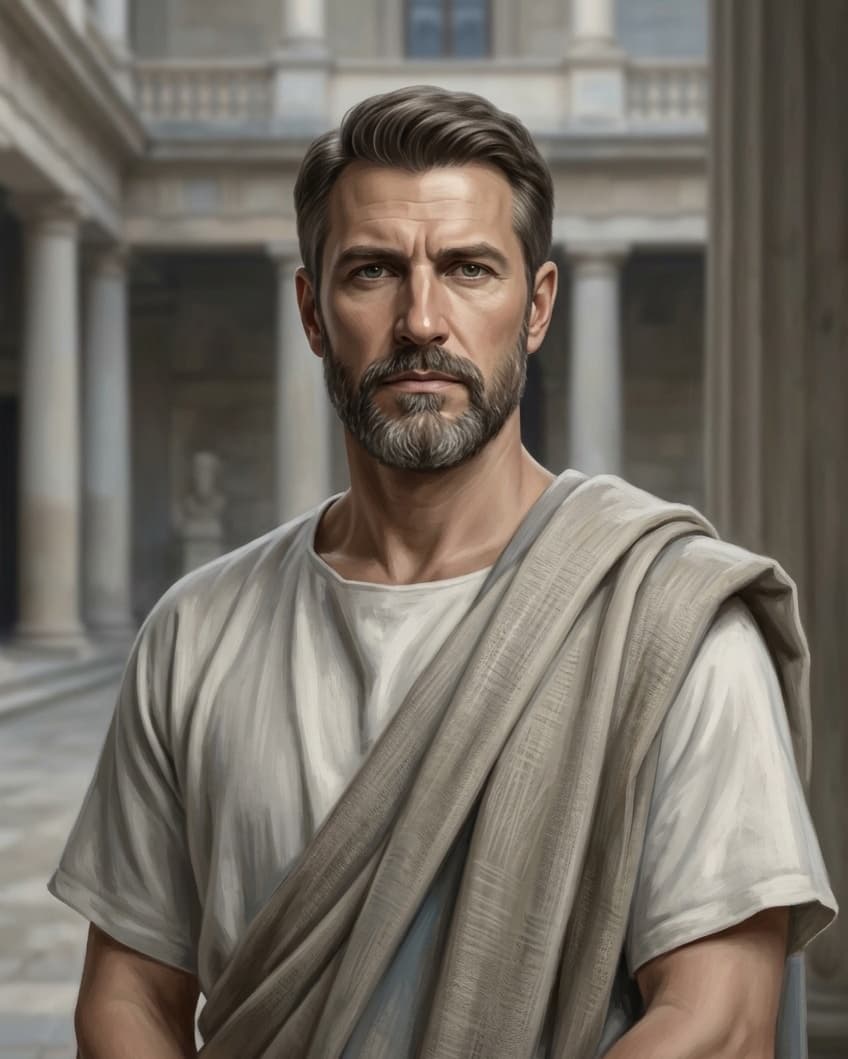
AI-assisted portrait of Anytus
The Defender of the City
Anytus emerges not as a philosopher, but as a figure of the polis — shaped by its structures, loyal to its stability, and invested in its preservation. Born into a wealthy Athenian family involved in trade and public life, he rose to political prominence during a period of instability following the Peloponnesian War.
Athens had been shaken — by oligarchic coups, by the rule of the Thirty Tyrants, by the fragile restoration of democracy. In such a climate, the priority was not exploration, but order.
Anytus represented that priority.
He played a role in restoring democratic governance and stood firmly against forces that threatened it. To him, the health of the city depended on shared norms, proper education, and respect for tradition. It is within this context that his opposition to Socrates becomes clearer.
Socrates did not simply question individuals. He destabilized assumptions. And for Anytus, that was a risk the city could not afford.
The Psychological Verdict
Anytus is sometimes reduced to a villainous figure in philosophical narratives — an antagonist to Socratic thought. But this framing overlooks the mindset behind his actions.
A closer look suggests that Anytus aligns most consistently with ESTJ.
This was not a man driven by abstract philosophy or personal introspection. It was a man oriented toward structure, order, and the practical functioning of society.
Te — Dominant
Anytus operates through external structure and responsibility. His role in Athenian politics reflects a focus on governance, stability, and actionable outcomes. He is concerned with what maintains the city — its institutions, its norms, its continuity.
His opposition to Socrates can be understood through this lens. Socratic questioning, while intellectually stimulating, undermined established authority and traditional pathways of education. To Anytus, this was not harmless inquiry.
It was disruption. Te seeks to organize and preserve systems that work. Anytus acts to protect those systems.
Si — Auxiliary
There is a strong attachment in Anytus to tradition and inherited structure. Athens, for him, is not an abstract ideal but a lived system shaped by precedent and collective experience.
He places trust in established forms of teaching, social roles, and civic behavior. The idea that wisdom should come from recognized authorities — rather than from constant questioning — reflects Si’s grounding in what has been proven over time.
This is not resistance to thought. It is loyalty to continuity.
Ne — Tertiary
While not dominant, Anytus does show awareness of potential consequences. His concern is not just what Socrates is doing, but what it could lead to — the erosion of respect for authority, the destabilization of youth, the weakening of civic cohesion.
This reflects a cautious use of Ne: seeing possibilities, but primarily in terms of risk rather than opportunity. Possibility, for Anytus, is something to manage — not pursue.
Fi — Inferior
Anytus does not appear guided by personal emotional introspection or individualized value systems. His actions are framed not around “what feels right to me,” but around what is right for the city.
This suggests inferior Fi — a relative lack of focus on internal emotional nuance, paired with a stronger reliance on external standards and collective expectations. He does not personalize the issue. He institutionalizes it.
The Socratic Conflict
Anytus and Socrates represent two fundamentally different orientations toward society.
Socrates
Questions in order to uncover truth. Sees growth through disruption.
Anytus
Resists in order to preserve order. Sees danger in instability.
Neither operates without logic. But they operate with different priorities. In a city still recovering from collapse, that distinction matters.
Not the pursuit of truth — but the protection of what holds.
Connected Figures
Further Reading
- The Trial of Socrates — I. F. StoneTreats Anytus as a serious political actor rather than a caricature, tracing his democratic loyalties into the courtroom.
- Lives of the Eminent Philosophers — Diogenes LaertiusThe ancient source for the trial's aftermath, including Athens's later regret over the condemnation Anytus led.
- Plato: Complete Works — John M. Cooper (ed.)The Apology and Meno preserve Anytus as Plato saw him — a defender of convention against Socratic disruption.
