 Historical Figure MBTI
3 min read
#185 · 3-19-26 · Ancient Athens
Aristomache
The Woman Who Moved Within Power
Classical Era noblewoman
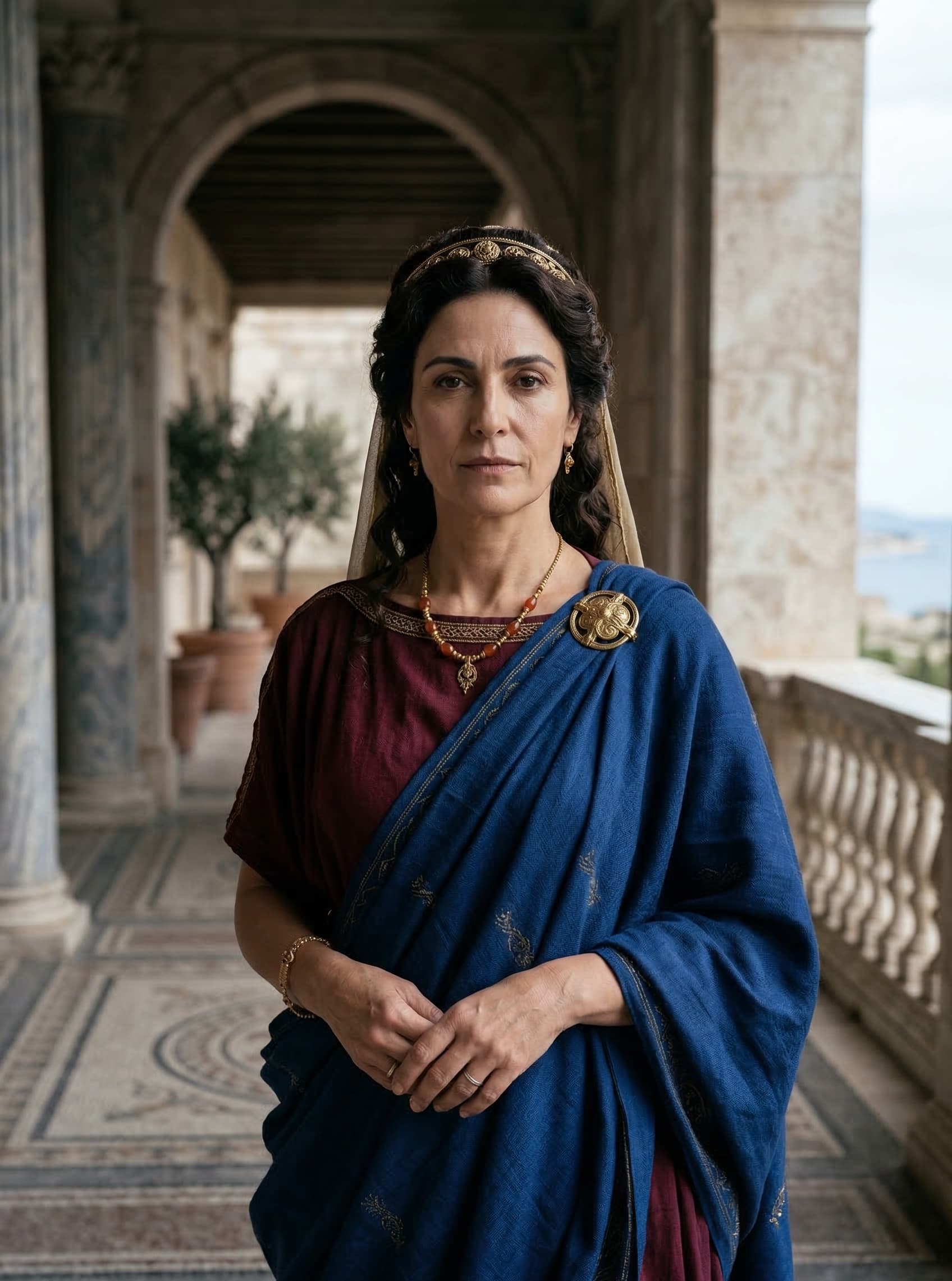
AI-assisted portrait of Aristomache
The Architecture of Position
Aristomache does not stand outside the system. She operates within it.
As the second wife of Dionysius I and the mother of key heirs, Aristomache’s position was not merely domestic—it was structural. In a court defined by succession, loyalty, and control, proximity to power was itself a form of influence.
She was not the first. But she became central.
Through her lineage and connections—including her brother Dion—Aristomache’s role extended beyond the household into the political dynamics of Syracuse. After the death of Dionysius I, the tensions between factions, heirs, and advisors did not unfold around her.
They unfolded through her.
The Psychological Verdict
Aristomache is not defined by visibility, but by position—a consistent alignment with influence, structure, and control within a political system.
She reads most clearly as ENTJ.
Te — Dominant
Aristomache’s significance lies in execution through structure. Her role is not passive—it is embedded within systems of succession, alliance, and power consolidation. Through marriage, family, and proximity, she participates in shaping outcomes, not through abstraction, but through tangible positioning.
This is Te: engaging the external world through structure and results. Not observing power. Operating within it.
Ni — Auxiliary
Her placement within the political landscape reflects foresight. To hold a central position in a court defined by instability requires more than presence—it requires an understanding of how influence flows over time. Her alignment with key figures and her role in succession suggest an awareness of longer-term outcomes.
This is Ni supporting Te: not reacting, but orienting toward what must unfold.
Se — Tertiary
Aristomache is not removed from reality. She exists within an environment of immediate stakes—shifting alliances, familial tensions, and political conflict. Her ability to remain central within this context reflects a grounded engagement with the present, even as it serves broader aims.
This reflects tertiary Se: responsiveness within a structured direction.
Fi — Inferior
What is not emphasized is personal expression. Her role is not framed through internal values or individual identity, but through function within a system. Decisions and alignments appear oriented toward position and outcome rather than emotional or moral articulation.
This suggests inferior Fi: internal values are secondary to external structure.
Analysis
Why not ESFJ?
Given her role within family and court, ESFJ may seem plausible—a figure defined by relational influence and social cohesion. But Aristomache’s orientation is not primarily toward harmony. It is toward position.
ESFJs tend to maintain and nurture social structures, prioritizing cohesion and relational stability. Aristomache’s significance, by contrast, lies in how she is situated within power—her role in succession, her connection to political actors, and the structural implications of her presence.
This is not Fe-driven maintenance. It is Te-driven alignment within systems of control.
The Position That Held
Aristomache does not command armies. She does not write philosophy.
But she exists at the center of power—not as an observer, but as a node through which influence moves.
Her legacy is not in what she declared. But in where she stood.
Not the voice that directs the system. But the position that shapes it.
Connected Figures
Further Reading
- Dionysius I: War-Lord of Sicily — Brian CavenDetails Aristomache's position as Dionysius I's second wife and the succession stakes that made her central to the court.
- The Age of Alexander — PlutarchPlutarch's Life of Dion traces her brother's political arc and the factional pressures Aristomache navigated after her husband's death.
- Ancient Sicily — M. I. FinleySets Aristomache's dynastic maneuvering against the broader pattern of Syracusan tyranny and instability.
