 Historical Figure MBTI
3 min read
#245 · 3-23-26 · The Age of Alexander
Bagoas the Elder
Minister · Kingmaker · Poisoner
died c. 336 BC
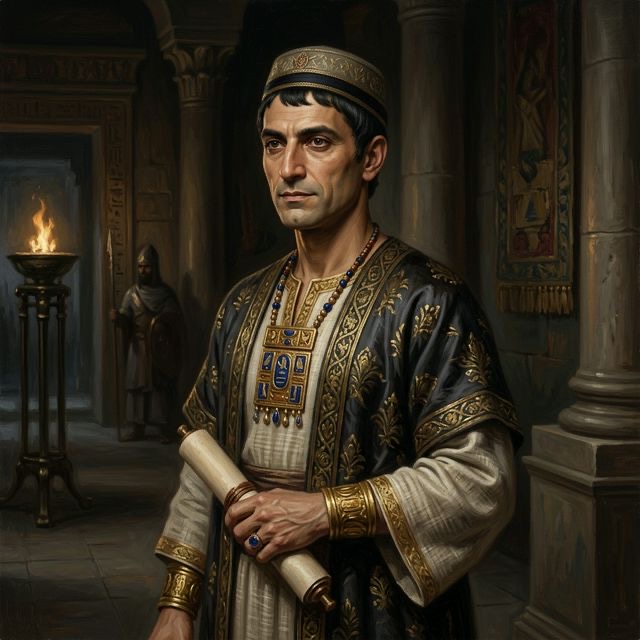
AI-assisted portrait of Bagoas the Elder
The Man Who Made and Unmade Kings
Bagoas the Elder was an Egyptian-born eunuch who rose to become the most powerful minister in the Achaemenid court — and the man directly responsible for placing Darius III on the throne of Persia. His career spanned three reigns and ended with a poison cup forced on him by the very king he had made.
Under Artaxerxes III, Bagoas served as the chief minister and effectively ran the empire. In 338 BC he poisoned the king, then methodically murdered all of his sons. He placed Arses — the youngest surviving member of the royal house — on the throne, controlling him as a puppet. When Arses proved insufficiently compliant, Bagoas poisoned him too (336 BC) and the entire royal line with him. He then made Darius, a distant relative who had served as a provincial governor, the new king. He intended to control him as well. Darius, warned of Bagoas's plans, forced Bagoas to drink the poison he had prepared.
Bagoas the Elder was an INTJ — a strategic architect who operated from the shadows, who thought in dynasties rather than individuals, and who finally miscalculated the one king he could not control.
The Architect Behind the Throne
Dominant Ni sees the trajectory of power before it materializes. Bagoas understood that direct rule was less stable than controlled rule — that a king who believed himself in charge was more useful than a king who knew he was being managed. He did not want the throne; he wanted the person on the throne to be interchangeable. His poisonings were not impulse crimes; they were systemic eliminations of individuals who had become obstacles to the structure he was maintaining.
The Efficient Administrator of Empire
Auxiliary Te made Bagoas indispensable as a practical administrator. He ran the day-to-day machinery of the Achaemenid bureaucracy — collecting taxes, managing satrapies, coordinating the military. His value to any king was real and concrete. This is why he survived as long as he did: kings were reluctant to remove him because he was genuinely useful, not merely politically connected. His Te competence was the cover for his Ni ambition.
Why INTJ Over ENTJ
Why not ENTJ?
An ENTJ would have seized the throne directly — would have been the man on the dais, not behind it. Bagoas specifically chose the shadow position. His power was most complete when invisible. That preference for structural control over visible authority is a Ni-dominant quality — the long-game thinker who finds direct power too exposed. ENTJs want to command. Bagoas wanted to architect. The distinction is fundamental.
Connected Figures
Further Reading
- The History of Alexander — Quintus Curtius RufusThe richest surviving account of Bagoas's court intrigues — poisoning Artaxerxes III, Arses, and finally being poisoned by Darius III.
- From Cyrus to Alexander: A History of the Persian Empire — Pierre BriantCovers the eunuch minister's rise inside the Achaemenid bureaucracy and the dynastic chaos his kingmaking produced.
- The Persian Empire: A Corpus of Sources from the Achaemenid Period — Amélie KuhrtGrounds Bagoas's late-Achaemenid court in the surrounding administrative and dynastic record.
