 Historical Figure MBTI
#690 · 5-23-26 · The Age of Exploration
Bartolomeu Dias
Navigator · Rounder of the Cape of Storms · Forgotten Pioneer
c. 1450 — 1500
6 min read
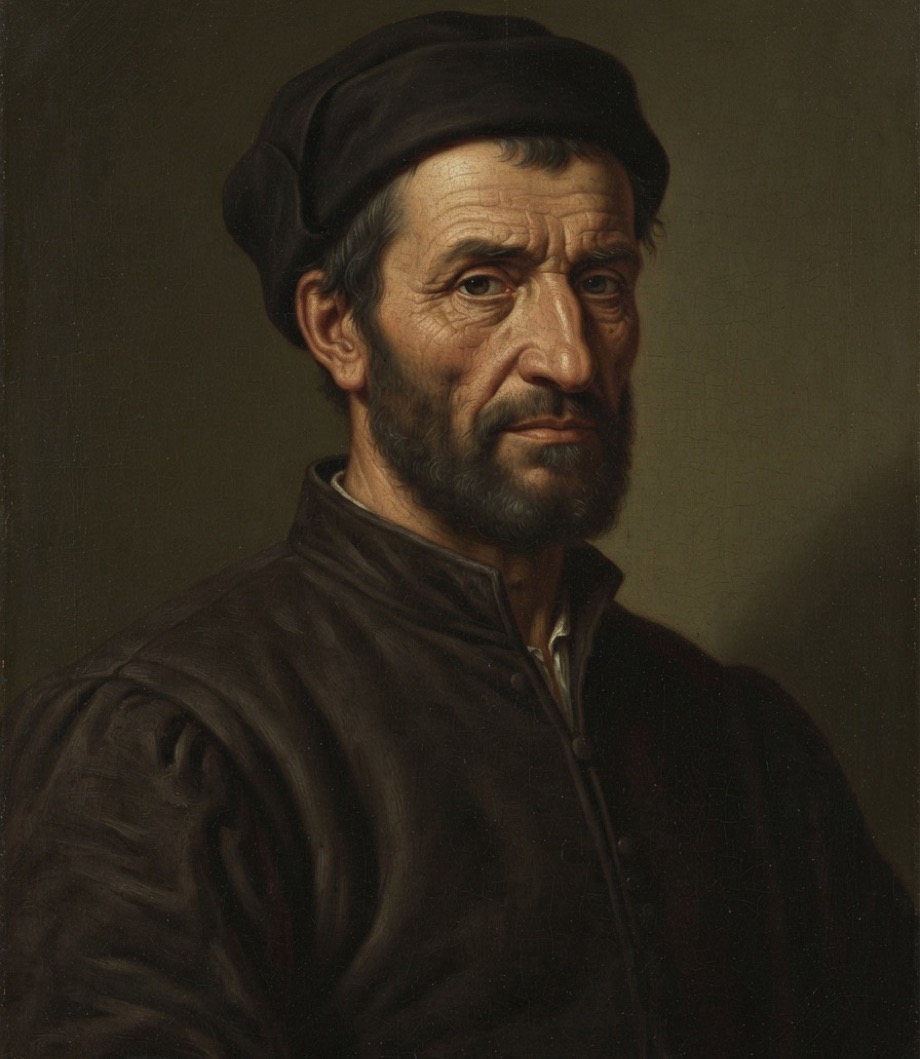
AI-assisted Portrait of Bartolomeu Dias
The Man Who Named a Cape "Storms" and Meant It
Bartolomeu Dias left almost no paper trail — no diary, no letters, barely a signature. What survives of him is a maneuver: three small ships driven south by a gale for thirteen days, out of sight of land, until the storm broke and Dias found himself in open water with no idea where the African coastline had gone. He turned east, expecting to meet shore. He did not. He turned north instead, reasoning that if the coast had vanished, he must have already rounded it. He was right.
He is the least mythologized of the great Portuguese navigators, and that is diagnostic. Henry the Navigator, dead before Dias sailed, built a decades-long institutional vision. João II ran the whole enterprise like a chess match against Castile and the Ottomans. Dias did neither. He solved the problem in front of him — wind, current, hull, crew — and then, when the crew broke, let them turn the ship around rather than force a mutiny into being. That combination, mastery of the immediate and indifference to the larger campaign, is ISTP almost to the letter.
Dias solved the storm with dead reckoning and instinct — pure ISTP Ti, working the problem in real time with no map for what came after.
Navigating by an Internal Chart
There was no chart for the water Dias found himself in after the storm. Portuguese pilots worked south along the coast in short, confirmable hops, always in sight of land. The storm took that away. For nearly two weeks he had nothing but the ship's heading, its speed, and the accumulated feel of a career spent reading wind and swell. When it cleared, he had to reconstruct where he was purely from internal logic — not from what he could see, but from what the numbers in his head told him must be true.
That is Ti in its rawest maritime form: a private, self-consistent model trusted over appearances. Turning east to find land and finding none was itself data, and Dias processed it correctly — the coastline's absence where it should have been meant the coastline was now behind him, not ahead. He did not need external confirmation to act. He turned the fleet north on the strength of his own reasoning, and the reasoning held.
None of that reasoning survives in writing. It survives only in the fact that his ships, and his crew, made it home.
Thirteen Days in the Weather
Se is the function of total physical presence, and Dias's whole career was spent inside weather rather than reading about it. He commanded the royal warehouses in Lisbon before he ever commanded a fleet, and that background — practical, hands-on, close to the machinery of ships and supply — set the tone for everything after. When the storm hit south of the Orange River, there was no time for deliberation. There was only the next gust, the next wave, the next order given to sailors who needed it immediately and correctly.
What makes Dias's Se distinctive is how little drama he made of it afterward. Sailors of his generation who survived comparable ordeals often built legends around themselves; Dias's own account, filtered through later chroniclers, is almost clinically brief. He noticed the storm's severity, adjusted the ships to survive it, made landfall at Mossel Bay, and moved to the next problem — each moment handled as it arrived, with no apparent need to narrate it into significance.
That immersion in the present shows in the naming, too. He called the headland he rounded the Cape of Storms — a plain, weather-accurate label from a man who had just lived through one. João II, reading the report from Lisbon with investors and India in mind, renamed it the Cape of Good Hope. The difference between those two names is the difference between the two temperaments in this story.
A Glimpse Past the Horizon, Then Nothing
Tertiary Ni gave Dias flashes of longer-range recognition without the dominant drive to act on them. Standing near India's sea route, he understood — correctly and immediately — what he had accomplished: not a coastal survey, but the missing piece of the project Henry the Navigator had died dreaming about seventy years earlier. Dias wanted to keep going. He argued for it.
But it stayed an argument. When his officers, exhausted and afraid of a lee shore, voted to turn back, Dias did not override them. A more Ni-dominant captain might have pressed the matter and gambled the fleet on history being two weeks away. Dias, correct about the stakes, deferred to his crew's practical condition instead. The insight arrived; the will to bend reality around it did not — exactly where tertiary Ni sits in the stack, present and accurate but never strong enough to overrule the functions ranked above it.
No Taste for the Court, or the Council
Inferior Fe is where Dias's limits are clearest, and where his career stalled relative to contemporaries who were, arguably, lesser sailors. He never became a courtier and had none of João II's appetite for managing rival factions or accumulating institutional favor. After his return, credit flowed to others; Dias was given a comparatively minor role in outfitting Vasco da Gama's fleet a decade later — building the ships that would finish the job, rather than sailing them himself.
The clearest Fe moment in the record is also the most human: the council vote to turn back. A more socially fluent leader might have managed his officers into pressing on. Dias instead accepted their collective read of the crew's exhaustion as decisive, even though it cost him the discovery he had all but made — inferior Fe functioning adequately under pressure rather than gracefully. He drowned in 1500, back at the Cape, part of Cabral's fleet to India, killed by the same water that had first made him famous.
Why ISTP Over ESTP
Why not ESTP?
An ESTP would have made the storm the whole story — Se leading, eager to broadcast the spectacle of survival. Dias's Se instead serves a private Ti model; he wrote and spoke almost nothing about the ordeal, simply recalculated and sailed on. Nor does an ESTP defer to a council vote so quietly — an extraverted-sensing lead more readily overrides the room. Dias's willingness to yield points inward to Ti, not outward to Se.
The two types share the same tools — sharp perception, physical competence, comfort under pressure — but point them in opposite directions. ESTP performs its competence outward, reading and working a room as fluidly as it reads a storm. Dias's competence stayed private, exercised and then set down without comment — a captain remembered for what he calculated, not for what he said.
Connected Figures
Further Reading
- A History of Portuguese Overseas Expansion, 1400–1668 — Malyn NewittThe standard scholarly account of the voyage and its place in the wider Portuguese project.
- Congo to Cape: Early Portuguese Explorers — Eric AxelsonDetailed narrative of the coastal expeditions leading up to and including Dias's rounding of the Cape.
- The History of Portugal — Peter PiersonPlaces Dias within the reigns of João II and the broader Age of Discovery.
