 Historical Figure MBTI
#687 · 5-23-26 · The Age of Exploration
Prince Henry the Navigator
Prince of Sagres · Patron of Exploration · Architect of the African Coast
1394 — 1460
9 min read
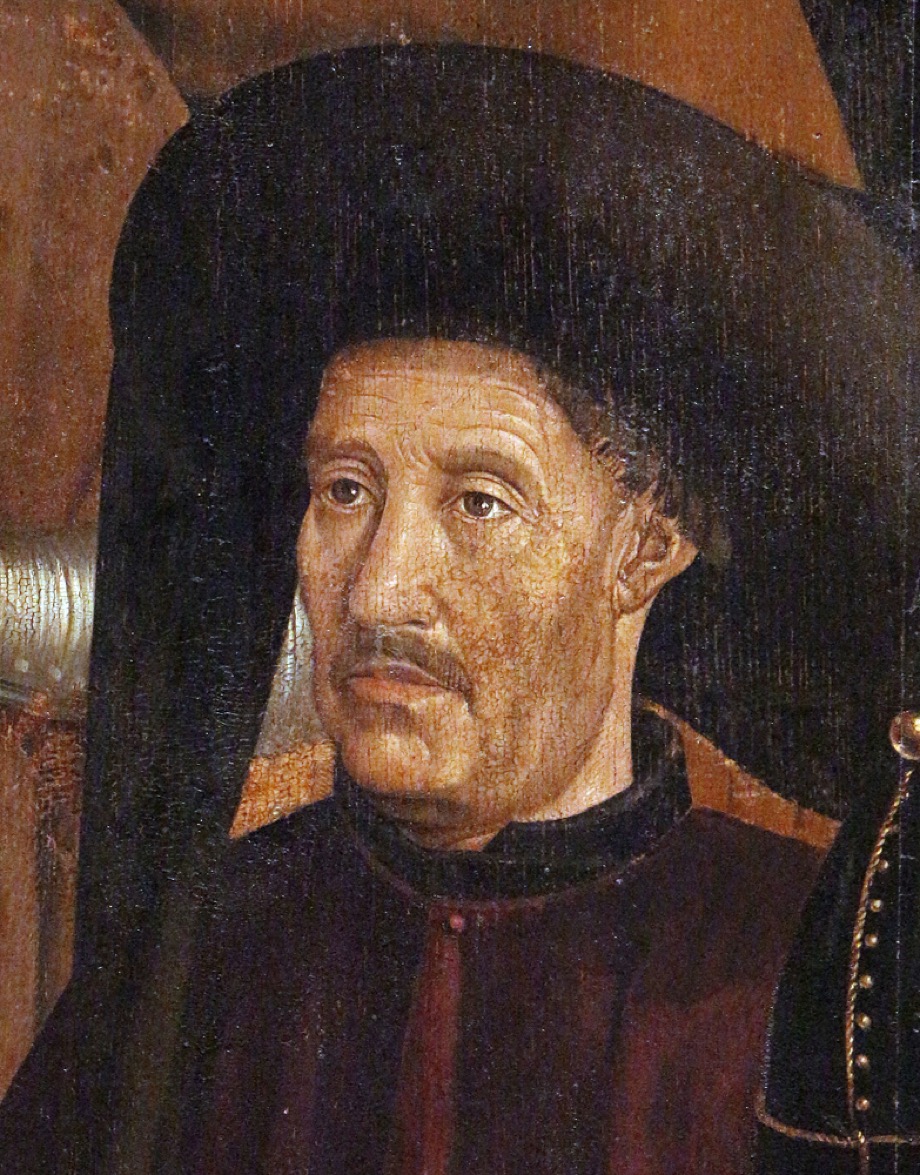
Portrait of Prince Henry the Navigator
The Man Who Never Sailed
Fifteen times he sent ships south toward Cape Bojador, the low sandy headland below the Canaries that Portuguese sailors believed marked the edge of the survivable world. Fifteen times the captains came back with reasons — the shoals, the current, the reddish water, the sun that would boil men black. Henry listened, and sent the sixteenth. In 1434 Gil Eanes rounded Bojador, found ordinary sea on the far side, and returned. The barrier had never been geographic. It had been a story, and Henry had spent a decade and a fortune methodically disproving a story by the only method that works: sending another ship.
He was the third son of João I and the English princess Philippa of Lancaster, and he first arrived in history as a soldier — twenty-one years old at the storming of Ceuta in 1415, the Moroccan port whose fall gave Portugal its bridgehead in Africa and gave Henry his lifelong obsession. But the soldier is not the figure who matters. For the next four decades he sat at Sagres and Lagos on the Algarve headland, at the extreme southwestern corner of Europe, and built something no one had built before: a permanent institution for producing discovery. Cartographers, pilots, shipwrights, Jewish and Genoese and Majorcan technicians, captured African informants, sailing directions collected voyage by voyage and copied into charts. The caravel — shallow, lateen-rigged, able to beat back north against the Portuguese trades that carried it south — emerged from that workshop. He never used it himself. Henry the Navigator, in the whole of a life spent pushing the known coast two thousand miles down the flank of Africa, appears never to have sailed further than Morocco.
That gap between the man and the work is the whole psychological case. Henry did not want the sea. He wanted the map completed, and he was willing to spend forty years, the revenues of a crusading order, and other men’s lives to complete it.
Henry is the archive’s purest institutional INTJ: a dominant Ni that saw a finished coastline no one had seen, and forty years of patience to make the world catch up to the vision.
A Coastline Seen Before It Existed
Every one of Henry’s contemporaries looked at Bojador and saw a limit. He looked at it and saw a temporary obstruction on a route that continued. Nothing in the evidence available to him supported that. Ptolemy’s geography was ambiguous, the Arab accounts stopped short, and the accumulated testimony of every sailor he could interrogate said the water south of the cape was death. Ni does not argue with such testimony; it simply does not find it persuasive against an internal picture that will not go away. Henry held the picture — a continuous navigable coast, reachable in stages — and treated every failed voyage not as evidence against it but as information about how to arrange the next one.
The tell is the pacing. A visionary with weaker judgment would have staked everything on one grand armada. Henry advanced in increments so small they look almost timid: Madeira colonized from 1420, the Azores from the 1430s, Bojador in 1434, Cape Blanco in 1441, the Bissagos and the Gambia in the 1440s and 1450s. Each stage was a base for the next, and each new stretch of coast was converted immediately into a chart, a set of sailing directions, a wind pattern understood. He was not exploring. He was tiling in, edge by edge, an image he already had.
The proof came after his death, and it is the most Ni thing about him. Henry never reached Guinea in force, never saw the equator, certainly never saw the Cape. But the volta do mar — the great westward arc into open Atlantic that his pilots worked out to get home against the trades — was the single technique that made everything afterward possible, for Bartolomeu Dias at the Cape in 1488 and for Columbus going the other direction in 1492. He built the method, and the method outlived him by exactly as long as he would have predicted.
The Machine at Sagres
Vision without an engine is a daydream, and Henry’s auxiliary Te built the engine with a bureaucrat’s cold literalism. In 1420 he was made governor of the Order of Christ, the Portuguese successor to the Templars, and he proceeded to convert a crusading order’s endowment into a research budget. Commanderies, tithes, the sugar and dyewood revenues of Madeira, the royal monopoly on soap, a fifth of everything brought back from the African coast: he assembled a funding structure that could absorb fifteen consecutive failures without collapsing. Fifteen failures bankrupt a venture. They barely dent an institution.
He systematized the knowledge with equal ruthlessness. Charts were corrected against returning pilots rather than against authority. Ship design was iterated — the caravel was not invented in a stroke but converged upon, hull and rig adjusted voyage after voyage until Portugal owned a vessel that could go where the wind forbade return and come back anyway. He hired for competence rather than blood, which in fifteenth-century Iberia meant Genoese, Majorcan Jews, and anyone else who could actually draw a coast. And he secured the legal architecture too, extracting from the papacy the bulls that granted Portugal exclusive rights to the discovered coast — a monopoly enforceable in Europe long before it was enforceable at sea.
Te is also why he could fail well. The Tangier disaster of 1437 was Henry’s doing: a badly planned assault that collapsed and cost his youngest brother Fernando, left hostage and dead in Moroccan captivity six years later. Henry never redeemed him, and the ransom price — Ceuta — he refused to pay. It is the ugliest personal thing in his record, and it is entirely consistent. The system came first; individuals, brothers included, were inputs.
The Hair Shirt and the Slave Market
He was not doing it for money, and this is the part that startles people who assume the Age of Exploration began as a spice ledger. Henry’s stated aims, repeated across his whole life, were crusading ones: to find how far Muslim power extended down the African coast, to reach the Christian kingdom of Prester John somewhere beyond it, to take the flank of Islam from behind and turn the whole geometry of the Mediterranean war. That the kingdom did not exist mattered to him not at all. Tertiary Fi in an INTJ shows up exactly here — as a private, unarguable, self-authored conviction that supplies the vision’s moral fuel and answers to nobody.
The austerity was real and contemporaries found it strange. Zurara, the court chronicler, records the hair shirt, the celibacy, the plain table, the great household maintained without its master ever seeming to enjoy it. He died in debt, at Sagres, having spent a royal prince’s entire life and revenue on a project whose payoff he had explicitly told everyone was spiritual. There is no evidence he was performing. He simply believed something about himself and the shape of sacred history, and organized four decades around it.
And that conviction is precisely what let him not look at what he had built. In 1444, in the square at Lagos beneath his own window, 235 captured Africans were unloaded from Lançarote de Freitas’s ships and sold — families separated by lot, children pulled from parents, Zurara describing the scene with a pity that did not interrupt it, and Henry present, on horseback, taking his fifth. That auction was the first organized European slave market of the Atlantic era. It was not incidental to the enterprise; it became the enterprise’s commercial engine, the thing that turned a prince’s expensive obsession into a trade that paid for itself and kept paying for four hundred years. Henry received a papal blessing for it and understood it as salvation for the enslaved. The Fi verdict was sincere. It was also the mechanism by which a sincere man authored an atrocity and filed it under mercy.
He Sent the Ships; He Did Not Board Them
The nickname is a posthumous English invention and it is wrong in the most revealing possible way. Henry the Navigator navigated nothing. Morocco, twice or three times, in armor. Otherwise the Algarve, the chart room, the correspondence. The entire physical world he made available to Europe — the Saharan coast, the Cape Verde islands, the green rivers of Guinea, the smell and heat and sound of any of it — reached him only as report, converted immediately into notation. Inferior Se does not mean incapacity. It means the sensory world is what you send other people to retrieve.
When it did break through, it broke badly. Ceuta in 1415 was Henry at twenty-one in the actual fighting, and it made him famous. Tangier in 1437 was Henry trying to recover that feeling twenty-two years later, and it was a catastrophe of exactly the kind an inferior function produces: a commander who understood systems refusing to reckon with terrain, supply, and the brute physical fact of a besieging army in the wrong place. His genius was never in the field. Every time he went to the field it cost him — at Tangier, his brother.
Why INTJ Over INFJ
Why not INFJ?
The mystical motive is genuine — Prester John, the flanking of Islam, the hair shirt — and it makes INFJ the only serious rival. But INFJ runs Ni through Fe, and Fe is the one thing entirely absent from Henry’s record. He left his brother Fernando to die in Moroccan captivity rather than surrender Ceuta. He watched families torn apart by lot in the Lagos square from horseback and took his fifth. He built no following, cultivated no affections, and moved men as line items in a forty-year budget. An INFJ’s vision is validated by the human harmony it produces; Henry’s was validated by a chart getting longer.
The distinction is not about whether the conviction was sincere — it plainly was — but about where it lived. Henry’s conviction was tertiary Fi: private, unarguable, answerable to no audience, and therefore capable of coexisting indefinitely with human suffering it never bothered to consult. Around it he built a Te apparatus of revenues, charters, monopolies, shipwrights, and pilots that could absorb failure for decades. That combination — an unfalsifiable inner picture served by a bloodless institutional machine — is INTJ in its most consequential and least comfortable form.
Connected Figures
Further Reading
- Prince Henry “the Navigator”: A Life — Peter Russell (Yale, 2000)The standard scholarly biography, and bracingly skeptical of the Sagres “school” myth and the nickname itself.
- Chronicle of the Discovery and Conquest of Guinea — Gomes Eanes de Zurara (15th c.)The contemporary court chronicle — laudatory, and the source for the 1444 Lagos slave auction in the chronicler’s own uncomfortable words.
- A History of Portuguese Overseas Expansion, 1400–1668 — Malyn Newitt (Routledge, 2005)Places Henry’s voyages inside the longer economic and institutional arc they actually belong to.
- The History of Portugal — Peter Pierson (Greenwood, 2009)Concise national narrative, useful for the Avis dynasty politics behind Ceuta and Tangier.
