 Historical Figure MBTI
#493 · 4-17-26 · The Hundred Years' War
Bertrand du Guesclin
Constable of France · The Guerrilla Genius
c. 1320 — 1380
7 min read
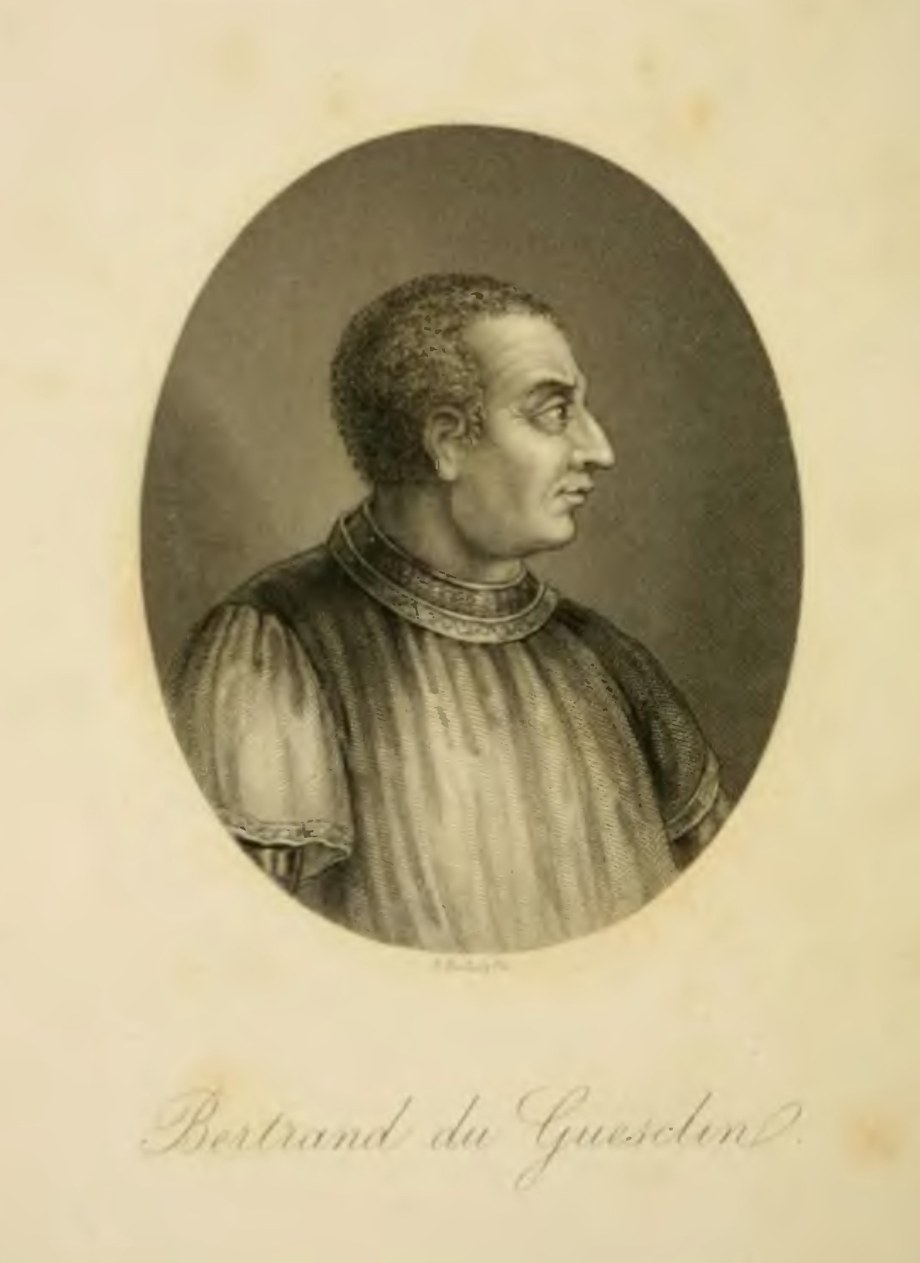
AI-assisted Portrait of Bertrand du Guesclin
The Hammer in Charles V's Hand
He was, by every account, spectacularly ugly — short, dark, thick-necked, his face flattened and coarse, the kind of man a chronicler reached for adjectives to insult. He was a Breton of minor nobility, the despair of his own family as a boy, a brawler who learned war in the saddle before he learned anything in books. And he became the greatest soldier France had in the fourteenth century: Constable of France, the realm's highest military office, and the instrument by which the English were quietly stripped of nearly everything they had won.
Bertrand du Guesclin rose by no advantage but talent. He had no great name, no courtly polish, no taste for the tournament glory his peers prized. What he had was an unsentimental, ferociously practical mind for war and a body that never tired of using it. When Charles V came to the throne in 1364 with a strategy of patience — refuse battle, starve the enemy of victories, take back France garrison by garrison — he found in du Guesclin the one commander temperamentally built to execute it. The king supplied the doctrine; the Breton supplied the relentless, methodical violence that made it work.
Du Guesclin was the ISTP at the head of an army — an analyst with a sword, reading terrain and weakness the way another man reads a face, and dismantling the enemy not with one glorious blow but with a hundred cold, well-aimed ones.
The War of Attrition as a Problem to Be Solved
Ti — dominant
Dominant Ti is a cold internal logic that asks one question of any situation: where is the weak point, and how do I exploit it with the least waste? Applied to fourteenth-century war, that mind produced a revolution. The chivalric ideal demanded the pitched battle — massed knights, a clash on an open field, honour won or lost in an afternoon. Du Guesclin understood, with the dispassion of an engineer, that this was exactly how France kept losing. At Crécy and Poitiers the English longbow had butchered French chivalry; the rational conclusion was to stop offering it the chance.
So he waged the small war — the war of siege, ambush, raid, and night assault. He picked English-held castles and towns apart one at a time, choosing his moment, buying garrisons out when buying was cheaper than storming, surprising them when surprise would do. He fought to take the thing in front of him and then the next thing, treating the reconquest of France as a long sequence of solvable problems rather than a single heroic gamble. It was unglamorous, grinding, and devastatingly effective: under his campaigns the English holdings that had once sprawled across France were reduced, by his death, to a handful of coastal footholds. What makes it Ti rather than mere competence is the indifference behind it — a more honour-bound commander would have chafed at avoiding battle, but du Guesclin simply did not care whether the method was glorious. He cared whether it worked. The logic governed; vanity did not enter.
The Soldier Who Was Always in the Field
Se — auxiliary
If Ti chose the targets, auxiliary Se did the fighting. Du Guesclin was no chateau general directing from the rear; he was a physical, hands-on commander, alive to the ground under his feet and the moment in front of him. He read terrain instinctively — the line of approach to a wall, the ford an enemy column would have to use, the hour a tired garrison would drop its guard. The raid and the siege are Se's natural element: improvised, concrete, decided by what you can see and seize right now.
His whole life was lived in the saddle and rarely out of it. He fought, was captured, was ransomed, and rode straight back to the next campaign; he died in 1380 on the march, besieging a town in the Auvergne, in harness to the end. The pairing of cold Ti with active Se is what produced the particular du Guesclin signature: a tactician who never merely planned but executed in person, who could conceive an ambush and then be at the head of the men springing it. The thought and the deed were the same motion.
The Long Campaign in Spain
Ni — tertiary
Tertiary Ni gives the ISTP a feel for how a campaign will unfold over time — not the strategist's grand design, but a working sense of consequence, of where this move leads three moves on. Du Guesclin had it. The Castilian war is the clearest case. In the late 1360s he led free companies into Spain to back Henry of Trastámara against his half-brother Pedro the Cruel — partly to win a throne for an ally, partly to drain France of the marauding mercenaries who plagued it in peacetime. It was a war fought as much for its second-order effects as its first.
The campaign also delivered his most famous reverse. At Nájera in 1367 he was caught in exactly the pitched battle his instincts told him to avoid, the English under Edward the Black Prince broke Henry's army, and du Guesclin was taken prisoner — the rare day his Ti caution was overruled and the field punished it. He was ransomed, returned, and two years later helped put Henry decisively on the Castilian throne, securing an alliance that mattered to France for a generation. The setback did not derail him; the longer arc bent his way, which is Ni's reward for patience.
Loyalty, and the Men Who Followed Him
Fe — inferior
Inferior Fe in an ISTP is not warmth on the surface; it surfaces as fierce, unflashy loyalty — to the men under him and to the king he served. Du Guesclin had no gift for courtly performance and no interest in faction; what he gave Charles V was plain, total fidelity, the soldier's bond rather than the courtier's flattery. Soldiers, in turn, followed the ugly Breton with a devotion his rivals never inspired, because he shared their hardships and won.
That undertow of feeling shows most clearly in how France grieved him. When he died on campaign in 1380, Charles V did the almost unthinkable for a low-born Breton: he had him buried among the kings of France at Saint-Denis, in the royal abbey itself. The honour says what du Guesclin could never have said for himself — that the bond of loyalty ran both ways, and that a king had loved his hammer. The inferior function, mute in life, spoke loudest at the tomb.
Why ISTP Over ESTP
Why not ESTP?
The ESTP is the bold, flashy, glory-seeking soldier — the one who charges, who craves the decisive clash and the audience for it. That is the Black Prince, not du Guesclin. The Breton won by doing the opposite: avoiding the great battle, declining the chance at glory, dismantling the enemy slowly by siege and ambush. An ESTP would have found that patience intolerable; du Guesclin found it obvious, because the cold Ti logic led, not the appetite for the spotlight.
The distinction is led-by-Ti versus led-by-Se. Both types are physical, hands-on fighters — that shared Se is why the confusion is tempting. But the ESTP's extraverted sensing is in command, hungry for the bold stroke and the visible win; the ISTP's detached internal analysis is in command, and the action serves the plan. Du Guesclin was an analyst with a sword, not a showman with one. He measured a war the way a craftsman measures a joint, and his genius was that he never confused looking like a victor with being one.
Connected Figures
Further Reading
- The Flower of Chivalry: Bertrand du Guesclin and the Hundred Years War — Richard VernierThe standard English-language biography — clear-eyed on the gap between du Guesclin the legend and du Guesclin the ruthless professional soldier.
- The Hundred Years War (vols. II–III) — Jonathan SumptionThe definitive narrative history; volumes II and III cover the attritional reconquest under Charles V in which du Guesclin was the decisive instrument.
- Studies on Bertrand du Guesclin — Yvonne Lanhers and othersFrench scholarship on the Constable's career and the documentary record behind the legend — essential for separating fact from medieval hagiography.
