 Historical Figure MBTI
#494 · 4-17-26 · The Hundred Years' War
John II of France
King of France · The Chivalrous King Captured at Poitiers
1319 — 1364
8 min read
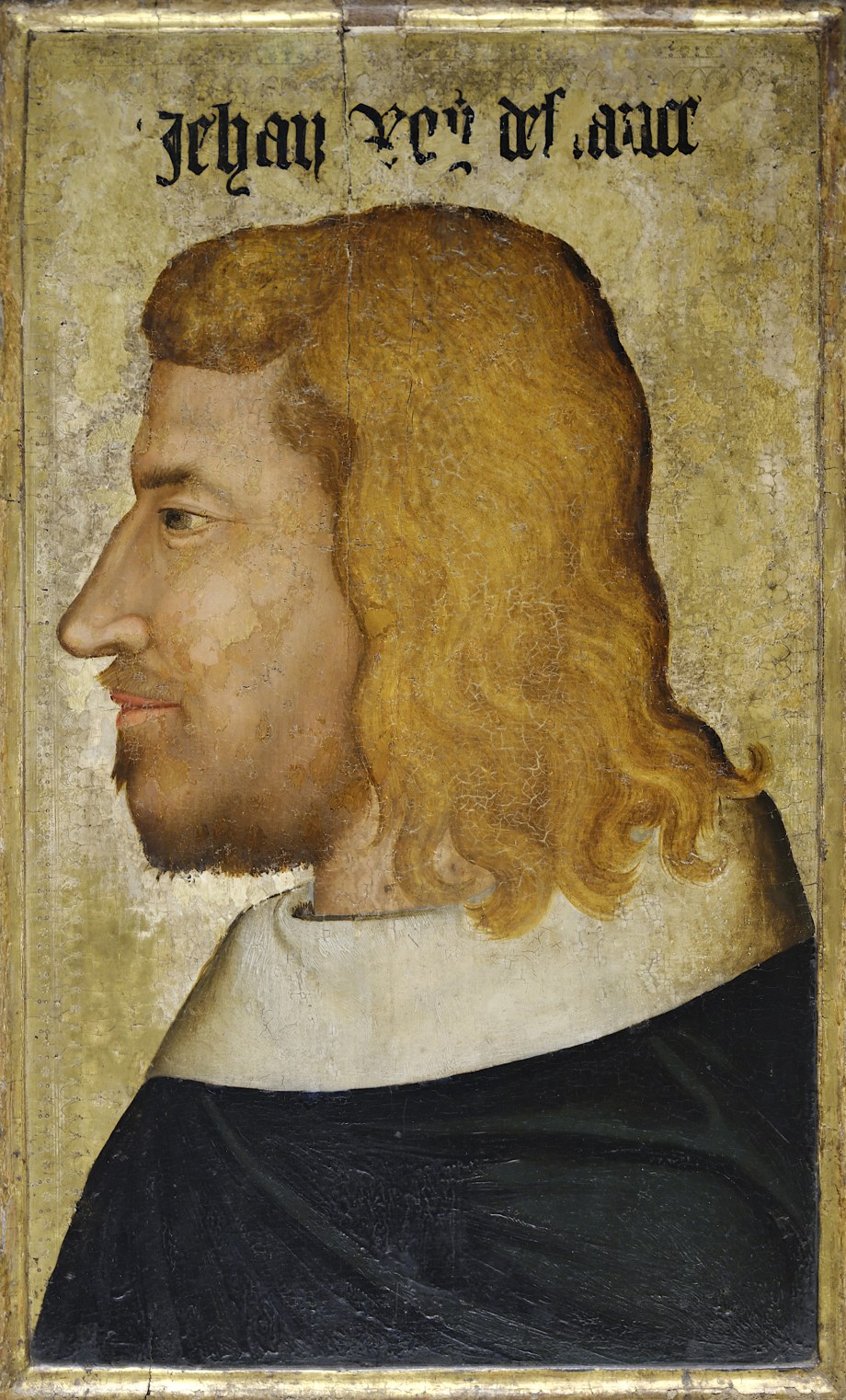
AI-assisted Portrait of John II of France
The King Who Loved His Honor More Than His Throne
No medieval king embodied the cult of chivalry more completely—or was more comprehensively ruined by it—than John II of France, called “the Good.” The epithet did not mean wise or competent. It meant gallant, generous, faithful to his word: good in the courtly sense, the sense that mattered to a knight and very little to a kingdom at war. He came to the throne in 1350 with the chivalric virtues at a high gloss and the political ones almost entirely absent.
The answer never wavered. At Poitiers in 1356 he fought on foot with reckless personal courage, was outgeneralled by a younger and colder commander, and surrendered his sword rather than flee. He spent his English captivity not in a dungeon but as the honored guest of a court that admired him for the very qualities that had lost him the battle—and by many accounts he found that gracious chivalric life rather agreeable, even as the Jacquerie burned the countryside and Étienne Marcel seized Paris in his absence. Later, released but with hostages left behind, he learned one of them had broken parole and fled—and did the thing that defines him for history. He went back, returning voluntarily to England, where he died in 1364.
John II was the ESFJ on the throne of France: a king whose entire self was built from the social code of chivalry and the opinion of his peers, who would surrender a battle, a kingdom, and finally his own freedom rather than break his given word.
A Self Built From the Eyes of Others
Fe — dominant
Dominant Fe locates the self outside the self—in the shared code, the reputation, the gaze of the people whose judgment one accepts as binding. For John, that external authority was chivalry, and he served it as though honor were a higher sovereign than the crown of France. He founded the Order of the Star in 1351 to bind his greatest nobles into a brotherhood of glory—an Fe instinct to manufacture belonging and knit a court together by collective ideal rather than cold calculation.
The same function explains the most astonishing act of his life. Released under the Treaty of Brétigny in 1360, he left hostages in England as surety, his own son among them. When one of those pledges broke parole and slipped home, the breach was not John's, and no one would have blamed him for keeping his hard-won freedom. But the stain was on the family honor and on his word, and to an Fe dominant a tarnished reputation is unbearable, felt as shame in the body. He returned to captivity of his own accord—an act of self-destruction by any strategic measure, and by the logic of Fe the only thing he could possibly do.
The voluntary return to an English prison was pure Fe: not a calculation of advantage but a visceral refusal to be the man who broke his word—honor felt as a debt that had to be paid, whatever the cost to the kingdom waiting on the other shore.
Keeper of an Inherited Ideal
Si — auxiliary
If Fe told John what to value, auxiliary Si told him that the chivalric ideal was fixed, inherited, and not his to revise. He received knighthood not as a flexible instrument to be adapted to the fourteenth-century battlefield but as a sacred tradition, handed down whole, to be upheld with unbending loyalty. This is the deep reason he kept fighting a war the old way while the English fought it a new one: the mounted charge and the valor of the highborn were the inherited forms, and Si holds inherited forms as a kind of conscience.
Poitiers was where that conservatism met its reckoning. Drawn up against a smaller English force dug in behind hedges and bristling with longbowmen, John pressed forward in waves of frontal courage, because courage was what the tradition prescribed. The longbow and the patient defensive trap were innovations his opponents embraced and his own cast of mind could not, and his loyalty to an overtaken model of war cost him his army and his liberty. Even his debasement of the coinage to fund the fighting was a reach for a familiar expedient rather than a rethinking of the problem.
The Imagination That Wandered the Wrong Way
Ne — tertiary
Tertiary Ne gives the ESFJ flashes of restless possibility, undisciplined and prone to chase the appealing rather than the prudent. In John it surfaced as a king forever reaching for the grand gesture—a chivalric order, a dream of one decisive battle that would settle the war in a single afternoon of glory—without the patience to see any of it through. The Order of the Star was conceived in a flush of imaginative ambition and half-wrecked at its first test, when so many of its brothers, having vowed never to flee the field, died honoring a pledge wiser men would never have made.
The tertiary function is also where a person is most easily seduced, and John was seduced by the romance of his own captivity. England staged exactly the chivalric fantasy his imagination loved—tournaments, courtesy, the gracious company of his royal captor—and he embraced it while his realm dissolved into the Jacquerie and the Paris uprising. His Ne could picture a glittering ideal vividly but never the hard consequences: what the longbow would do to a cavalry charge, what an absent king would mean for a kingdom in revolt.
The Cold Judgment He Never Had
Ti — inferior
John's tragedy was an inferior-Ti tragedy: the want of cold, impersonal, independent judgment—the capacity to step outside the warm pull of honor and the inherited code and ask, dispassionately, what the situation actually required. Ti weighs a problem on its own internal logic, indifferent to how the answer feels or how it looks. It was precisely this faculty that John lacked and that his enemies possessed in abundance. At Poitiers he was outclassed not by a braver man but by a colder one, who read the ground, the weapons, and the odds, and arranged the field to win rather than to dazzle.
The contrast with his own son is the cruelest measure of the gap. Charles V, who watched his father lose a kingdom to gallantry, governed by the opposite instinct—the detached calculation that avoids the grand battle, grinds the enemy down, and trusts results over glory. John could not think that way; the machinery for it sat too far down in his stack. He governed by sentiment, honor, and the example of the past, and against adversaries who governed by analysis, that was not enough. He felt his obligations with painful clarity and could not reason his way out of them—and it never occurred to him that he should.
Why ESFJ Over ESTJ
Why not ESTJ?
The ESTJ is the hard-headed administrator-commander—a king who would have weighed the odds at Poitiers, husbanded the realm with cold efficiency, and never dreamed of trading his freedom to honor a technicality of parole. John was the opposite at every turn. His guiding faculty was warm and social rather than logical and procedural; he was ruled by how things felt and how they looked, not by what the ledger said. A competent ESTJ does not lose a kingdom to gallantry and then walk back into a prison cell over a point of honor.
The deciding evidence is the return to captivity itself. An ESTJ's honor is functional—the reliability that keeps obligations running—and it bends when the cost grows absurd; he would have judged that France needed her king more than England needed a hostage, and stayed. John's honor was social and relational, the dominant-Fe kind felt as identity and shame, and it ruled him against his own plain interest and his realm's. He sailed back to a foreign prison because his word had been compromised. That is not the calculus of a Te administrator; it is the conscience of an ESFJ for whom reputation and the chivalric code were the deepest sovereign of all.
Connected Figures
Further Reading
- The Hundred Years War, Vol. II: Trial by Fire — Jonathan SumptionThe definitive narrative of the war's middle phase — Poitiers, John's capture, and the chaos of the captive years, in exhaustive and authoritative detail.
- Société politique, noblesse et couronne sous Jean le Bon et Charles V — Raymond CazellesThe classic French study of the political world of John II and his son — essential on the crown, the nobility, and the crises of the reign.
- The Valois: Kings of France 1328–1589 — Robert KnechtA readable overview of the Valois dynasty that situates John II within the longer arc of the house and the war that defined it.
