 Historical Figure MBTI
#492 · 4-17-26 · The Hundred Years' War
Charles V
King of France · The Wise, Who Won France Back
1338 — 1380
9 min read
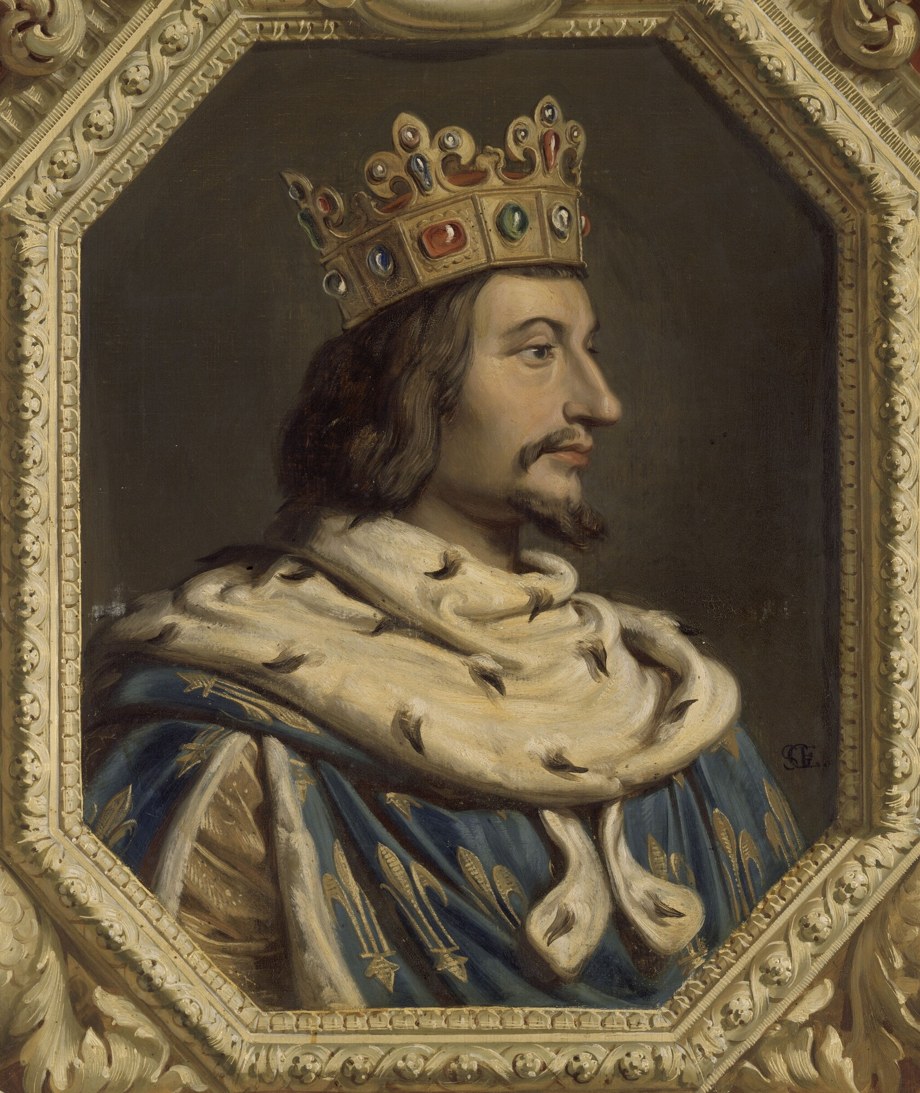
AI-assisted Portrait of Charles V
The King Who Won a War From His Study
He was the frail, bookish foil to an age of dazzling warrior-kings — and he beat every one of them. While the English thundered across France behind Edward III and his son the Black Prince, winning the great set-piece battles of the century, Charles V of France sat in his library, read Aristotle, and quietly designed their undoing. He never led a charge. He was sickly his whole adult life, his right arm so swollen and weak that contemporaries whispered he had been poisoned. And by the time he died in 1380, he had clawed back almost everything France had lost — reducing the vast English holdings to a handful of coastal toeholds.
The inheritance he received was catastrophic. His father, John II, had been taken prisoner at Poitiers in 1356, carried off to captivity in England while France disintegrated into peasant revolt, factional civil war, and the freebooting violence of unpaid mercenary companies. The Treaty of Brétigny in 1360 ransomed the king at the price of a third of the kingdom. France was devastated, bankrupt, and leaderless. Charles — regent during his father’s captivity, then king from 1364 — rebuilt it not with heroics but with patience, system, and an almost inhuman capacity to wait. Posterity gave him the only epithet that fit: le Sage, the Wise.
Charles V is the INTJ on a throne: Ni’s long, cold strategic vision married to Te’s relentless execution — a man who, having watched Crécy and Poitiers destroy France’s chivalry, simply decided to stop fighting battles and win the war another way.
The War He Refused to Fight
Ni — dominant
Dominant Ni is the capacity to fix on a single distant outcome and bend everything toward it, even when every instinct of the present screams otherwise. Charles had seen what the present cost. The chivalric ideal — the noble massed cavalry charge that was supposed to decide wars — had been butchered by English longbowmen at Crécy in 1346 and again, with his own father in the field, at Poitiers in 1356. Where lesser men drew the lesson that France needed braver knights or better luck, Charles drew the only conclusion that mattered: the battle itself was the trap. So he resolved never to give the English one again.
This was a strategy of almost unbearable patience. Under Charles, France fought a long war of attrition — sieges, raids, the slow recapture of fortified towns, the harrying of English supply lines — and pointedly declined the open-field showdowns the English kept offering. When the Black Prince and later English armies marched their devastating chevauchées across the countryside, burning and looting to provoke a response, Charles let them burn. He absorbed the humiliation of watching his land ravaged because he could see the further horizon they could not: an enemy that marches and burns but never holds ground eventually exhausts itself, while a defender who refuses to gamble keeps taking towns back one by one. It was unglamorous, unheroic, and ruthlessly correct.
That is the Ni signature — not a plan but a vision, held so steadily that the noise of the immediate cannot dislodge it. The war Charles fought looked, year to year, like nothing much: no triumphs to sing about, no decisive day. Only in the long view did the design resolve. By 1375 the English had been pushed back to little more than the ports of Calais, Bordeaux, and Bayonne. He had reconceived an entire war, and then waited out everyone who doubted him.
The Machinery of Recovery
Te — auxiliary
A vision is worthless without an engine to execute it, and auxiliary Te was Charles’s engine. The strategy of attrition demanded a state that could pay, supply, and sustain a professional war indefinitely — precisely what France did not have when he took the regency. So he built one. He reformed the royal finances and put taxation on a more regular, durable footing, turning emergency levies into a system that could fund a standing military effort year after year. He overhauled the army, paying and disciplining troops rather than relying on the unreliable feudal host, and channeled the chaotic free companies into the crown’s service.
The human instrument of all this was his Constable, Bertrand du Guesclin — a low-born Breton brawler with no patience for chivalric niceties and a genius for exactly the kind of grinding, opportunistic warfare Charles wanted waged. The pairing is pure Te: the king supplied the directing intelligence and the resources; du Guesclin was the hand that did the work in the field, taking fortress after fortress. Charles did not need to ride out himself. He needed the right competent operator pointed at the right objective, properly funded and left to execute — the manager-king delegating force the way an INTJ builds a system and staffs it.
The same Te shows in stone. Charles fortified Paris, strengthening its walls and raising a new fortress on its eastern edge — the Bastille — to guard the approach to the capital. He thought in infrastructure, in defenses that would still be standing and useful long after the immediate threat had passed. Where Ni saw the shape of the whole war, Te laid the brick, balanced the books, and made sure the design could actually be paid for.
The Scholar on the Throne
Fi — tertiary
Tertiary Fi in an INTJ is the private interior — the quiet, personal conviction about what is worth doing that hums beneath the strategist’s cool surface. In Charles it surfaced as something genuinely rare in a medieval king: a deep, sincere love of books and learning, pursued for its own sake. He assembled a great royal library in the Louvre, hundreds of volumes catalogued and housed in a dedicated tower — the seed from which the Bibliothèque nationale would eventually grow. This was not display. It was a king who actually wanted to read, and to have read what mattered.
He acted on that conviction the way a Te-user does — by commissioning the work. He ordered French translations of Aristotle’s Politics and Ethics, of Augustine’s City of God, and other foundational texts, deliberately building a body of political and moral philosophy in the vernacular so that the ideas could shape governance rather than sit locked in scholars’ Latin. A man who reaches for Aristotle and Augustine to think about how a realm should be ruled is showing you his values: that kingship is a craft to be studied, that wise rule is a thing one can learn. The strategist who won the war and the scholar who built the library were the same man, governed by the same inner certainty about what was worth his life.
Frailty Turned Into Strategy
Se — inferior
The inferior function is the one that does not come naturally — and in Charles, weak Se was almost comically literal. He had no aptitude for the physical, martial, present-tense heroics that defined a medieval king’s glory. His body would not allow it: he was chronically ill, his right hand and arm gout-ridden and swollen, his constitution fragile his whole reign. He could not be the warrior on horseback. By every contemporary standard of what made a king admirable — prowess in the field, valor in the charge — he was a disappointment waiting to happen.
The genius of Charles V is that he made his greatest weakness the cornerstone of his strategy. A king who could fight would have been tempted to fight; the chivalric pull toward the battlefield had destroyed his father and grandfather’s armies precisely because healthy, vigorous kings could not resist the lure of a decisive day. Charles felt no such lure — he could not answer it if he wanted to — and so the Se he lacked became the discipline he didn’t have to impose. The man too frail to ride to war was therefore the one man in France who would never throw an army away to prove his courage.
His was a kingship conducted at one remove from the immediate and the bodily: from the council chamber, the account book, the library tower, the map. He governed the war the way he governed everything — through intermediaries, through systems, from his study. The inferior function names exactly what he was not, and exactly why he won.
Why INTJ Over ISTJ
Why not ISTJ?
The ISTJ reading is tempting: Charles was prudent, cautious, methodical, a master of finance and administration who hated to gamble. But the ISTJ administers the realm dutifully within the inherited framework — conserving, regularizing, doing the established thing well. Charles did something an ISTJ’s Si-Te would resist: he threw out the entire received model of how war was waged. Refusing pitched battle and replacing chivalric combat with a novel grand strategy of attrition was not conservatism — it was a radical reconception, the work of Ni reframing the whole problem, not Si defending the proven way.
That is the line between the two types here. The ISTJ’s caution is rooted in precedent — this is how it has always been done, and doing it carefully is the virtue. Charles’s caution was rooted in foresight: he wasn’t preserving the past, he was serving a future only he could see clearly, and to reach it he overturned the most sacred military convention of his age. His prudence was visionary design wearing the mask of conservatism — and that combination of long-range vision (Ni) driving disciplined, systematic execution (Te) is the INTJ, not the dutiful steward. He didn’t maintain a kingdom. He re-strategized one back into existence.
Connected Figures
Further Reading
- The Hundred Years War (Vols. II–III) — Jonathan SumptionThe definitive narrative history in English; the central volumes cover the French recovery under Charles V in exhaustive, authoritative detail.
- Charles V le Sage — Françoise AutrandThe standard modern French biography — comprehensive on the scholar-king, his library, and the machinery of his governance.
- Royal Intrigue: Crisis at the Court of Charles VI — R. C. FamigliettiOn the Valois court and the unraveling that followed Charles V's death — context for how little of his rebuilt kingdom survived him.
