 Historical Figure MBTI
#693 · 5-24-26 · The Age of Exploration
Boabdil
Last Emir of Granada · The Sultan Who Wept · End of Al-Andalus
c. 1460 — 1533
7 min read
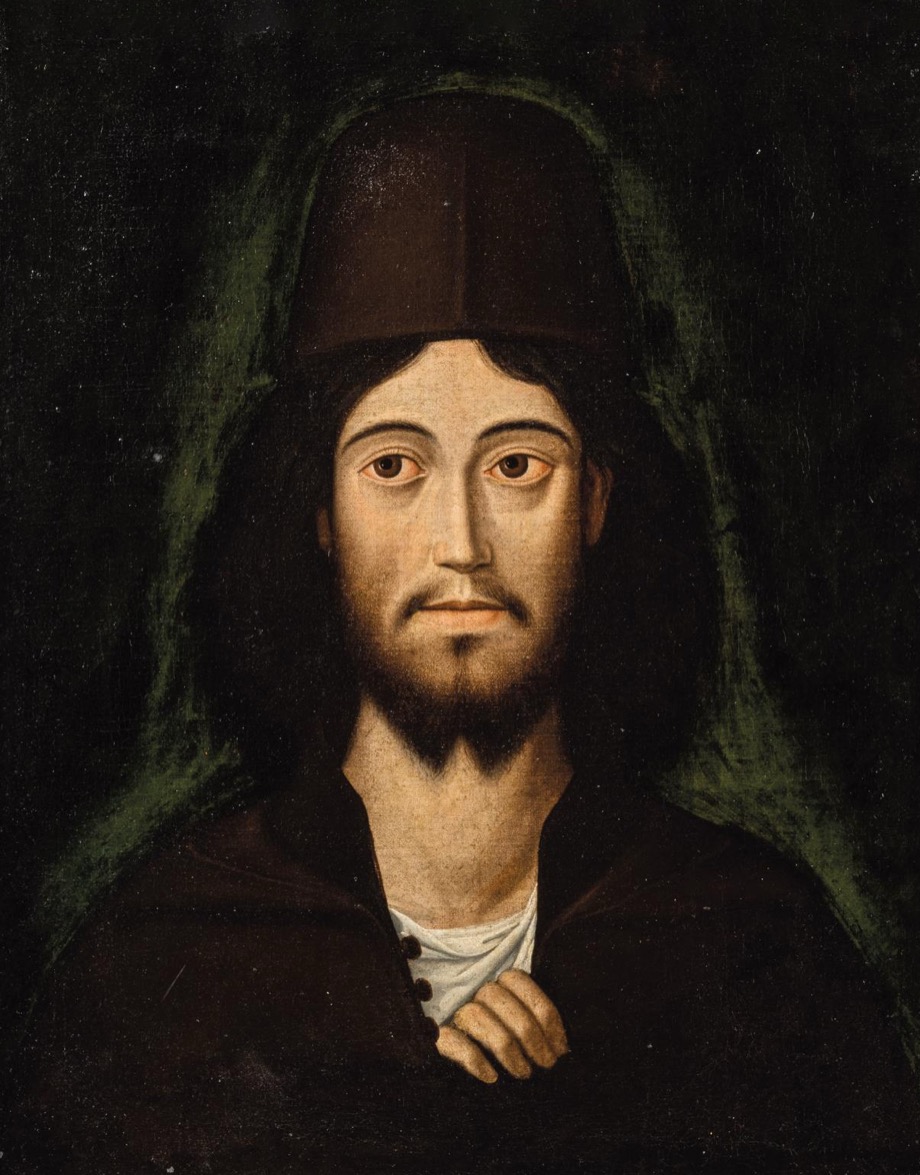
Portrait of Boabdil
The Sultan Who Could Not Be a Symbol
Muhammad XII — Boabdil to the chroniclers who mangled his name — inherited a throne through betrayal and lost it through conscience, and history has rarely forgiven him for the second part. He rose against his own father, Abu al-Hasan Ali, in a palace war his mother Aisha al-Hurra helped engineer, and the kingdom he then tried to hold was already hollowed out by the quarrel that made him emir. Granada in the 1480s needed a symbol of unbending resistance. It got, instead, a man of real interior life — a poet's sensibility, a capacity for doubt, a reluctance to spend his people on a cause already lost — and that man was Boabdil.
Captured at Lucena in 1483, released as a humiliated vassal, squeezed between an uncle who kept fighting and a Castilian-Aragonese army that never stopped closing, he spent his reign absorbing a fact his culture had no honorable vocabulary for: that surrender could be the more principled choice than martyrdom. In January 1492 he handed over the keys of Granada, the last Muslim capital in Iberia, ending seven centuries of al-Andalus not in a final battle but in a negotiated peace he believed — wrongly, as it turned out — would protect his people.
He was an INFP: a man governed by inward conviction, Fi, who could not make himself perform the martial certainty his throne demanded.
The Weight of His Own Judgment
The most famous scene in Boabdil's life was staged by others but is true to his temperament: at the mountain pass above Granada, looking back at the city he had just surrendered, he wept. His mother is said to have rebuked him — "you do well to weep like a woman for what you could not defend as a man" — and the line has followed him for five centuries as an indictment. It is better read as a diagnosis. Boabdil never mistook the throne for his identity; what he refused to sacrifice was his own sense of what the surrender cost, and he did not perform stoicism he did not feel.
That same inward compass had put him on the throne at all. Joining his mother's conspiracy against his father was not a calculated power grab so much as an act of personal loyalty overriding dynastic convention — a decision made on private conviction, not political arithmetic. And at the end, when his uncle Muhammad XIII urged continued resistance, Boabdil weighed the annihilation of Granada's people against his own reputation and chose the people. Fi answers to itself first; here it answered by refusing to let pride become a death sentence for a city.
Reading the Angles of a Collapsing Kingdom
Boabdil's political career, such as it was, ran on an ability to see multiple possible futures for Granada at once, rather than a fixed strategy pursued to the end. He treated his 1483 captivity not as a dead loss but as an opening: vassalage to Castile, humiliating as it was, kept a version of the emirate alive and gave him leverage against rival Nasrid claimants. He continually recalculated which alliance — with Castile, against his uncle, with Castile again — kept the most doors open for his people, even as each recalculation cost him legitimacy with the hardliners around him.
That same restless possibility-scanning made him receptive to a negotiated peace that a more single-minded resister would have refused outright. The Treaty of Granada's initial terms — religious tolerance, property protections, the preservation of Muslim law — represented, to Boabdil, one plausible future among several, and arguably the one likeliest to spare Granada's population a massacre. Ne gave him the imagination to see it; Fi gave him the resolve to sign it, knowing what surrender would cost his name.
Bound to What Al-Andalus Had Been
Boabdil governed as an heir keenly aware of what he was the last of. The Alhambra he handed over was not merely a fortress but the accumulated inheritance of centuries of Nasrid rule, and his negotiated terms show a man trying to preserve continuity — mosques kept open, customs and courts left intact, the texture of daily Muslim life in Granada carried forward under new sovereigns — rather than a man indifferent to what would vanish with his crown.
That backward-looking loyalty also explains the poignancy that later legend attached to him. The stories of his poetry, his grief at the pass now called the Moor's Last Sigh, his lingering attachment to a city he no longer ruled, all read as Si turned toward mourning — a fidelity to a remembered world he could not carry into the future, even as he did everything he could to soften its ending.
A Command He Never Quite Grasped
What Boabdil lacked was the inferior INFP's usual weak point: the cold, external, results-driven command that his position demanded constantly and his temperament supplied only under duress. He could negotiate a treaty; he struggled to run a war, discipline a fractious nobility, or hold a coalition together through sheer administrative force. His reign is a chronicle of ground lost to rivals more comfortable simply issuing orders and enforcing them.
The clearest evidence is what happened after 1492: freed of the emirate, Boabdil went into exile — eventually to Fez — and vanished from the historical record almost entirely, a man for whom sovereignty had never been a fully comfortable fit. Te, undeveloped, could get him through a negotiation but not through the sustained, externally-imposed discipline that holding Granada by force would have required.
Why INFP Over ENFP
Why not ENFP?
An ENFP emir would have externalized his conflict — rallied supporters, tested alliances aloud, made the case for or against resistance in open council, and drawn energy from the very chaos closing in on Granada. Boabdil did none of this. His decisions read as arrived-at in solitude and announced once settled: the alliance with his mother against his father, the acceptance of vassalage, the final surrender all appear in the record as private conclusions, not the product of extraverted deliberation. The grief at the pass above the city was not performed for an audience — it was, by every account, simply true.
What separates Boabdil from an ENFP is the direction his conviction flowed: inward and downward into private certainty, not outward into persuasion and momentum-building. He never tried to talk Granada into fighting on, nor himself into believing a lost cause could still be won. He simply decided, alone, what he could and could not do to his own people — and lived with what that decision made of his name.
Connected Figures
Further Reading
- Islamic Spain, 1250 to 1500 — L.P. HarveyThe standard scholarly account of Granada's final century and fall.
- The Ornament of the World — María Rosa MenocalPlaces Boabdil's surrender within the broader collapse of convivencia.
- The Moor's Last Stand: How Seven Centuries of Muslim Rule in Spain Came to an End — Elizabeth DraysonA focused narrative biography centered on Boabdil himself.
