 Historical Figure MBTI
#694 · 5-24-26 · The Age of Exploration
Tomás de Torquemada
Grand Inquisitor · Architect of the Inquisition's Machinery · Confessor to a Queen
1420 — 1498
11 min read
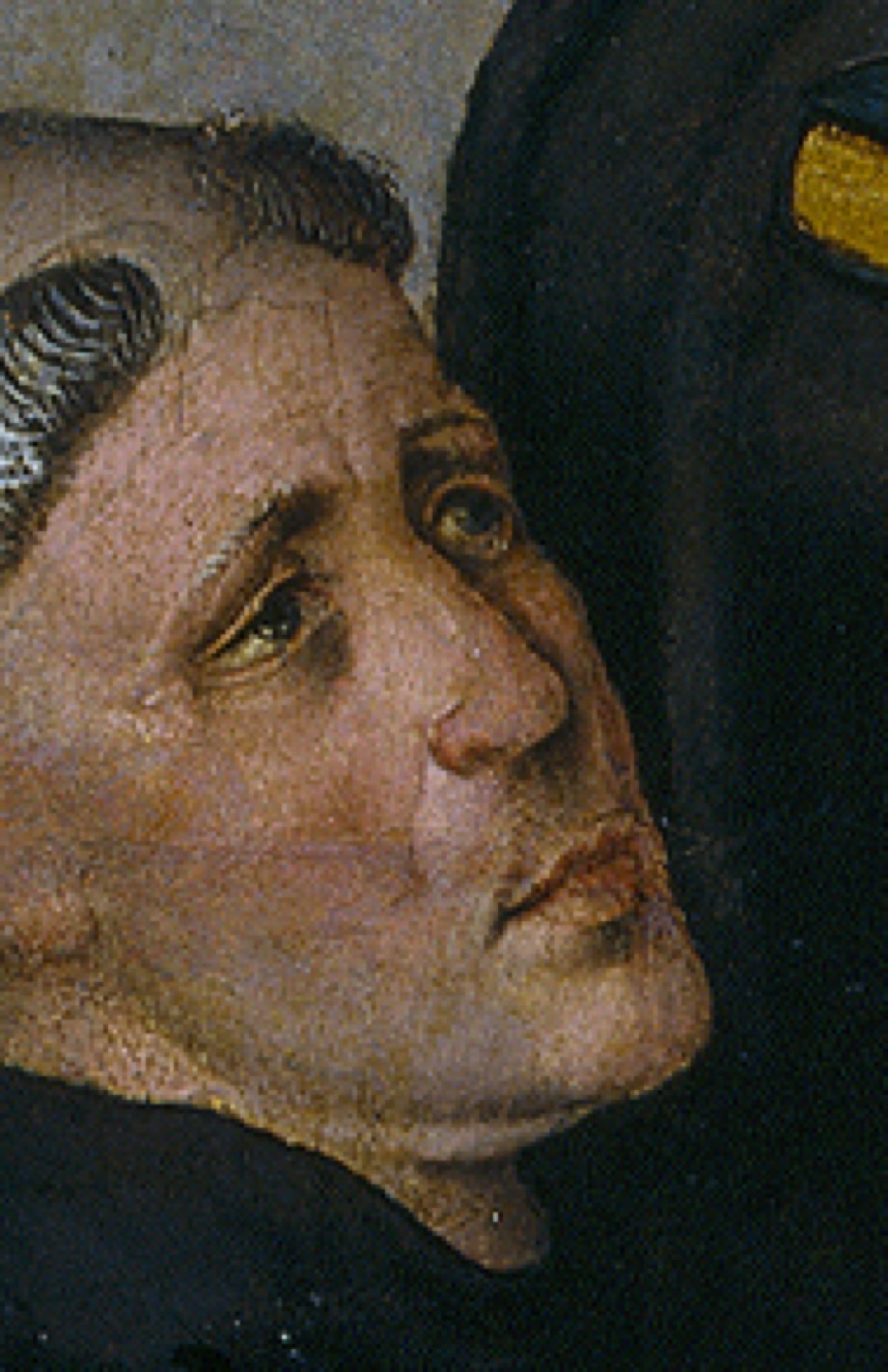
Portrait of Tomás de Torquemada
The Man Who Wrote the Manual
The most disturbing document Tomás de Torquemada left behind is not a sentence of death. It is a set of instructions. The Instrucciones he issued from Seville in 1484, expanded in 1485, 1488, and 1498, read like the internal handbook of a competent administrative agency — how a tribunal should be constituted in a new town, how long the edict of grace should run before denunciations became prosecutions, how many witnesses were required, how testimony was to be transcribed and archived, how property was to be inventoried, how the condemned were to be arranged in the procession of the auto-da-fé. There is no rhetoric in them. There is no theology to speak of. There is a man with a legal training and a Dominican's temperament sitting down to make sure that the thing was done the same way in Córdoba as in Zaragoza, this year and next year and after his death.
That is the horror, and it is a specific kind of horror. Spain in the 1480s was not short of cruelty; the peninsula had been improvising pogroms against its Jewish and converso population since 1391. What Spain lacked, until Torquemada, was a permanent apparatus that could convert religious suspicion into paperwork and paperwork into fire, indefinitely, without needing a mob. He supplied it. Under his tenure as the first Grand Inquisitor — appointed 1483, dead in 1498 — tribunals were planted across Castile and Aragon, thousands were tried, an unknown but unambiguously real number were burned, and tens of thousands of conversos entered a condition that had no precedent in Europe: permanent, hereditary, documented suspicion. Their neighbors were invited to inform. Their grandchildren inherited the file.
He did not invent this. That is the point most easily lost. The inquisitorial procedure was centuries old, worked out by the medieval papacy against the Cathars and carried by his own Dominican order ever since. The Spanish tribunal itself was authorized by Sixtus IV's bull of 1478, at the request of Isabella and Ferdinand, five years before Torquemada took charge of it. He inherited a concept, an institution, and a mandate. What he contributed was rigor — standardization, precedent, record-keeping, uniformity, the refusal to let any local tribunal drift from the model. He was not a visionary. He was the best operations officer that religious terror has ever had.
Torquemada is the archive's clearest case of the ISTJ in its most catastrophic register: a dominant Si that treated the accumulated procedure of the Church as sacred fact, applied without deviation to human beings.
Precedent as Revelation — Si dominant
Dominant introverted sensing is an instrument for holding the past in fixed, reliable, concrete form and treating it as the standard against which the present is measured. In most lives it produces the reliable steward, the keeper of the accounts, the person who remembers exactly how it was done and sees no reason to do it differently. In Torquemada it produced something with a body count, because the past he held with that fidelity was the accumulated procedural memory of the medieval Inquisition, and he saw no reason to do it differently.
The Instrucciones are the artifact of that faculty. They do not argue. They specify. A denunciation must be recorded with the names of the witnesses even where the accused will not be told them; the accused's property is to be sequestered and inventoried at arrest; the confession, if obtained under torture, must be ratified freely afterward on a separate day, in a separate room, and entered separately in the register. That last provision has been cited as evidence of restraint. It is better read as evidence of temperament: the concern is not that the prisoner suffered but that the record be procedurally clean. The suffering was not the flaw.
The same faculty explains his personal life, which was austere to the point of parody — the plain Dominican habit worn under the Grand Inquisitor's authority, the refusal of a bishopric, the meatless table, the reported unicorn horn kept as a guard against poison. He lived by a rule laid down two and a half centuries before him by Dominic, and he applied it to himself with exactly the literalism he applied to everyone else. There is no evidence he thought of himself as innovating in any particular. He thought he was enforcing what was already true.
A Bureaucracy of Terror — Te auxiliary
Extraverted thinking organizes the outer world into systems that function. Torquemada's Te is visible in the fact that the Spanish Inquisition, alone among the persecuting instruments of early modern Europe, worked like an institution rather than a spasm. He built a hierarchy: a Grand Inquisitor at the top, the governing council beneath him, local tribunals below that, each with inquisitors, a prosecutor, a notary, an alguacil, an accountant, and a network of unpaid lay informants — the familiares — extending into every parish. He standardized the salaries. He standardized the forms. He built the appeals channel that ran back up to the center, which had the effect not of protecting the accused but of ensuring that the center knew everything the periphery did.
He fought turf wars with local bishops over jurisdiction and with the Aragonese cortes over the tribunal's legality, and generally won, because he had the monarchs and the paperwork alike. When the inquisitor Pedro de Arbués was assassinated in Zaragoza in 1485 by conversos hoping to break the new tribunal, the tribunal did not break. That is the signature of the Te build. Kill an improviser and the thing stops. Kill a functionary in a properly staffed system and a replacement is appointed under the existing procedure by the end of the month.
The auto-da-fé itself — the great public ceremony of sentencing — was under his hand less a rite of religious ecstasy than a scheduled administrative event with a fixed running order, standardized penitential garments, a written sermon, and the sentences read in ascending order of severity so that the burnings came last. Te does not need theater for its own sake. It builds theater when theater is the most efficient available mechanism of general deterrence, and then it writes down the stage directions so the next one runs the same way.
The Private Conviction That Needed No Audience — Fi tertiary
Tertiary introverted feeling gives the ISTJ a moral core that is intensely personal, rarely explained, and almost impossible to argue with, because it was never built out of arguments in the first place. Torquemada does not appear to have wanted money, a title, a diocese, or even fame. He wanted Spain to be one thing. The conviction was interior, absolute, and entirely closed to external correction — and that combination, seated beneath a dominant Si and an auxiliary Te, is what turns an administrator into an architect of atrocity.
Its purest expression is 1492. Torquemada personally pressed Isabella and Ferdinand for what became the Alhambra Decree: the expulsion of every unconverted Jew from Castile and Aragon, roughly four months to leave or convert, tens of thousands of lives uprooted, communities eight centuries old ended by signature. The Inquisition had no legal jurisdiction over practicing Jews at all — only over baptized Christians suspected of backsliding. The expulsion was therefore not an enforcement action but a lobbying victory, and it reveals what he actually believed: that the conversos could never be secured while an unconverted community remained to remind them of what they had been. The logic is coherent. It is also, in the plainest sense, a program of destruction pursued to its end.
The famous scene — Torquemada bursting in with a crucifix to shame the monarchs out of accepting a Jewish community's ransom offer — comes to us through later, largely unreliable transmission, and Kamen and Pérez both treat it as legend. But the legend attached to him rather than to someone else for a reason. Everyone who dealt with him understood that his was a conviction no negotiation touched. Fi in the tertiary position does not deliberate in public. It simply refuses, and the refusal is the whole of the reasoning.
The Heresy Behind Every Door — Ne inferior
Inferior extraverted intuition does not disappear; it leaks. In a healthy ISTJ it surfaces as low-grade worry about what might go wrong. Under strain and given power, it becomes something else: a generator of hypotheticals that the dominant function then treats as facts requiring procedure. Torquemada's Inquisition is, structurally, a machine for taking imagined possibilities about people's inner lives and converting them into evidentiary categories.
Consider what the tribunals actually looked for. Not confessed apostasy, which was rare, but signs: clean linen on Saturday, a house without smoke on the Sabbath, meat prepared a certain way, an averted face at a particular moment of the Mass, a child given a grandmother's name. These were entered in the manuals as indicators of judaizing. The method presumes an invisible interior betrayal and then reads the surface of ordinary domestic life for traces of it — which is to say, it is Ne running without any check from a real perceiving function, producing an infinite supply of suspicion because the possibilities never run out. The edicts of grace institutionalized it further, offering reconciliation to anyone who came forward and denounced others, thereby converting the whole converso population into a source of leads.
This is why the machine could not stabilize. A Te system aimed at a finite objective completes and stops. A Te system fed by inferior Ne's inexhaustible catalogue of what might secretly be true has no terminal condition, and the Spanish Inquisition duly ran for three hundred and thirty-six years after his death, outliving the empire that built it. Torquemada's own last years reportedly bent toward the same shape — the bodyguard, the tasted food, the antidote horn — a man who had built a national apparatus for detecting hidden enemies and ended it convinced that hidden enemies were coming for him. They largely were. He had made them.
Why ISTJ Over INTJ
Why not INTJ?
The INTJ case is seductive because the finished product looks designed: a national surveillance system with a doctrine, a hierarchy, and a three-century horizon. But Torquemada authored none of the concept. Inquisitorial procedure was Dominican inheritance; the Spanish tribunal was created by papal bull in 1478 at the crown's request, five years before he led it; the theological justification for prosecuting conversos was already settled canon law. What he added was uniformity, precedent, documentation, and enforcement — the operationalization of a system he received, not the conception of one he foresaw. Ni builds toward a future it alone can see; Torquemada's every recorded instinct was to conform the present to an authoritative past.
The comparison that settles it stands next to him in this same cluster. Cardinal Cisneros — also a friar, also a queen's confessor, also an inquisitor general, also ruthless — founded things that had not existed: a university at Alcalá built from nothing to his specification, the Complutensian Polyglot Bible printed in four languages in parallel columns, an entire program for reforming the Spanish clergy conceived before there was any constituency for it. That is Ni-Te: a private vision of what ought to exist, driven into being. Torquemada founded nothing. He took an institution someone else had authorized and made it work everywhere, identically, forever. Set the two men side by side and the difference is not one of severity — Cisneros burned Arabic manuscripts in the squares of Granada — but of direction. One looked at a blank space and saw a structure. The other looked at an existing structure and could not rest until every part of it ran to code.
Connected Figures
Further Reading
- The Spanish Inquisition: A Historical Revision — Henry KamenThe standard modern account — deflates the older mythology of scale while remaining damning on what the tribunal actually was.
- The Spanish Inquisition: A History — Joseph PérezA lucid narrative history strong on the converso question and the politics behind the 1492 expulsion.
- Torquemada and the Spanish Inquisition — Rafael SabatiniThe influential 1913 treatment — vivid, polemical, and unreliable on numbers, but the source of much of the popular image.
- Isabella: The Warrior Queen — Kirstin DowneyUseful on the court where Torquemada operated and on Isabella's own role in authorizing him.
