 Historical Figure MBTI
#695 · 5-24-26 · The Age of Exploration
Cardinal Cisneros
Regent of Spain · Founder of Alcalá · Ascetic Reformer
1436 — 1517
8 min read
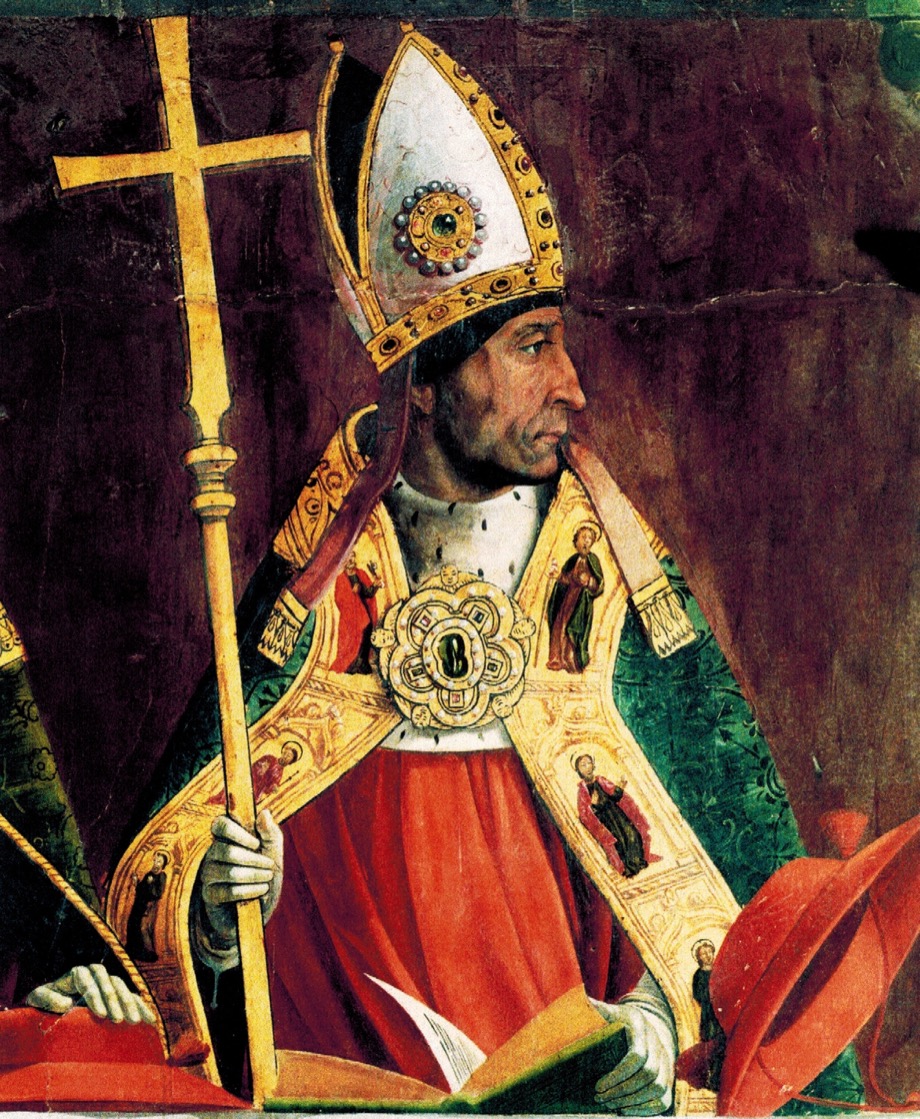
Portrait of Cardinal Cisneros
The Friar Who Built a University Instead of an Empire
Under the cardinal's scarlet, Francisco Jiménez de Cisneros wore a hair shirt and slept on bare boards. That detail is usually offered as a curiosity — proof of piety in an age of ecclesiastical excess — but it is also the clue to how he actually operated. Deprivation was not theater for him; it was a way of clearing the field of everything that wasn't the plan. Isabella of Castile made him her confessor, then all but forced the archbishopric of Toledo on him over his own objections, and what she got in return was not a courtier but an architect: a man who looked at the gaps in Spain's intellectual and religious infrastructure and quietly, patiently, built the missing pieces from nothing.
That is the shape of an INTJ: a mind that lives inside long-range blueprints and treats the present as raw material for a future only it can see clearly. Cisneros founded a university at Alcalá de Henares where none had asked for one. He commissioned a six-volume printed Bible in four ancient languages that no one had thought technically possible. He financed and led an army against Oran at seventy-three, not because circumstance demanded it but because a vision he had held for years finally had the resources to become real. Twice he was handed the regency of Castile in moments of dynastic collapse, and twice he ran it like a man executing a design already drafted in his head.
Cisneros was an INTJ who used dominant Ni to see institutions that did not yet exist, and then built them.
A University Where There Was Only a Village
In 1499, Alcalá de Henares was a modest town under the archbishop of Toledo's jurisdiction, notable for nothing in particular. Cisneros looked at it and saw the future capital of a new kind of learning — one that would fuse scholastic theology with the new humanist scholarship spreading out of Italy, training clergy who could read scripture in its original languages rather than secondhand through Latin tradition. No one had asked him to build this. He conceived the entire institution — its colleges, its curriculum, its endowment — as a single integrated system, years before the first stone was laid.
The Complutensian Polyglot Bible shows the same pattern at even greater scale. Producing a printed edition of scripture with Hebrew, Greek, Latin, and Aramaic texts running in parallel columns was not a project anyone in Spain had the infrastructure for in 1502 — the scholars, the typefaces, the manuscripts, the printing expertise all had to be assembled specifically for it. Cisneros gathered Jewish, Christian, and humanist scholars under one roof and held the enterprise together for over a decade, publishing only after death delayed his own final approval. That is Ni doing what it does best: holding a complex, distant outcome fixed in mind long enough for reality to catch up to it.
Even his late-life military expedition to Oran fits the pattern more than it first appears to. Cisneros had wanted a North African campaign for years, framing it as an extension of the Reconquista's logic onto new terrain. When Ferdinand's government hesitated, Cisneros simply financed and organized it himself, at his own expense, at seventy-three. It was not impulse. It was a long-deferred piece of an internal design finally being executed.
Regent Twice, Absolute Both Times
Vision alone does not run a kingdom through a succession crisis. When Isabella died in 1504, Castile fractured between factions loyal to her daughter Juana and those maneuvering around Juana's evident incapacity; when Ferdinand died in 1516, the crown passed to a teenage heir still in Flanders, and Spain again needed someone to hold the machinery of state together in the interval. Both times, Cisneros took the regency and ran it with blunt administrative force — enforcing royal authority against fractious nobles, controlling finances, keeping order — until a legitimate successor could physically arrive to claim the throne.
This is auxiliary Te: the capacity to convert an internal vision into external, measurable, organized results, and to do it without sentiment. Cisneros did not run Castile by consensus or charm. He ran it by decree, by garrison, by ledger. Contemporaries who found him harsh were not wrong — he treated the state the way he treated the printing of the Polyglot Bible, as a system to be controlled until the desired output was achieved.
The Oran campaign again illustrates the fusion: Ni supplied the ambition, but it was Te that assembled the actual army, secured the actual financing, and delivered the actual military victory. Cisneros was not a mystic who dreamed of institutions. He was a builder who happened to dream first.
The Hair Shirt Under the Cardinal's Robes
Cisneros did not need anyone to see the hair shirt for it to matter. He kept his Franciscan austerities — the coarse habit worn beneath the cardinal's vestments, the floor for a bed, the refusal of luxury even as he commanded one of Europe's wealthiest sees — as a private discipline, largely uncommented on until his household staff noticed it years into his tenure. This is tertiary Fi: a quiet, unnegotiable internal code that did not require external validation and was not performed for effect.
That inward conviction is also what let him resist the archbishopric when Isabella first offered it, and what let him spend his own personal fortune on the Oran expedition rather than wait for a reluctant crown treasury. Cisneros's values were not up for negotiation with political convenience. He gave money he did not have to spare to a war he believed was righteous, on principle, regardless of whether the government agreed it was prudent.
But Fi sat well behind Te and Ni in his stack, which is why his convictions expressed themselves as personal severity rather than public advocacy or emotional appeal. He never tried to persuade anyone of his inner life. He simply lived by it, silently, and let the institutions he built speak for what he valued.
An Old Man's Army in Africa
The Oran expedition of 1509 is the moment Cisneros's inferior Se breaks the surface most visibly. A seventy-three-year-old cardinal, a man who had spent his life inside libraries, cloisters, and council chambers, personally organized and financed an amphibious military assault on a fortified North African port — and it succeeded. For a dominant Ni type, inferior Se can surface as a late-life pull toward direct, physical, irreversible action, as if the abstract vision finally demanded a body on the ground to complete it.
It was not comfortable territory. Cisneros did not lead troops in the field himself in the way a natural sensor-warrior might; he organized, financed, and delegated command, staying closer to his administrative strengths even while pushing into unfamiliar physical stakes. The expedition reads less like ease with immediate danger and more like an act of will overriding a lifetime of indoor habits.
That the gamble paid off — Oran fell — only reinforces how untypical the whole episode was for him. It stands nearly alone in his biography as a moment when the visionary reached for the sword instead of the pen, and it is precisely because it was so uncharacteristic that it has stayed so memorable.
Why INTJ Over ENTJ
Why not ENTJ?
An ENTJ regent would have led from the front — visible, forceful, seeking out confrontation and drawing energy from the arena of open political combat. Cisneros did the opposite: he governed from behind closed doors and personal austerity, letting institutions and decrees do the talking while he retreated to a cell-like private life. His decisiveness came from a private, long-held interior vision, not from extraverted engagement with people and events in real time. That introversion of process — plan first, in solitude, execute second, through subordinates — is the signature of dominant Ni over dominant Te, and it is what separates Cisneros from an ENTJ commander-administrator.
The clearest test case sits inside the same batch of figures: Tomás de Torquemada, an ISTJ, occupied a nearly identical institutional position — confessor to the same queen, a severe cleric wielding enormous ecclesiastical power. But Torquemada inherited an office, the Inquisition, and made it more rigorous, more procedural, more consistent. Cisneros built things that had not existed before — a university, a printed multilingual Bible, a military campaign financed from nothing. One systematized; the other invented. That is the difference between Si-flavored institutional stewardship and Ni-flavored institutional creation, and it is why the two men, despite looking so alike on the surface, could not be more different underneath.
Connected Figures
Further Reading
- Jiménez de Cisneros: On the Threshold of Spain's Golden Age — Erika RummelThe standard English-language biography, covering his reforms, regencies, and the Alcalá project.
- El Cardenal Cisneros: Vida y empresas — José García OroComprehensive Spanish-language study of his life and institutional undertakings.
- Imperial Spain 1469–1716 — J.H. ElliottPlaces Cisneros's regencies within the broader arc of Castile's dynastic and administrative consolidation.
