 Historical Figure MBTI
4 min read
#14 · 2-4-26 · The Napoleonic Age
Charles-Maurice de Talleyrand
Diplomat · Survivor · The Man Who Outlived Every Regime
1754 — 1838
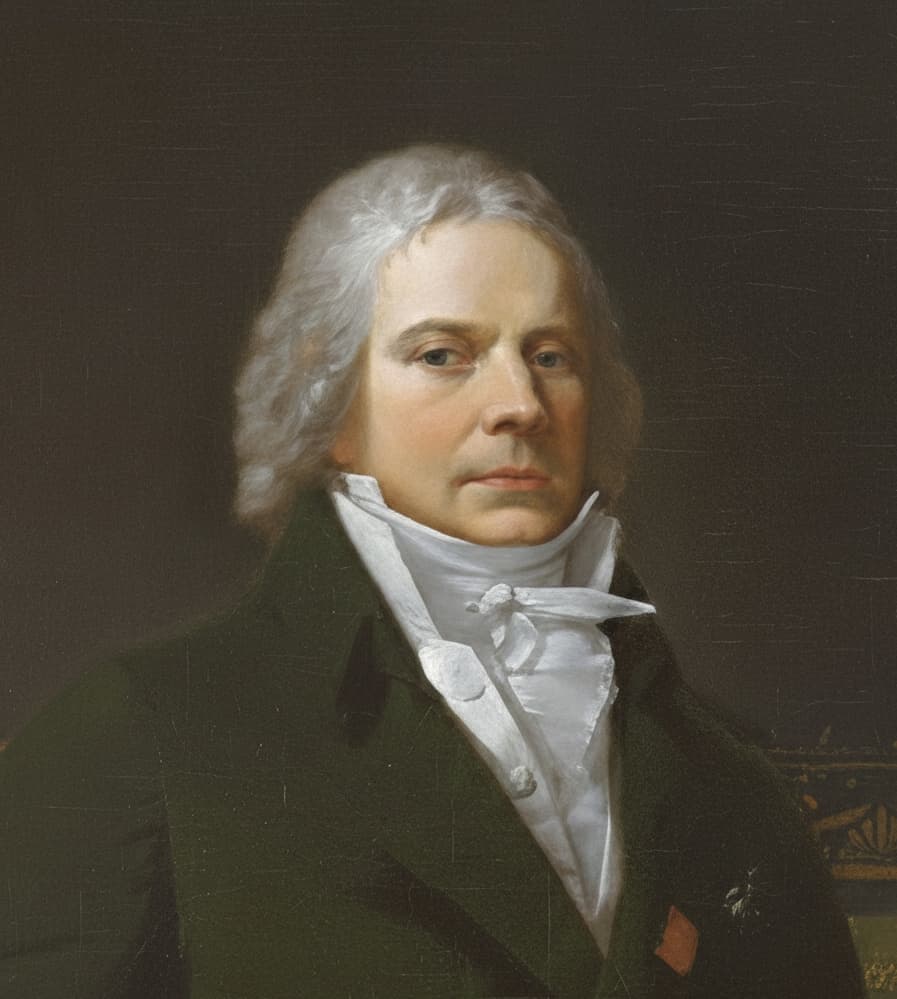
AI-assisted Portrait of Charles-Maurice de Talleyrand-Périgord
The Man Who Planned for the After
Charles-Maurice de Talleyrand lived through the collapse of a monarchy, the violence of a revolution, the rise of an empire, and the restoration of a crown — and emerged from all of it not only alive, but influential. While others defined the Napoleonic era through conquest or ideology, Talleyrand defined it through restraint.
Born into the French aristocracy yet physically sidelined by a disability, Talleyrand learned early that power did not require spectacle. He moved instead through proximity, discretion, and intellect — mastering the quiet art of influence. Where generals reshaped borders and revolutionaries burned principles into the streets, Talleyrand asked a different question: what remains when the fire is gone?
His legacy is not one of loyalty to rulers, but of continuity for France. He did not believe history belonged to heroes. He believed it belonged to systems that survived human excess.
That's the INTP signature: not pursuing a vision, but evaluating one. Talleyrand's power came from judgment, not direction — from knowing when to act and, more often, when not to.
Principles Over Passions
Talleyrand's mind operated on principles, not passions. He consistently analyzed political situations by stripping away rhetoric and focusing on structural reality: incentives, balance, and human nature.
He distrusted ideological certainty and heroic narratives, viewing them as distortions of truth rather than expressions of it. His decisions were guided by internal logical coherence — does this system hold? does it prevent collapse? — rather than by loyalty or moral theater. This detached, internally consistent reasoning is characteristic of dominant Ti.
Probabilistic Adaptability
Rather than committing to a single future, Talleyrand continuously mapped multiple possibilities. He anticipated regime collapse, foreign retaliation, and long-term instability long before others allowed themselves to imagine it.
His adaptability was not playful or experimental, but probabilistic. He kept options open not out of curiosity, but caution — a hallmark of auxiliary Ne supporting Ti analysis. This allowed him to pivot without psychological rupture when circumstances changed.
The Weight of Precedent
Despite living through upheaval, Talleyrand valued institutional memory and historical precedent. He understood how Europe remembered power, humiliation, and dominance — and acted accordingly.
This grounding in precedent informed his skepticism toward radical reinvention. He did not seek to erase the past, but to stabilize its aftermath. His use of tradition was selective and pragmatic, reflecting tertiary Si rather than conservative rigidity.
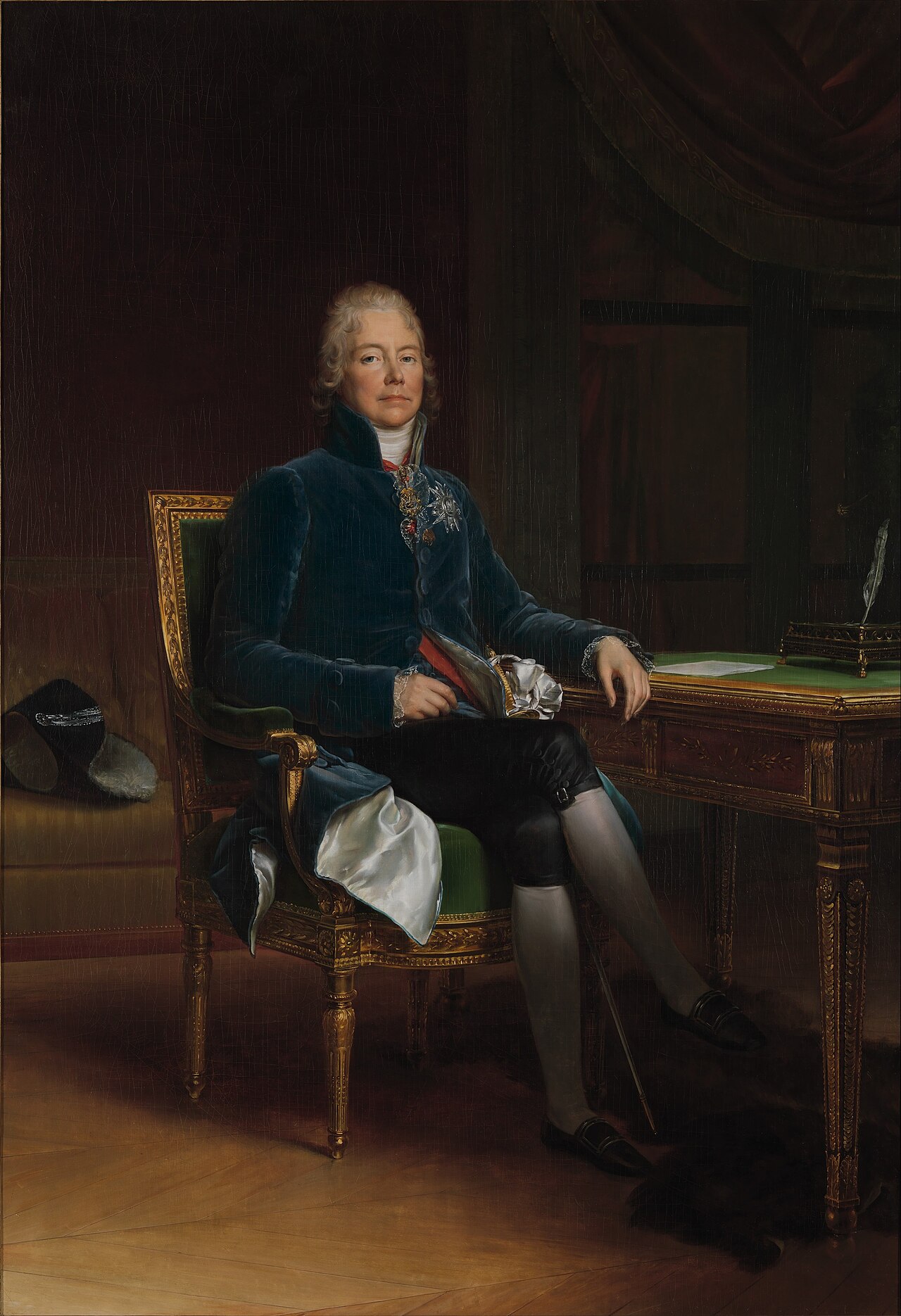
Why INTP Over ENTP or INTJ
Why not ENTP?
ENTPs lead with exploratory Ne — generating ideas through dialogue, play, and external stimulation. Talleyrand did none of this. His wit was controlled, his speech minimal, and his creativity directed toward containment rather than expansion. He did not enjoy chaos. He tolerated it. He did not ideate publicly. He evaluated privately. Adaptability alone does not equal ENTP.
Why not INTJ?
INTJs are driven by internal vision — a future they seek to realize through structured execution. Talleyrand avoided ownership of grand outcomes. He advised, warned, and adjusted — but rarely committed himself to building a singular world. He was not an architect of destiny. He was a regulator of excess. His refusal to bind himself to a single vision places him outside dominant Ni.
Napoleon's Mirror — The ENTJ–INTP Pairing
The relationship between Napoleon Bonaparte and Talleyrand reflects a classic ENTJ–INTP dynamic. ENTJs are often drawn to INTPs for their clarity, restraint, and ability to articulate what power risks overlooking. Napoleon enjoyed talking with Talleyrand because Talleyrand could keep up intellectually without competing for command. Talleyrand, in turn, provided something Napoleon rarely found — a mind that could slow the room without dulling it.
Momentum met moderation. Expansion met evaluation.
Their ultimate destinies reveal the limit of the pairing. Napoleon's trajectory demanded acceleration — more territory, more authority, more certainty — until momentum itself became unsustainable. Talleyrand's path favored endurance. When the system began to fracture, the INTP stepped away from the will of the ENTJ and aligned instead with continuity. One fell with the empire he built. The other remained, helping negotiate France's return to stability after collapse.
Connected Figures
Further Reading
- Talleyrand — Duff CooperThe classic English-language biography — elegant and sharply observed, first published in 1932.
- The Congress of Vienna — Harold NicolsonPuts Talleyrand's diplomatic triumph of 1814–15 in full context; essential for understanding his greatest hour.
- Talleyrand: The Betrayer and Saviour of France — Robin HarrisA revisionist 2007 biography that takes the 'saviour' argument seriously and reassesses his reputation for treachery.
- Memoirs of the Prince de Talleyrand — Charles-Maurice de TalleyrandHis own account — self-serving, witty, and indispensable for hearing the INTP rationalize his choices in his own voice.
