 Historical Figure MBTI
#419 · 4-7-26 · The Age of Travelers
Donata Badoer
Venetian Wife of Marco Polo · Patrician Daughter · Figure of the Notarial Record
fl. c. 1300
2 min read
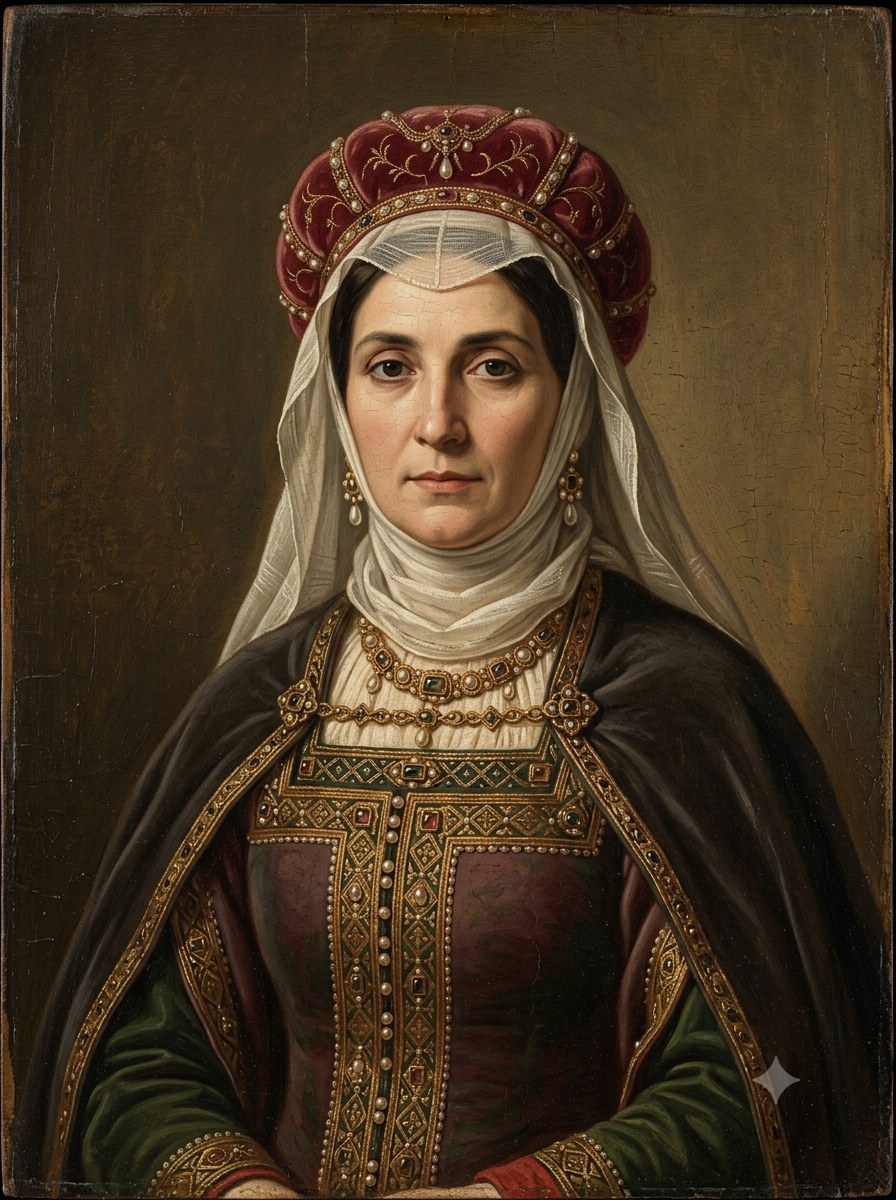
AI-assisted Portrait of Donata Badoer
The Wife the Traveler Came Home To
Donata Badoer is the woman Marco Polo married after he stopped traveling. The man who had crossed Asia, served at the court of Kublai Khan, and spent more than two decades away from Venice came home, settled into the life of a patrician merchant, and around 1300 took a wife from the Badoer family — one of the old houses of the Venetian aristocracy. With her he had three daughters: Fantina, Bellela, and Moreta. After the most extraordinary journey of the age, this was the ordinary life on the other side of it.
She survives almost entirely in legal documents. The Badoer were a well-established patrician clan, which is why the marriage was recorded at all and why we know her name with any confidence — but the record stops at the facts of property and inheritance. There are no letters, no reported conversations, no anecdotes. What we have is a wife and three daughters attached to a famous name, glimpsed through the dry machinery of Venetian notaries.
A Life in the Notarial Record
Donata appears where Venetian law required a wife to appear. Marco Polo's will, dictated in January 1324 as he lay dying, named her and provided for her and their daughters — the standard care a patrician husband arranged for the women he left behind. She was also a beneficiary in the disposition of his estate, and the Polo property later became the subject of litigation, the kind of inheritance dispute that filled the courts of mercantile Venice. Each of these documents fixes her in place a little more firmly while telling us nothing about who she was.
That this is all we have is not a failure peculiar to Donata. The Venetian record preserved the careers of merchants, magistrates, and officials — overwhelmingly men — while the lives of patrician wives surfaced mainly at the moments that touched money: dowry, marriage, widowhood, inheritance. Donata Badoer is the wife on the far side of Marco Polo's legend, the household and the family that were waiting when the traveler finally came home to stay. She represents the wholly unremarkable Venetian domesticity that the most-traveled man of his century returned to and lived out.
Psychological Verdict
Donata Badoer is genuinely untypeable, and she is marked untyped for that reason rather than as a placeholder. Typing a historical figure means working from behavioral evidence — letters, decisions, the texture of recorded words and deeds — and in her case none of that exists. She survives only as a name in legal documents: a wife provided for in a will, a party to an inheritance dispute. To assign her a type would be to invent a personality where the record preserves only a silhouette. She remains, honestly, unknown.
Connected Figures
Further Reading
- Marco Polo: From Venice to Xanadu — Laurence BergreenA modern narrative biography of Marco Polo that situates Donata and the daughters within his return to Venetian life.
- The Travels of Marco Polo — Marco Polo (with Rustichello of Pisa)The famous account of the journeys Donata's husband made before the ordinary domestic life she shared with him.
