 Historical Figure MBTI
#420 · 4-8-26 · The Medieval Islamic World
Ibn Battuta
Moroccan Jurist · The Greatest Traveler of the Middle Ages
1304 — 1369
11 min read
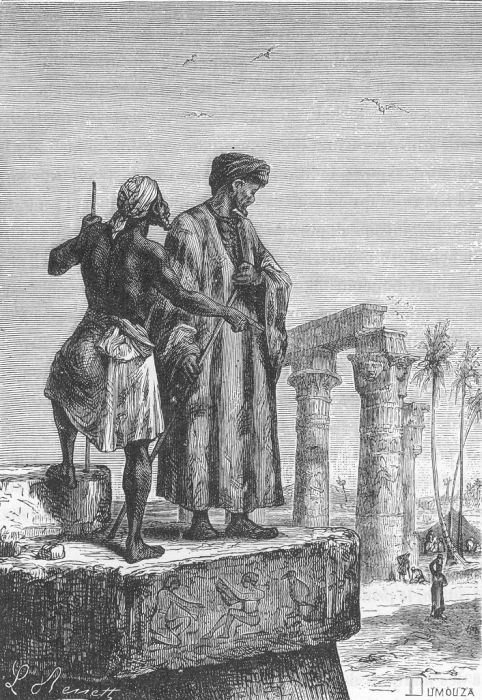
Portrait of Ibn Battuta
The Man Who Could Not Stop Going
In 1325, a twenty-one-year-old jurist from Tangier set out alone for Mecca to perform the hajj. It was the most ordinary ambition a young Muslim could have, and he expected, as he later put it, to be away for the time the road demanded and no longer. He did not see his parents again. He did not see Morocco again for nearly a quarter of a century. By the time he finally turned for home, Abu Abdullah Muhammad ibn Battuta had crossed roughly seventy-five thousand miles—a distance no one in the pre-modern world is known to have exceeded—through North Africa, Egypt, Arabia, the Swahili coast of East Africa, Anatolia, the steppe of the Golden Horde, Central Asia, India, the Maldives, Sri Lanka, Southeast Asia, and China, and later still across the Sahara to the empire of Mali. He went because the next country was there, and then the country after that.
What survives of all this is not a map but a voice. Back in Morocco the sultan set him to dictating his adventures to a young Andalusian scholar named Ibn Juzayy, and the resulting book—known simply as the Rihla, the “Travels”—is one of the strangest great works of medieval literature. It is barely interested in geography. It is intensely interested in dinners, in the manners of kings, in holy men and their miracles, in the women Ibn Battuta married and divorced and the concubines he bought, in slights he never forgave and honors he could not stop recounting. He is the great traveler of the Middle Ages, and he is also one of its great talkers—a sensory, sociable, self-regarding, pleasure-loving man who experienced the medieval world more completely than anyone, and felt no obligation to be cool about any of it. He is the ESFP at full stride.
Ibn Battuta did not travel to discover anything. He traveled because the world was a feast laid out across continents and he could not bear to leave the table—the ESFP appetite for experience extended to the horizon and sustained for thirty years.
The Appetite for the World
Se — dominant
Dominant Se lives in the present, physical, sensory world—and it is never satisfied for long, because the present keeps moving and so must the person who needs it. This is the engine of the whole improbable life. Ibn Battuta did not set out with a plan to see the world; he set out for Mecca and then simply could not make himself stop. At each junction—a caravan forming, a ship sailing, an ambassador heading somewhere unfamiliar—the pull of the next concrete experience overrode any reason to go home. He attached himself to a hajj caravan, then to a Sufi lodge, then to a sultan's embassy, riding whatever momentum the road offered. The man who wandered seventy-five thousand miles was not chasing a destination. He was chasing the next thing he had not yet touched, tasted, or seen.
The texture of the Rihla is pure Se. Where another traveler might give us latitudes and trade routes, Ibn Battuta gives us the coconut and the betel leaf of the Maldives, the congealed blood and roasted meat of a Turkish feast, the exact protocol by which the Sultan of Delhi received a guest, the appearance of a Chinese junk, the heat of the Sahara crossing, the particular way a holy man wore his cloak. He notices what can be perceived. His descriptions of food are so frequent and so loving that scholars have nearly mapped the fourteenth-century Islamic world by its menus. He is alert to wealth, to physical beauty, to ceremony and spectacle—the gold a king displays, the elephants in a procession, the dress of the women in a given port. This is not the eye of a geographer. It is the eye of a man for whom the surface of the world is the substance, and an inexhaustible one.
Se also explains the recklessness. Ibn Battuta repeatedly walked into danger—famine, bandits, shipwreck, the lethal moods of the rulers he served—with a present-tense confidence that the situation in front of him could be handled when it arrived. He nearly starved, was nearly executed, lost everything he owned more than once, and kept going. A planner would have calculated the odds and stayed home decades earlier. The Se-dominant simply meets the moment as it comes, trusting reflex and improvisation over foresight, and finds the whole arrangement exhilarating rather than terrifying.
For thirty years the next horizon was always more real to Ibn Battuta than the home behind him. That is dominant Se: the present moment, vivid and physical, outweighing every abstraction that might have called him back.
The Voice That Cannot Hide Itself
Fi — auxiliary
What makes the Rihla a personality and not merely an itinerary is auxiliary Fi—the deeply subjective, feeling-centered inner compass that filters everything through “how this struck me.” Most medieval accounts efface their authors; the writer is a window, not a presence. Ibn Battuta is the opposite. He is everywhere in his own book. We learn what delighted him, what offended him, whom he admired and whom he could not stand, when he wept, when he was proud, when he felt wronged. The book is a self-portrait disguised as a travelogue, and the man it portrays is governed far more by personal feeling than by doctrine or duty.
That Fi shows up most plainly in his loves and his grudges. He married and divorced repeatedly across the world, took concubines, fathered children he left behind in several countries, and described his attractions and attachments with unembarrassed candor—he wanted what he wanted, and the wanting was reason enough. He is equally candid in resentment: when a patron cooled toward him, when an official failed to honor his rank, when a fellow traveler crossed him, the wound goes straight into the narrative and stays there. He nurses his dignity. He keeps a long private ledger of who treated him as he believed he deserved. This is not the cool detachment of a man recording events; it is the warm, partial, sometimes vain accounting of a man for whom the central question is always how the world has made him feel.
His piety belongs here too, and it is genuinely his own. Ibn Battuta was a devout Muslim who sought out saints and shrines everywhere and recorded their miracles with real reverence—yet his devotion never disciplined his appetites, and he saw no contradiction. Auxiliary Fi does not run on external rules; it runs on an internal sense of what feels right and meaningful to this particular soul. His faith was sincere, his sensuality was sincere, his vanity was sincere, and all of them were his—held together not by a system but by the simple fact that he felt them. The result is one of the most personal, least guarded voices the medieval world has left us.
The Office That Pays the Passage
Te — tertiary
A wanderer needs money, standing, and a way to make himself useful in every place he lands, and here tertiary Te did its quiet work. Ibn Battuta carried one transportable asset: he was a trained jurist, a qadi, equipped with the law that governed the entire Islamic world from Morocco to the Maldives. Wherever he arrived, he could turn that credential into a paid post, a place at court, a household, a salary. Te is the function that organizes the external world to produce a result, and Ibn Battuta used it instinctively—not to build an institution, but to convert his learning into the practical means of going further. He took judgeships, accepted offices, collected the gifts and stipends that rank attracts, and kept himself afloat across three decades and a dozen courts.
The Indian years are the clearest case. At the court of Muhammad bin Tughluq, the volatile Sultan of Delhi, Ibn Battuta spent roughly eight years as a qadi, was showered with wealth on a scale he describes with frank relish, and was eventually entrusted with leading an embassy to China. In the Maldives he again took up the office of qadi, and characteristically set about enforcing the law and marrying into the ruling families—briefly becoming a small power in island politics. This is Te in a tertiary, supporting role: competent, opportunistic, deployed to secure status and resources rather than to construct a lasting order.
But tertiary Te is a servant, never the master, and it shows in how shallowly his offices held him. He administered, he judged, he accumulated—and then the next opportunity, or the next threat, would dissolve the arrangement and he would move on. He built nothing that outlasted his departure. The post was always a means to the journey, never the point of it; the moment a position stopped serving the appetite that drove him, it was abandoned without much regret.
The Journey With No Map
Ni — inferior
The most revealing thing about Ibn Battuta's travels is what they lack: a plan. There is no grand design behind the seventy-five thousand miles, no destiny he believed he was fulfilling, no single vision pulling the whole arc together. That absence is inferior Ni. The function that generates long-range purpose, that subordinates the present to a foreseen future, that asks “where is all this finally going?”—in the ESFP it sits at the bottom of the stack, weak and rarely consulted. Ibn Battuta did not chart a course through the medieval world. He drifted through it on currents of opportunity and impulse, and the staggering total was an accident of never stopping rather than the execution of any intent.
Inferior Ni surfaces instead in flashes, often as superstition or omen rather than strategy. He puts great weight on the predictions of holy men, on dreams, on the saint who foretells that he will travel to India and China—the unconscious reaching for a sense of destiny it cannot supply on its own. When the deeper meaning of his life does appear in the book, it arrives pre-packaged in the language of fate and divine will, borrowed rather than generated. The ESFP feels that some larger pattern must be there, but cannot quite see it from the inside, so it outsources the foresight to prophets and signs.
The same blind spot may account for the Rihla's famous unreliability. Ibn Battuta claims to have been places the timeline can barely accommodate—most notoriously, that he escorted the Byzantine princess Bayalun all the way to Constantinople—and modern scholars suspect he sometimes fused borrowed accounts with his own or improved the story in the retelling. A strong-Ni mind builds a coherent internal narrative and guards its consistency. The Se-dominant, weak-Ni traveler lived for the vividness of each separate moment and was never much troubled by whether the moments added up. He remembered how things felt, not how they fit—and the seams show.
Why ESFP Over ENFP or ESTP
Why not ENFP?
The ENFP travels for ideas—new ways of seeing, new possibilities, new conceptual ground; the journey is fuel for an imagination that lives in what things could mean. Ibn Battuta's drive was sensory and present-tense: the food, the spectacle, the wealth, the women, the physical fact of being somewhere he had not yet been. His book is concrete and personal, not conceptual—it reaches for the taste of the meal, not the idea behind the culture. That is Se in the driver's seat, not Ne.
Why not ESTP?
The ESTP shares the Se appetite and the love of action, but reads the world through cool, tactical Te—leverage, advantage, the play to be made. Ibn Battuta's account runs on warm, subjective feeling instead: his loves and grievances, his vanity, his reverence for holy men, his unguarded delight and equally unguarded resentment fill the page. That emotional, pleasure-and-people-centered inner voice is auxiliary Fi, not the detached pragmatism of the ESTP.
The signature is the marriage of the two: an insatiable hunger for direct experience yoked to a frankly personal, feeling-saturated way of recording it. Ibn Battuta went everywhere because the world was endlessly worth tasting (Se), and he wrote it all down through the lens of his own pleasures, prides, and wounds (Fi). Neither the idea-chasing ENFP nor the cool-headed ESTP produces a book quite like the Rihla—at once a panorama of the medieval world and an intimate, unembarrassed portrait of the appetite that crossed it.
Connected Figures
Further Reading
- The Travels of Ibn Battuta — Ibn Battuta (trans. H.A.R. Gibb)The standard English translation of the Rihla itself — the indispensable primary source, in the traveler's own gossipy, sensory voice.
- The Adventures of Ibn Battuta: A Muslim Traveler of the 14th Century — Ross E. DunnThe best scholarly biography in English — reconstructs the journeys and uses them as a portal into the connected world of fourteenth-century Islam.
- Travels with a Tangerine — Tim Mackintosh-SmithA modern writer retraces Ibn Battuta's route with wit and deep learning; the most enjoyable way into the man and his world.
- Ibn Battuta in Black Africa — Ibn Battuta (eds. Said Hamdun & Noël King)An annotated edition of the East African and Mali passages — the Saharan crossing and the empire of Mali at the far end of his wandering.
