 Historical Figure MBTI
#423 · 4-8-26 · The Medieval Islamic World
Uzbeg Khan
Khan of the Golden Horde · Who Made It Muslim
c. 1282 — 1341
8 min read
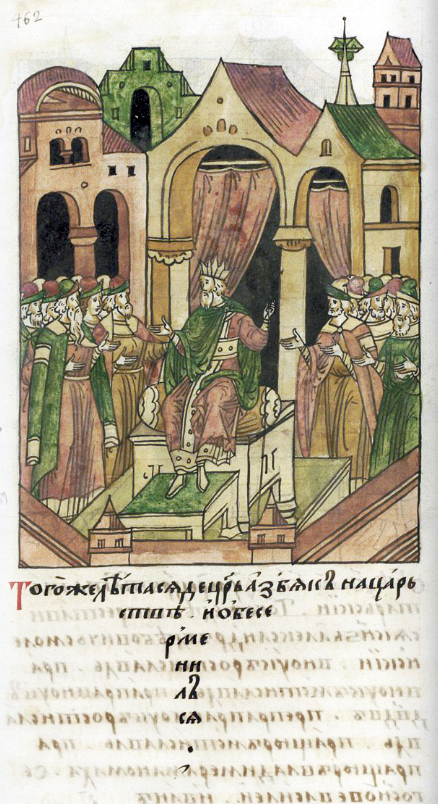
AI-assisted Portrait of Uzbeg Khan
The Khan Who Changed an Empire's Soul
When Uzbeg Khan took the throne of the Golden Horde in 1313, he inherited the western half of the Mongol world—the steppe khanate that Batu had carved out of the Rus' principalities and the Volga—and over the next twenty-eight years he made it the most powerful state in Eurasia. His reign was the Horde at its zenith: the longest, the richest, the most feared. He centralized its sprawling administration, expanded its trade until the caravans of the Silk Road and the Italian merchants of Caffa fed his treasury, rebuilt its army, and held the Russian princes as tributary vassals so completely that historians call this the height of the “Tatar Yoke.”
But his defining act was not conquest. It was conversion. Uzbeg made Islam the state religion of the Golden Horde—a decisive, permanent break with the shamanist and pluralist traditions of his Mongol ancestors. When the conservative aristocracy resisted, he purged them. The decision reshaped the religious map of Eurasia: it bound the Horde into the wider Muslim world, opened diplomacy with Mamluk Egypt, and set in motion the Islamization of the Volga and Central Asian steppe whose echoes persist to this day. He is the ENTJ as empire-builder—a man who looked at an institution and saw not what it was, but what it could be remade into.
Uzbeg did not merely rule the Golden Horde; he re-engineered it. Dominant Te ran the machinery of empire—administration, trade, army, tribute—while auxiliary Ni supplied the single transforming idea: make the Horde Muslim, and make it permanent.
The Architect of the Horde
Te — dominant
Dominant Te organizes the external world into systems that work. Uzbeg's reign reads as one long exercise in administrative consolidation. He tightened the chain of command that ran from the khan's court down through the regional governors, regularized the collection of tribute from the Russian principalities, and turned a loose confederation of clans into something closer to a centralized state. Where his predecessors had governed by personal loyalty and the threat of the horse, Uzbeg governed by structure—a bureaucracy, a treasury, a standing capacity to project force.
Trade was the engine he understood best. Uzbeg cultivated the commercial arteries that crossed his territory: the overland Silk Road and, crucially, the Italian colonies on the Black Sea—Genoese Caffa above all—whose merchants paid for the privilege of moving slaves, grain, and silk through his domain. The wealth that flowed in paid for the army, and the army enforced the order that protected the trade. It is a closed Te loop: power funds commerce, commerce funds power. By the 1330s the Horde was richer and more formidable than at any point in its history, and the Russian princes traveled to his court to receive the patent of office from his hand.
What distinguishes Uzbeg's Te from mere competence is its appetite for control. When the old Mongol nobility—the keepers of the steppe's traditional religion—stood in the way of his designs, he did not negotiate. He had them killed. The state-builder's instinct is that an institution exists to be directed, and an obstacle exists to be removed; Uzbeg applied that instinct to his own aristocracy without flinching.
The Conversion as Strategy
Ni — auxiliary
If Te built the machine, auxiliary Ni decided where to point it. The Islamization of the Golden Horde was not a sudden act of personal piety—Uzbeg had converted as a young man—but a long-range strategic vision about what the Horde should become. A shamanist steppe khanate was an outsider in the fourteenth-century world. A Muslim one was a peer of Mamluk Egypt and the Ilkhanate, a legitimate participant in the diplomacy, trade, and prestige of the dar al-Islam. Ni sees the configuration that does not yet exist and works backward to it; Uzbeg saw a Horde that was Muslim, unified, and respected abroad, and he spent his reign making that future real.
The decision was also a unifying instrument. A common faith gave the Horde's diverse Turkic and Mongol peoples a shared identity that cut across clan loyalty, and it gave the khan a source of legitimacy independent of the old aristocratic order he had purged. That is Ni in service of Te: a single conceptual move—adopt Islam—that simultaneously consolidated the state internally, legitimized the ruler, and repositioned the entire khanate within the geopolitics of the Islamic world. He married a Byzantine princess, traded the Mamluks his cavalry for their gold, and corresponded across the Muslim east, all of it flowing from the one transforming choice.
The proof of the vision is its permanence. Berke, an earlier khan, had embraced Islam two generations before, but the conversion did not take root—it died with him. Uzbeg made it stick. By forcing the change through the resistant nobility and binding it to the structure of the state, he ensured that the Golden Horde would remain Muslim long after he was gone, and that the steppe and the Volga would carry that legacy for centuries.
The Splendor of the Court
Se — tertiary
Tertiary Se in an ENTJ surfaces as a feel for impact, magnificence, and the tangible projection of power. When Ibn Battuta visited the Horde in the 1330s, he left a dazzled account of Uzbeg's court—the moving city of tents, the disciplined ranks of soldiers, the wealth on display, the ceremony surrounding the khan and his wives. This was not incidental luxury. The grandeur was a statement, a deliberately staged spectacle of dominance meant to be seen and reported, exactly as it was.
Se also shows in how Uzbeg wielded the army as an instrument of present force. He campaigned in the Caucasus and against the Ilkhanate, kept the Russian princes in line through periodic shows of strength, and understood that an empire of his kind was sustained by the visible, immediate capacity to act. The strategic patience of Ni told him where to go; the tertiary Se gave him a taste for the concrete demonstration—the marshaled cavalry, the loaded caravan, the gold from Caffa—that made the abstract design felt and feared.
The Cost of Conviction
Fi — inferior
Inferior Fi in an ENTJ is the buried, inarticulate value system that the dominant Te normally overrides—and when it surfaces, it does so with absolute, uncompromising force. Uzbeg's personal faith was the one domain where the calculating state-builder gave way to something that looked like pure conviction. His Islam was not merely a policy lever; it was a genuine commitment that he was prepared to impose on his entire aristocracy at the point of the sword. The all-or-nothing intensity of the purge—convert or die—is the signature of inferior Fi: a private value held so rigidly that it admits no negotiation.
That same underdeveloped Fi is why the human cost of his designs registers so little in the record. The Russian principalities groaned under his tribute; rival princes were summoned to his court and executed when they displeased him; the old nobility was eliminated wholesale. Uzbeg felt the rightness of his cause far more reliably than the suffering it produced. The ENTJ with weak Fi can build a magnificent order and remain largely untroubled by what it crushes—and the Horde at its zenith was built, in part, on exactly that capacity not to look down.
Why ENTJ Over ESTJ
Why not ESTJ?
The ESTJ is the supreme administrator of an existing order—dutiful, procedural, conserving the institution it inherits and running it well. Had Uzbeg merely governed the Horde competently, kept the tribute flowing, and maintained the steppe's traditional ways, ESTJ would fit. But he did the opposite of conserve. He looked at the religious and political identity he inherited and decided to replace it—a visionary pivot, not a dutiful continuation. That is the difference between the manager and the transformer: ESTJ optimizes the system in front of it; Uzbeg's Ni-Te reimagined what the system should be.
The Islamization is the deciding evidence. A purely sensing administrator does not stake his throne on remaking an empire's soul; he works with the materials at hand. Uzbeg's defining act was abstract and future-oriented—a wager on what a Muslim Horde could become in a world it did not yet belong to—and he forced it through against the established order at enormous cost. That is the strategic intuition of the ENTJ, the rare commander who does not just win the game on the board but changes the board itself.
Connected Figures
Further Reading
- Russia and the Golden Horde: The Mongol Impact on Medieval Russian History — Charles J. HalperinThe standard English study of the Horde's domination of the Rus' principalities — essential for understanding Uzbeg's overlordship at its height.
- The Travels of Ibn Battuta — Ibn Battuta (trans. H. A. R. Gibb)The eyewitness source for Uzbeg's court — the splendor, the army, the wives, and the journey of Bayalun to Constantinople.
- Islamization and Native Religion in the Golden Horde — Devin DeWeeseThe definitive scholarly account of how Islam took root in the Horde — and why Uzbeg's conversion, unlike Berke's, proved permanent.
