 Historical Figure MBTI
#410 · 4-6-26 · The Mongol Khanates
Batu Khan
Founder of the Golden Horde · Scourge of the West
c. 1207 — 1255
8 min read
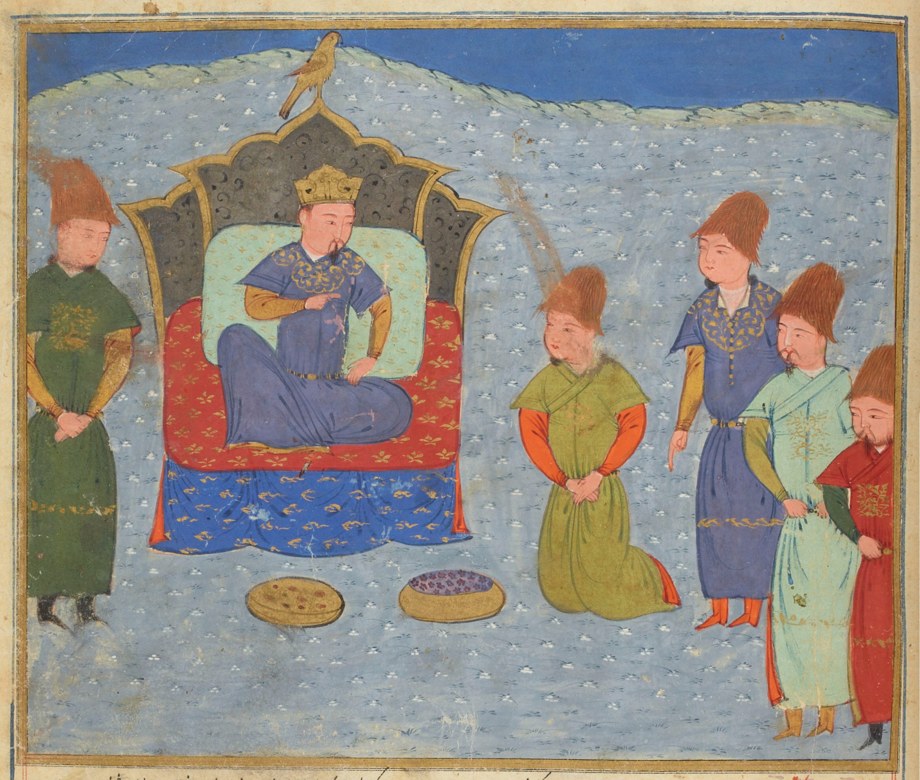
AI-assisted Portrait of Batu Khan
The Man Who Built the West
In the winter of 1240 the city of Kiev, mother of the Rus' cities, was reduced to ash and rubble; within two years the same army had shattered the chivalry of Poland at Legnica and the kingdom of Hungary at the Sajó River, and the courts of Western Europe braced for the end of the world. The man directing that storm was not the most famous Mongol of his age, nor the most feared in legend, but he was arguably the most consequential after Genghis himself. Batu Khan — grandson of the conqueror, son of the disinherited Jochi — took the westernmost slice of the Mongol inheritance and turned it into a state that would outlive every other branch of the empire and rule Russia for nearly two and a half centuries.
What is striking about Batu is how little of his power rested on personal glory. He was not a battlefield berserker in the mold of his celebrated general Subutai, nor a mystic of destiny. He was an organizer and a political mind: the founder of the Golden Horde, the overlord who institutionalized the “Tatar Yoke” over the Rus' princes, and, after the deaths of Ögedei and Güyük, the senior prince — the aqa — of the entire Mongol world. From that seat he did something rarer than conquest: he made a Great Khan. Backing his cousin Möngke in the coup that history calls the Toluid Revolution, Batu became the most powerful man in the empire short of the throne — a throne he could have contested and pointedly declined to want. His contemporaries called him Sain Khan, the Good Khan, and the title was shrewdness as much as praise.
Batu was the ENTJ as empire-architect — a Te-Ni strategist who would rather build the structure that makes a kingdom permanent than wear the crown that makes a man briefly supreme. He conquered for keeps, and he ruled the men who ruled the world.
The Conqueror as Administrator
Te — dominant
Dominant Te organizes the external world into systems that produce results, and Batu's career is one long demonstration of it. The invasion of Europe (1236–1242) was not a raid but a methodical program of conquest: the Volga Bulgars destroyed, the fractious Rus' principalities reduced one by one, then a coordinated two-pronged drive into Central Europe that pinned Poland and Hungary at the same moment so neither could relieve the other. This is Te warfare — logistics, sequencing, and the cold allocation of force toward a defined objective — and Batu, the campaign's nominal commander, presided over its machinery even as Subutai supplied the operational genius.
But conquest is the easy part for Te; what distinguishes Batu is what he did afterward. He did not simply burn Russia and ride home. He built a durable apparatus of extraction and control — the system later Russians called the Tatar Yoke — that left the Rus' princes nominally on their thrones while making them taxpaying clients who traveled to his capital at Sarai to receive the yarlyk, the patent confirming their right to rule. Census, tribute, the licensing of grand princes: Batu governed conquered territory the way a Te dominant always prefers, through standing institutions rather than perpetual terror. He founded a state, the Golden Horde, with a capital, an administration, and a tax base — and it endured for some two hundred and forty years, long after the unified empire that spawned it had fractured.
The same managerial coldness governed his politics. When the supreme throne fell vacant, Batu did not gamble on charisma or sentiment; he calculated where real power lay and moved decisively to install the candidate who served the structure of the empire — and his own position within it. Te does not ask who deserves to rule; it asks what arrangement works, and then engineers it.
The Kingmaker's Long Game
Ni — auxiliary
If Te executes, auxiliary Ni decides what is worth executing. It supplies the single convergent vision toward which all that organized force is bent — and Batu's vision was unusually far-sighted. Where a lesser prince of the blood might have spent the European campaign chasing plunder and personal renown, Batu treated it as the foundation of a permanent western realm. The choice of the lower Volga for his capital, the decision to leave the Rus' political structure standing rather than annihilate it, the patient cultivation of the princes as a renewable source of revenue: these are the moves of a man thinking in decades, building something that would still be collecting tribute long after he was gone.
Ni shows most clearly in the Toluid Revolution. After Güyük died, Batu was the senior figure of the entire Mongol world, and he could have pressed his own claim or simply backed the Ögedeid line that held the throne. He read the future differently. Allying with Sorghaghtani Beki, the formidable widow of Tolui, he threw his decisive weight behind her son Möngke, engineering a transfer of supreme power from one branch of Genghis's descendants to another. It was a stunning act of foresight: by making the Great Khan rather than becoming him, Batu secured for himself near-total autonomy in the west — a sympathetic emperor in Karakorum and a free hand in Sarai — without ever exposing himself to the lethal politics of the central court.
Batu grasped the thing most conquerors miss: that the man who chooses the king, and then rules unsupervised at the edge of the map, is freer and safer than the king himself.
Speed, Shock, and the Frozen Rivers
Se — tertiary
Tertiary Se gives the ENTJ a taste for bold, decisive action in the physical world — and Mongol warfare rewarded it spectacularly. The campaigns Batu led were defined by speed and shock: armies that covered ground faster than any European force believed possible, feigned retreats that lured knights into annihilation, sieges pressed with terrifying momentum. The Mongols famously invaded the Rus' in winter, using the frozen rivers as highways into the heart of a country that assumed the cold made it safe. That is Se reading the terrain for tempo and opportunity, and Te exploiting the opening.
Held in the grip of dominant Te and the long view of Ni, Batu's Se never ran away with him. He used boldness; he was not used by it. The contrast with a pure sensation-driven warrior is instructive: Subutai engineered the battles, and Batu — present, decisive, willing to strike hard and fast — harnessed that aggression to a strategic end rather than indulging it for its own thrill. The withdrawal of 1242 makes the point. When word came that Ögedei had died, Batu turned the whole victorious army around at the gates of Western Europe and rode back east to the succession politics that mattered more to him than Vienna. A man ruled by Se would have wanted the conquest in front of him. Batu wanted the empire behind it.
The Wound He Inherited
Fi — inferior
Inferior Fi is the ENTJ's buried country — a private register of loyalty and grievance that rarely surfaces but quietly steers the whole apparatus. Batu carried a real wound: his father Jochi had been shadowed all his life by a doubt over his birth, sidelined from the succession, dead under a cloud before Genghis himself. Batu's lifelong refusal to reach for the supreme throne can be read in purely strategic terms — and largely should be — but underneath the calculation runs an inferior-Fi current of the disinherited line declining to beg for what it had been denied, choosing instead to build a domain no central court could take away.
Where Fi turned outward, it did so as durable loyalty rather than warmth. Batu's alliance with the Toluids was not sentimental, but it was steadfast: having chosen Möngke, he stood by him, and the partnership held. His famous tolerance — the religious pragmatism, the willingness to leave conquered institutions standing — reads less as tenderness than as a Te instrument, yet it earned him the name Sain Khan and a reputation for keeping faith that outlasted him. Like most ENTJs, Batu's values were real but understated, expressed in what he built and whom he backed rather than in anything he is recorded as feeling.
Why ENTJ Over ESTP
Why not ESTP?
The bold mobile warfare, the appetite for decisive physical action, the cool reading of terrain and timing — all of it can look like a brilliant ESTP raider living for the next strike. But the ESTP's Se-Ti pairing optimizes for the situation in front of it, not for a structure that will stand in two hundred years. Batu's defining acts were the opposite of opportunistic: he founded an enduring state, institutionalized rule over a conquered nation, and re-engineered the succession of the whole empire from the outside. That is a Te-Ni long game, not an ESTP's in-the-moment tactical play.
The kingmaking is decisive. An ESTP seizes the advantage in front of him; Batu declined the supreme prize precisely because his eye was on the more durable position behind it. He played for the architecture of the entire Mongol world — choosing who would sit in Karakorum so that he could rule unsupervised in Sarai — and built the one Mongol successor state tough enough to outlast all the others. The ENTJ does not merely win the battle; he designs the order that the battle was fought to establish, and then makes sure the right man is sitting at the center of it.
Connected Figures
Further Reading
- Russia and the Golden Horde: The Mongol Impact on Medieval Russian History — Charles J. HalperinThe standard reassessment of how deeply the Horde shaped Russia — essential on the institutions of the Tatar Yoke.
- The Mongols and Russia — George VernadskyThe classic older survey of the Mongol domination of the Rus' — detailed on Batu's conquest and the structure of his rule.
- The Mongols — David MorganThe best single-volume introduction to the empire as a whole; clear on the succession politics and the Toluid Revolution.
- The Mongol Empire — Timothy MayA modern, authoritative synthesis that situates the western campaigns and the Golden Horde within the empire's larger trajectory.
