 Historical Figure MBTI
#405 · 4-6-26 · The Mongol Khanates
Sorghaghtani Beki
Mother of Khans · Architect of the Toluid Ascendancy
c. 1190 — 1252
9 min read
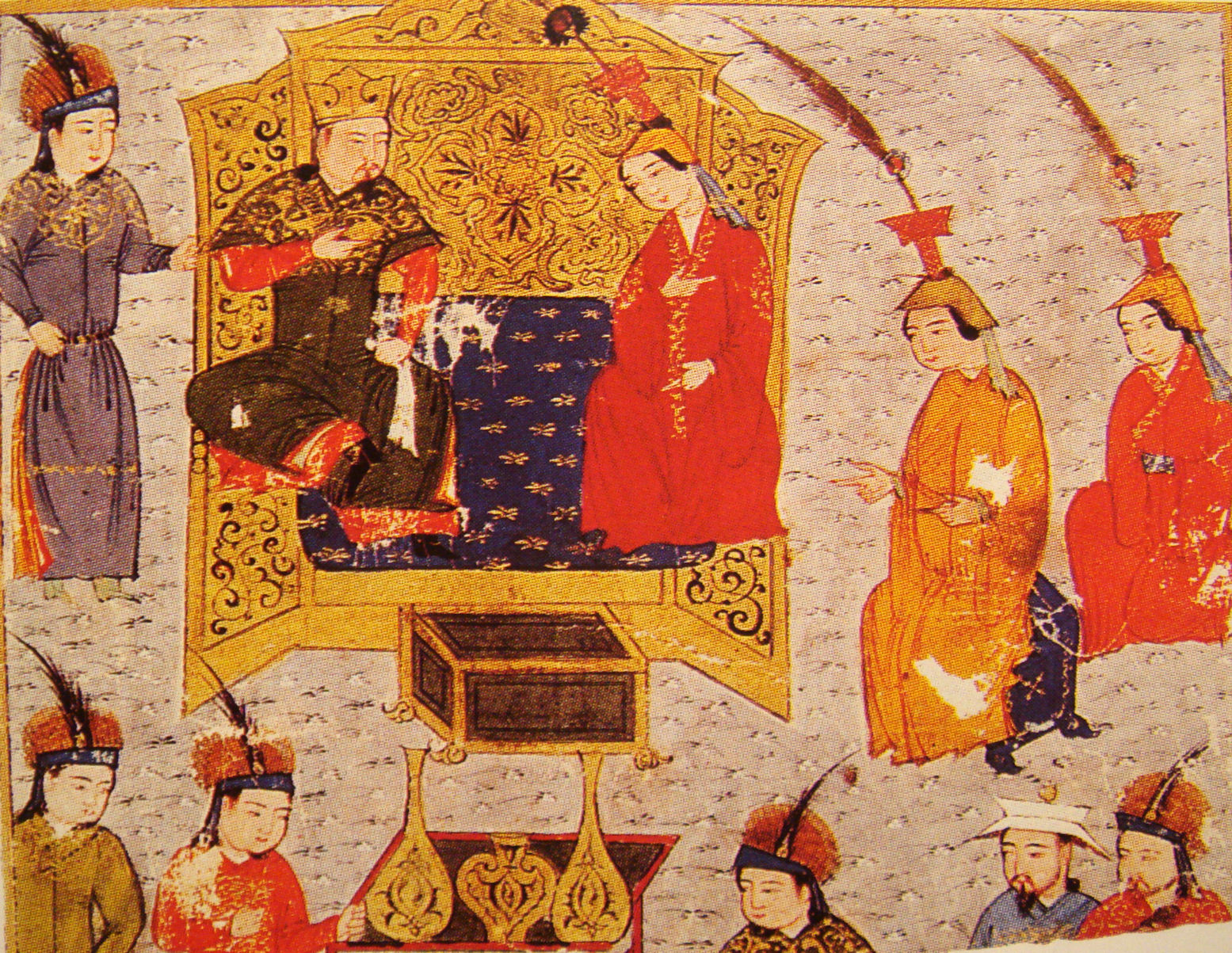
AI-assisted Portrait of Sorghaghtani Beki
The Woman Who Built an Empire She Never Ruled
She never held a throne, never commanded an army in the field, never carried the title of Khan. And yet no single person did more to shape the Mongol Empire after the death of its founder than the Kerait widow who raised four sons and made every one of them a king. Two of them — Möngke and Kublai — would rule as Great Khan over the largest contiguous land empire the world has ever seen. A third, Hulagu, would found the Ilkhanate in Persia; the fourth, Ariq Böke, would contest the supreme khanate itself. To produce one ruler is fortune. To produce four, across the whole sweep of Eurasia, is design.
Sorghaghtani Beki was a niece of Toghrul, the Ong Khan — the Kerait lord who had been Genghis Khan's patron before he became his enemy. When the Keraits fell, she was married off to Tolui, the conqueror's youngest son, and inherited with him an enormous appanage in northern China. Tolui died young, in 1232, leaving her a widow with four boys and a vast territory to govern alone. From that position — technically subordinate, formally powerless, a woman in a culture of warrior-patriarchs — she spent the next twenty years quietly assembling the conditions under which her bloodline would inherit everything. She is the INTJ as dynast: patient, invisible, and decades ahead of everyone around her.
She played a game measured in decades while the men around her played in seasons. The throne was never the goal — the throne was the byproduct of a position so carefully built that, when the moment came, the empire simply fell to her sons.
The Long Game Nobody Else Was Playing
Ni — dominant
Dominant Ni is the conviction that the future has a single shape, and that everything in the present is a move toward or away from it. Sorghaghtani saw, far earlier than her contemporaries, that the empire Genghis had built by plunder could not be held by plunder. The Mongols of her generation still treated conquered China as a herd to be slaughtered — there were serious proposals at the imperial court to exterminate the northern Chinese peasantry and turn the farmland to pasture. She understood that this was suicidal: that a settled population, taxed and protected rather than butchered, was worth infinitely more alive. The insight was not sentimental. It was strategic foresight of a kind almost no one else at the table possessed.
The same vision governed the decision that defined her life. When Tolui died, custom offered her in levirate marriage to Güyük, the son of the reigning Great Khan Ögedei. She refused. The official reason she gave was duty to her sons; the real reason was that marriage would have dissolved her into another man's household and surrendered the independent power base she needed. A reactive person takes the safe remarriage. Sorghaghtani declined the entire frame, kept her appanage, her wealth, and her freedom of maneuver, and bent all of it toward a single distant end: the throne, for her line, when the Ögedeid house inevitably faltered. She was not gambling on that collapse. She was waiting for it.
That is Ni's signature — not prediction as guesswork but recognition of a trajectory already in motion, then the patience to let it arrive. For nearly two decades she did almost nothing visible. She governed, she invested, she watched. The Ögedeid line drank and quarreled itself into weakness exactly as she had foreseen, and when Güyük died suddenly in 1248, the position she had spent twenty years building was already in place. The future she had seen simply caught up with the present.
The Administrator and the Coup
Te — auxiliary
Ni sees the destination; auxiliary Te builds the road. Sorghaghtani's vision of a productive, loyal China would have stayed a private intuition without the executive machinery to realize it — and she had that machinery in abundance. Granted her appanage in the region of Zhending in northern China, she ran it as a model of pragmatic statecraft. Where other Mongol overlords stripped their lands, she invested in them: she protected the farmers, regularized taxation, encouraged agriculture, and turned a conquered province into a stable, revenue-generating asset. The contemporary historian Juvayni, no flatterer of women, recorded her territory as one of the best-governed in the empire.
Te also reads what holds a diverse realm together, and acts on it without sentiment. Sorghaghtani patronized every faith in her domain. She was herself a devout Nestorian Christian, but she subsidized Buddhist monasteries, Daoist temples, and Muslim scholars alike, and funded the construction of a madrasa for Islamic learning. This was not modern tolerance for its own sake; it was a governing instrument. A ruler who underwrites every constituency buys the loyalty of all of them. She understood that an empire of many peoples is held by patronage, not terror — and she paid for that loyalty deliberately.
The same operational competence executed the boldest stroke of her life. When the Great Khan's throne fell vacant, the succession by rights belonged to the Ögedeid house. Sorghaghtani moved to take it for her son anyway. She forged an alliance with Batu's Golden Horde in the west — the one power bloc that could counterbalance the Ögedeids — and engineered a great assembly in 1251 that elected Möngke as Great Khan. The rival princes who refused to accept it were met with a purge of extraordinary thoroughness; the Ögedeid and Chagataid lines were broken, their leaders executed. Historians call it the Toluid Revolution. It was, in plain terms, a coup — conceived by Ni, executed by Te, and carried through without a tremor.
The Private Compass
Fi — tertiary
Beneath the strategist ran a current of conviction she never compromised and rarely displayed. Sorghaghtani was a serious Nestorian Christian in a court that was largely shamanist, and she held that faith quietly throughout her life without ever letting it narrow her politics. Tertiary Fi in an INTJ works like this: a deep, privately held set of loyalties — to family, to faith, to a personal code — that guides the inner life but stays subordinate to the strategic mind. She believed, and she acted on belief, but she never let belief make her a partisan when the realm required a patron of all gods.
Her deepest loyalty was to her sons, and it was absolute. Every refusal, every investment, every alliance traced back to the conviction that her line was destined for something her culture would never simply hand her. She educated her boys with unusual care, ensuring each was literate, each trained for rule, each prepared for a throne that did not yet exist. That she succeeded with all four was not luck but the expression of a value held so firmly it organized an entire life around itself.
It is telling that contemporaries reached for the language of moral exception when they described her. The Syriac chronicler Bar Hebraeus wrote that if there were another woman like her, “the race of women would be far superior to that of men.” What such observers were registering, beneath the period's condescension, was an inner seriousness — a person whose convictions were evidently real and evidently her own, never worn for show.
The Power She Never Wielded in Person
Se — inferior
The inferior function is the one a type leaves to others, and Sorghaghtani's was Se — the immediate, physical seizure of the moment. She was born into the most Se-saturated culture imaginable: a world of horseback warriors who settled questions by riding out and taking what they wanted. Yet she never once led from the front. She fought no battles, gave no field commands, made no display of force in her own person. Her power was always exercised at a remove — through letters, through patronage, through sons and allies who acted while she arranged.
This is precisely how inferior Se manifests in a dominant intuitive: not as incapacity but as delegation. She left the horseback to Hulagu, who would sack Baghdad, and to Möngke, who would campaign on two fronts. Her instrument was foresight, and the visible, physical empire was the medium her sons worked in, not the one she did. Where her father-in-law Genghis was Se incarnate — conquest by sheer kinetic will — she was his inverse: the same family ambition routed entirely through the mind.
Her death in 1252 came at the moment of total victory. Her son sat as Great Khan; her line held the empire; her decades-long design was complete. She did not live to see Kublai found the Yuan or Hulagu raise the Ilkhanate, but both rested on the platform she had built. The strategist who never took a city by storm had, in the end, taken the whole empire — without ever lifting a sword.
Why INTJ Over ENTJ
Why not ENTJ?
The ENTJ is the outward commander — the figure who steps to the front, takes the title, issues the orders, and is unmistakably in charge. That was never Sorghaghtani. She held no office and led no army; her entire method was to work from behind, patient and watchful, letting others occupy the visible roles while she arranged the outcome. Where the ENTJ's power is Te-dominant — frontal, declarative, organizational — hers was Ni-dominant: foresight and maneuver, exercised so quietly that contemporaries marveled a woman could have done it at all. Her sons Kublai and Hulagu were the ENTJs of the family; she was the intelligence that put them on their thrones.
The distinction is one of stance. An ENTJ in her position would have sought formal authority — a regency, a title, a recognized command — because the ENTJ wants to run the system in plain sight. Sorghaghtani wanted only the result, and was entirely content to remain invisible to get it. She never needed to be seen wielding power; she needed power to flow, on schedule, toward the future she had foreseen. That is the deepest INTJ tell: the strategist for whom the throne is a means, the title an irrelevance, and the long arrival of the inevitable the only thing that ever mattered.
Connected Figures
Further Reading
- The Secret History of the Mongol Queens — Jack WeatherfordThe fullest popular account of Sorghaghtani and the Mongol women who held power; the source that restored her to general memory.
- Khubilai Khan: His Life and Times — Morris RossabiThe standard scholarly biography of her son Kublai — essential on the family she built and the empire it inherited.
- The History of the World-Conqueror — Ata-Malik JuvayniThe thirteenth-century Persian chronicle, written by a Mongol official who praised Sorghaghtani's governance directly — a near-contemporary source.
- The Mongols — David MorganA concise, authoritative survey of the empire that places the Toluid Revolution in its full political context.
